HVAC Associations Excited About Election Results
Trade groups prep for a new, and more favorable, they say, climate in Washington
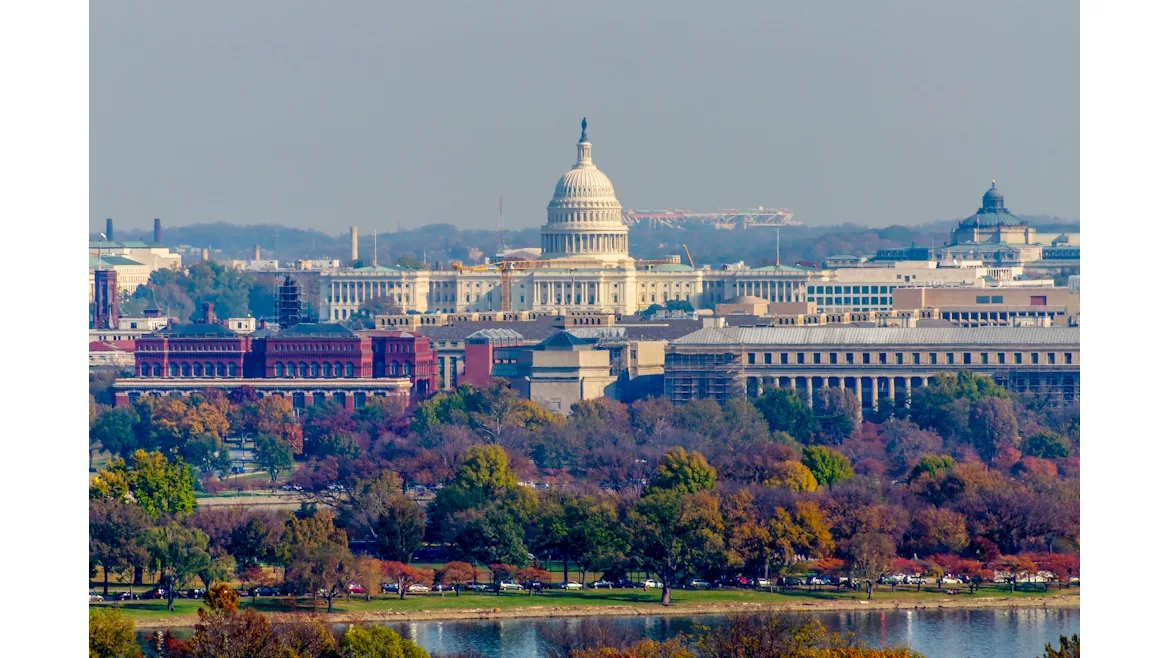
NEW BALLGAME: Republicans will have the balance of power in Washington, D.C., next year, and HVACR industry trade groups plan to stay active in lobbying for policy changes that would benefit their members. (Courtesy of Getty Images / Matt Anderson)
The HVACR industry will face a significantly changed national political landscape, one that several industry trade groups are welcoming, next year.
With Donald Trump returning to the White House and Republicans capturing a majority in the U.S. Senate and retaining control of the House of Representatives, political experts at HVACR industry associations expect a more business-friendly tax, energy policy, and regulatory environment. Association representatives say they’re planning to stay involved as federal policies change with the shift in the balance of power, and lobby to keep or improve existing policies and programs that they favor.
“We’re excited to work with a pro-business administration,” said Alex Ayers, vice president of government affairs at Heating, Air-conditioning & Refrigeration Distributors International (HARDI).
“It’s no secret that the Republican platform is more friendly on energy policy and taxes, so we expect to be more aggressive there so that we can get outcomes that work best for our contractors,” said Mark Valentini, vice president for legislative affairs at Plumbing-Heating-Cooling Contractors—National Association (PHCC). Democrats, Valentini added, tend to have workforce policies the PHCC likes.
At the Air-conditioning, Heating, and Refrigeration Institute (AHRI), which represents manufacturers, Francis J. Dietz, vice president of public affairs, took a more cautious approach.
“AHRI is consulting with its members regarding what our policy priorities are likely to be, given the momentous change in political leadership,” Dietz said. Important issues for AHRI, Dietz added, include working with new U.S. Department of Energy (DOE) appointees to ensure that existing rules schedules are followed, and working with the Environmental Protection Agency (EPA) to complete the A2L refrigerant transition.
In the 10 days since the election, leaders at HVACR trade organizations have spoken up about how the industry might be affected by Republican control in Washington, D.C. Here’s some of what they had to say:
Taxes
Trade groups are in favor of extending provisions of the Tax Cuts and Jobs Act (TCJA) of 2017 that are scheduled to expire at the end of 2025, and Republicans are expected to follow through. Those provisions include the so-called 199A deduction, for up to 20% of qualified business income, and the increased exemption levels for the estate tax, which are currently at about $13.6 million for a single person and $27.2 for a couple.
“We want to make sure those thresholds are as high as possible, so that it mitigates the burden of, you know, estate planning and passing on the business from one generation to the next,” Valentini said.
Ayers said the future of the expiring TCJA provisions is next year’s most important political issue for HARDI members.
“With Republicans in control of Congress and the White House, we are more likely to see pro-business tax provisions like the pass-through business income deduction and full business expensing remain intact,” Ayers said.
Trade groups also favor cutting the 21% corporate tax rate, which Trump has promised to do.
“I think they will extend those (tax reforms) and then probably add some of the things that he talked about in the campaign,” Jim Ellis, senior political analyst at BIPAC, told ACCA members during a November 13 livestream. “I think they have to do that.” BIPAC is a political action committee that supports business-friendly candidates.
Sean Robertson, ACCA’s vice president for membership, advocacy, and events, said members need to pay attention to the tax debate.
“Seems like there may be a need for some hard choices, and for small businesses to stand up for things like the 199A deduction,” Robertson said.
At AHRI, Dietz said the organization supported the original TCJA, but would have no comment on its future until tax proposals are put forth.
Tariffs
Increasing tariffs on foreign-made goods, which was a major talking point of the Trump campaign, is one issue on which the HVACR industry may disagree with the incoming administration.
“If your source of equipment is overseas, that’ll be in the line of sight of those tariffs,” Robertson said, adding, “It’s going to delay (incoming shipments) further, and it’s going to cause more increases.”
“Not an issue for us, for now,” Valentini said. “I imagine our partners in manufacturing would have a lot more to say about that.”
Three manufacturers were contacted for this story, but none agreed to answer questions.
Regulations
Ellis said he was pleased with Trump’s nomination of Lee Zeldin, a former Republican congressman from New York, to lead the Environmental Protection Agency (EPA).
“He is a very level-headed guy. He is conservative. He is very pro-business, very pro-small business,” Ellis said. “And I think he’s a great choice for EPA, and to stop a lot of the regulations that they’re trying to do.”
Ellis said Trump could reverse some regulations via executive orders.
“On day one, Trump can go in and cancel a lot of those regulations, just because they were based upon (President Joe) Biden’s executive orders,” Ellis said. Biden acted similarly when he took office, Ellis added, as did Trump during his first term in canceling executive orders signed by his predecessor, Barack Obama.
Valentini said he sees an opening for changing policies intended to curb the use of natural gas, which the PHCC views as an unnecessary limitation on consumer choice. With Republicans in charge, “We anticipate that we’re going to have much friendlier conversations, if you will,” he said.
“The ban of non-condensing furnaces by 2028, that’s the kind of thing that could now be back on the table,” Robertson said during the ACCA meeting.
Asked if there might be changes to the refrigerant transition — the ban on the manufacture of new residential systems that require refrigerants with a GWP of more than 700 begins in January — Robertson said the industry should be careful about what it wishes for.
Manufacturers and contractors have been preparing for the change, Robertson said.
“There could be potential for real whiplash, where, you know the more prepared companies could be behind the eight ball, and suddenly, the Wild West again,” he said.
That said, Robertson added, the industry may soon have a better chance of convincing the federal government to restrict states, such as California, from implementing refrigerant regulations that are more restrictive than federal rules.
Ayers, at HARDI, said he expects Trump to roll back the Biden administration rule that requires employers to pay overtime to executive, administrative, and professional employees who earn less than a certain amount. That pay level is currently $43,888 a year, and is set to increase to $58,656 a year in January.
Robertson isn’t as certain about a rollback.
“The new administration may seek to provide relief on that, but employers have to adhere to it in the meantime, and I haven’t heard clear guidance on that,” he said.
HVAC Incentives
Republicans uniformly opposed the Inflation Reduction Act (IRA) of 2022, which earmarked billions, in the form of tax credits and rebates, to incentivize the installation of high-efficiency residential HVAC equipment, particularly electric equipment such as heat pumps, and other energy-saving home improvements. But repealing it, or reducing incentives, will likely be easier said than done for Trump, whose platform promised to undo “the Socialist Green New Deal.”
Any change to the IRA’s incentives is “a bit of a mixed bag, and depends on how deep the cuts go,” said Charles R. White, the PHCC’s vice president for regulatory affairs. “Certainly, the expansion of the IRS (Internal Revenue Service) Section 25C tax credits have been beneficial. If 25C were to be scaled back, upgraded equipment would be less attractive to consumers.”
The benefits to contractors of the IRA’s rebates, however, aren’t yet as clear, White added, partly because the programs are new and not yet available in most states.
“While these programs offer significant opportunities for contractors, the programs are not without concerns from contractors,” he said. “On the big-picture side, it is a significant amount of money, but at the business level, figuring out the state programs, compliance details, becoming a qualified contractor, and figuring out how long it will take to collect the rebates have been points of resistance.”
The IRA’s two Home Energy Rebate programs are designed to put $8.8 billion into the industry, and participating states and the District of Columbia have claimed more than half of that already.
“Eliminating them or scaling these programs back changes future business projections, perhaps reduces future employment, and takes away potential energy savings for low- and moderate-income Americans,” White said.
“Once funds are obligated to the states, it is fairly difficult to claw them back,” said Robertson. States that have not yet completed applications for rebate money, he added, are going to be “racing to get them through the process” before the new administration takes over.
Ayers said any debate over the future of the IRA is an opportunity for HARDI to work with lawmakers to improve the incentives.
“Changes to the Inflation Reduction Act will require congressional approval, which will delay when changes happen,” he said. “We’re hopeful that we can show Congress how to improve some of these incentives to help our members leverage the incentives.”
Barton James, ACCA’s president and CEO, urged members to get involved, or stay involved, politically.
“If you’re not at the table, you’re on the menu” in Washington, James said.
Looking for a reprint of this article?
From high-res PDFs to custom plaques, order your copy today!