NY Gov. Hochul Signs Legislative Package Designed to Spur Energy Efficiency, Reduce Greenhouse Gas Emissions
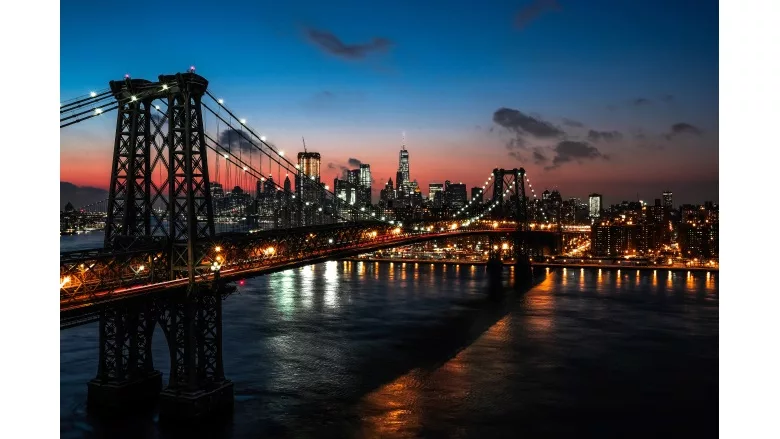
Image courtesy of Matteo Catanese/Unsplash
NEW YORK — Gov. Kathy Hochul signed a legislative package of three bills that will strengthen New York's commitment to clean energy development and energy efficiency while reducing greenhouse gas emissions. The governor signed the bills at Newlab headquarters in Brooklyn alongside state Sens. Kevin Parker and Jessica Ramos, assembly member Pat Fahy, assembly member Latoya Joyner, and key labor leaders and climate advocates. These three new laws support the Climate Leadership and Community Protection Act goal of an 85% reduction in greenhouse gas emissions by 2050 while ensuring a just and equitable transition for New York workers and communities.
"The impacts of climate change are felt all over New York State, and, in response, we are taking bold action and building a stronger, more resilient New York by guaranteeing healthier, greener places to live and work," said Gov. Hochul. “Now more than ever, the importance of a cost-effective green transformation is clear, and strengthening building codes and appliance standards will reduce carbon emissions and save New Yorkers billions of dollars by increasing efficiency. This multipronged legislative package will not only replace dirty fossil fuel infrastructure, but it will also further cement New York as the national leader in climate action and green jobs."
The Advanced Building Codes, Appliance and Equipment Efficiency Standards Act of 2022, bolsters New York's regulatory and policy environment to support energy efficiency and greenhouse gas reduction strategies in buildings along with expanded appliance standards. The Utility Thermal Energy Network and Jobs Act requires the Public Service Commission (PSC) to develop a regulatory structure for utility thermal energy networks, including district geothermal and other community-scale thermal infrastructure projects, for heating and cooling homes and to direct utilities to launch pilot projects in their service territories. The governor also signed legislation requiring prevailing wage for renewable energy projects 1 MW and larger that involve the procurement of renewable energy credits from a public entity. Together, with the strong promise held by community thermal systems for existing pipe workers and other skilled trades, accelerated action in building efficiency, and strengthened wage standards for renewable energy development, these legislative measures demonstrate the state's commitment to ensuring projects create quality jobs for New Yorkers in clean energy and planning for a just transition.
Greening New York's building sector by investing in clean heating and cooling solutions presents the greatest prospect to reduce greenhouse gas emissions while realizing a unique workforce development opportunity. Earlier this year, the Climate Action Council's Just Transition Working Group issued a Jobs Study that details the number of jobs that will be created as part of New York's clean energy transition, and found the buildings sector accounted for well over half of all the jobs added in growing clean energy subsectors from 2019 to 2030. The study estimates that overall employment in the buildings sector will grow to approximately 366,000 by 2040, more than doubling the 2019 workforce by adding over 200,000 new jobs. The legislative package signed today is one part of a holistic suite of policies and programs needed to drive decarbonization in the buildings sector at scale and realize these significant opportunities for near-, medium-, and long-term job growth.
Advanced Building Codes, Appliance and Equipment Efficiency Standards Act of 2022
Legislation A.10439/S.9405 requires the New York State Energy Conservation Construction Code to be updated to achieve energy efficiency and greenhouse gas emission reductions in support of the Climate Act. Advanced energy codes could reduce ongoing energy bills, leading to nearly $4 billion in energy savings for building owners by 2030, with potential for even greater savings when factoring in recent inflation and energy cost increase trends.
Additionally, this legislation authorizes the New York State Energy Research and Development Authority (NYSERDA), in consultation with the Department of State, to adopt efficiency standards for appliances and equipment that reduce energy usage. Expanding appliance standards will reduce emissions and deliver $15 billion in savings to New Yorkers through 2035, including $6 billion to low- and moderate-income households, by reducing wasted energy from the use of less efficient everyday products and appliances.
The legislation also authorizes the Governor to designate the President of NYSERDA and the Commissioner of the Department of Environmental Conservation as members of the State Fire Prevention and Building Code Council (Codes Council), to align the work of the Climate Action Council with the Codes Council to achieve the goals of the Climate Act through advances in the building energy code.
“For our great state to reach our CLCA goals it will take an all of the above approach,” said state Sen. Kevin Parker. “My two bills the Governor signed into law are important steps in achieving those goals. Buildings are the single largest user of energy in the State of New York, and the largest source of greenhouse gasses and other climate emissions, due to the combustion of fossil fuels for heating, domestic hot water, as well cooking. Thank you, Governor Hochul, for signing this important legislation into law. Ultimately, this legislation helps tie local, union jobs and efforts to decarbonize buildings and neighborhoods at an affordable price due to utilities' cheaper cost of capital, all of which is in the public's interest.”
Utility Thermal Energy Network and Jobs Act
Legislation A.10493/S.9422 allows utilities to own, operate, and manage thermal energy networks, as well as supply distributed thermal energy, with PSC oversight. Heating and cooling networks - also referred to as community thermal or district energy systems - are a resilient, energy efficient, and clean solution that can also help New York State meet its ambitious climate goals. By leveraging multiple sources of existing waste heat (such as water, wastewater, and geothermal, among others) and connecting a diverse set of building types on a shared loop, thermal energy networks can provide significant operating and energy cost savings when compared to more traditional heating and cooling methods, while also reducing demand on the electric grid.
This legislation will promote the development of thermal energy networks throughout the State, providing benefits by reducing fossil fuel usage for heating and cooling through community-scale infrastructure solutions, along with employment opportunities for existing utility workers and new workers. The enabling legislation will build on the progress of, and complement, NYSERDA's active community thermal program, which to-date has funded feasibility studies, detailed design studies, and other advanced project construction incentives to more than three dozen sites across the state.
“Today, we take an important step forward in addressing climate change and creating green jobs that will benefit generations of New Yorkers for the future,” said assembly member Latoya Joyner said. “We can no longer afford to stand idly by as climate change wreaks havoc on communities across our state, and I applaud Governor Hochul for taking swift action and to create a cleaner, greener New York for all."
Prevailing Wage for Renewable Energy Projects One Megawatt and Larger
Legislation A.9598/S.8648 requires prevailing wage for renewable energy projects one megawatt and larger that involve the procurement of renewable energy credits from a public entity, ultimately supporting the Governor's new goal for ten gigawatts of distributed solar by 2030, enough to annually power nearly 700,000 average-sized homes. New York's ten gigawatt roadmap, approved by the PSC in April, provides a comprehensive strategy to expand the state's successful NY-Sun initiative into one of the largest distributed solar programs of its kind in the nation. The public investment to achieve ten gigawatts of solar will spur approximately $4.4 billion in private investment to bring awarded projects to fruition, for a total of $5.9 billion in expected investment over the mid- to late-2020s. Six-thousand additional solar jobs will be created across the state, including with the State's first application of prevailing wage requirements for solar projects between one and five megawatts.
“Putting prevailing wages and organized labor at the helm of our State's transition to renewable energy will allow New York to lift up communities with family-sustaining wages while leading on our efforts to tackle the climate crisis,” said state Sen. Jessica Ramos, chair of the Senate Labor Committee. “I'm thrilled that my bill with assembly member Joyner is being signed today, and hope it is one of many steps to build a climate future with working families as the priority.”
Looking for a reprint of this article?
From high-res PDFs to custom plaques, order your copy today!