Top 5 Tips for Selecting Valve Actuators for Fluid Automation
Tips process engineers can leverage to minimize the time spent selecting actuators for different applications while still maximizing the reliability and durability of valves and automation mechanisms.
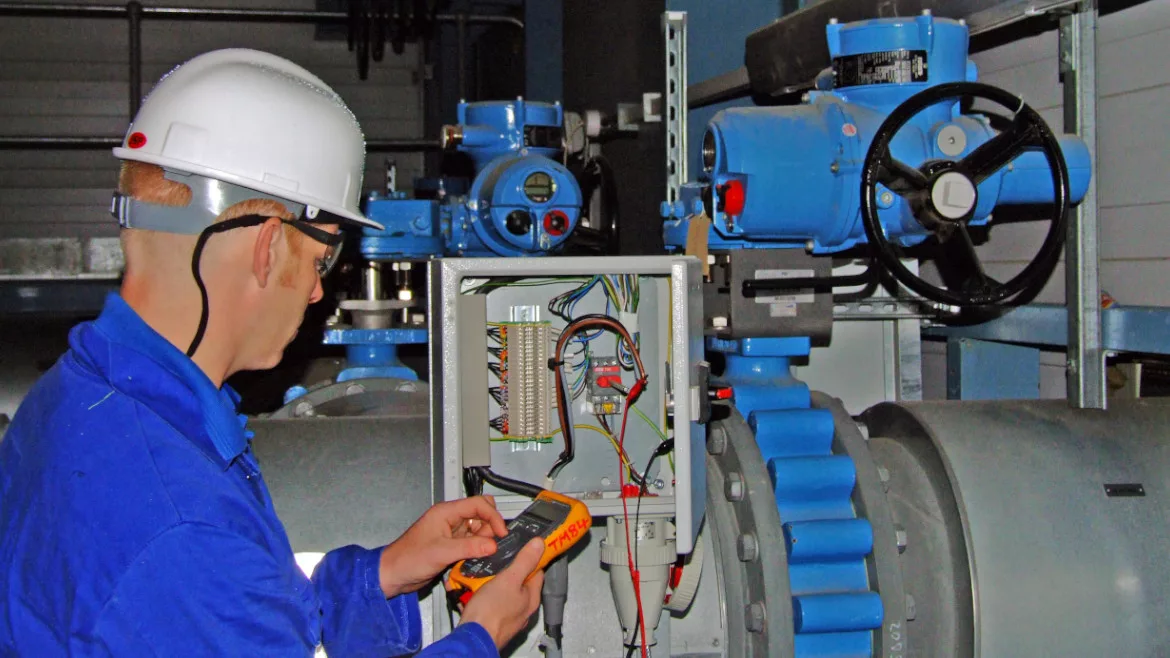
The actuator can manipulate the position of the valve mechanism to regulate the flow of fluids; seat the valve’s disc, ball, or plug for fluid shut-off; and control the operational speed of the valve in response to flow conditions of the system.
Image courtesy of A CC BY 3.0, https://en.wikipedia.org/w/index.php?curid=30804967Selecting actuators to automate valve operations in different applications is a delicate process. It requires careful evaluation of the structural and operational capabilities of the actuation mechanism, durability and compatibility with the service media, and operating conditions of the pipeline. There are several reasons to automate valve operation piping systems. Predictable and reliable valve operation enhances the safety of industrial fluid applications.
Actuators have high accuracy levels, which enhances the performance of valves in diverse piping systems and facilitates fluid control in remote or inaccessible locations. More companies are leveraging technology to automate industrial processes. The rise of computerized controls in industrial systems is making it a necessity for companies to automate valve operations.
There are different types and sizes of actuators for a wide range of industrial valves. The actuator can manipulate the position of the valve mechanism to regulate the flow of fluids; seat the valve’s disc, ball, or plug for fluid shut-off; and control the operational speed of the valve in response to flow conditions of the system. Actuators can provide rotational or linear motion of the closure mechanism depending on the type of process valves.
Actuators have varying performance characteristics due to their designs, operating modes (rotary or linear), and power sources. Process engineers can choose among hydraulic, electric, or pneumatic actuators to get the desired valve operations. Each actuator category has desirable features and benefits, making them suitable for specific pipelines or processes.
Below are tips that process engineers can leverage to minimize the time spent selecting actuators for different applications while still maximizing the reliability and durability of valves and automation mechanisms.
1. Identify the availability of appropriate power sources for actuators — The primary way to differentiate valve actuators is by determining the type of power they require for their operations. Both pneumatic and hydraulic actuators use fluid power to control the position of valve closure mechanisms. Therefore, process engineers must guarantee the availability of sufficient and clean air supply throughout the operating period of the valve. That means selecting the appropriate air compressor, air supply pipes and correct configuration of air distribution and discharge ports for the entire pipeline.
When extending the actuation of the existing actuation systems, verify that the compressor can supply enough air pressure to operate additional valves. Pneumatic actuators utilize compressed air for their operation: usually, the supplied air pressure is between 40 and 120 PSI, but most commonly 60 or 80 PSI. Since they are reliable, accurate, and cost-effective, pneumatic actuators are quite popular to use.
In hydraulic actuators, the motion of the sleeve within the cylinder exerts pressure on the hydraulic fluid, which, in turn, manipulates the position of the valve. These actuators have simple designs that enable small units to deliver sufficient torque/thrust to operate large valves.
Electric actuators are essentially electric motors that drive valve operation. As their name suggests, they require a connection to an electric power source. Depending on the selection, either alternating current or direct current can power the motors operation.
When choosing a valve actuator, process engineers need to ascertain the availability of power sources. If the company has access to more than one power source, the engineers have to analyze the desired safety levels and the reliability of the actuator. Pneumatic actuators are preferable in most applications since they are naturally explosion-proof, require minimal maintenance interventions, and offer reliable long-term service. Engineers can recommend electric actuators in select hazardous environments if their enclosures meet National Electrical Manufacturers Association (NEMA) requirements.
2. Determine the desired fluid control functions — Understanding the desired actuation function is critical in the selection process. Some valves provide on/off service, while others are suitable for throttling. Automated valves operate in response to control signals and the conditions of the pipeline (pressure drop or rise). An on/off valve is easy to actuate as it requires a two-position digital control signal. The actuator signal controls the frequency of valve operations and determines the quality of flow control.
Actuating a throttling valve is a bit complex. The pressure and temperature conditions of the pipeline vary from time to time, putting a high demand on the actuator. Such fluid operations require actuators with high duty cycles. When choosing the actuator for throttling applications, ensure it can respond quickly to the dynamic changes in the flow of fluids. The actuator should be compatible with the instrumentation devices, which monitor the characteristics of the service fluid in the pipeline. When choosing an actuator for throttling or control, hydraulics and pneumatics are generally a favorite because of their high duty cycle; however, if clean instrument quality air is not available, a high-duty cycle electric actuator could be used.
When selecting actuators, understand the type of fluid control required at different stages of the process. Ensure that the actuator is compatible with the instrumentation devices. If the instrumentation system generates digital control signals, use an actuator with digital capabilities.
3. Evaluate the torque and thrust requirements of the actuator — The size of the valve and the nature of the service fluid determine the torque or thrust requirement of actuators. Large valves require more force to operate. When dealing with viscous fluids, the actuator must deliver sufficient force to manipulate the position of the closure mechanism and overcome the viscous resistance of the fluid. Actuators for valves with high torque or thrust requirements consume more power, translating to high operating costs.
Large valves that require more force to operate can utilize hydraulic or electro-hydraulic actuators for automation. Well-sized electric actuators can also provide reliable flow automation in selected applications. Such applications will require large pneumatic actuators, increasing the overall size of the valve assembly.
Varying the supply pressure of compressed air provides means for controlling the amount of thrust/torque supplied by pneumatic actuators. They are suitable for valves with low to medium range torque/thrust requirements.
Do not oversize or undersize the actuator. An oversized actuator delivers excess force, which may be insufficient to operate the valve or limit the valve’s accuracy and responsiveness. Consult a valve expert when sizing actuators to ensure you purchase the correct actuator to limit the probability of operational accidents.
4. Analyze the expected safety levels of valves and actuation mechanisms — Safety takes center stage in different piping applications. There are regulations regarding the allowable emission and leakage levels around valves and actuator assemblies. Valve actuators contain fail-safe mechanisms that protect piping systems when failures occur. Pneumatic and hydraulic actuators use a spring-return system, while most electric actuators have backup batteries or capacitors that revert valves to a fail-safe position when power or signal loss occurs.
When choosing electric actuators for hazardous applications, engineers evaluate their compliance with NEMA requirements. The actuator casings should be of a suitable rating to allow the valves to operate in fire or explosion for a considerable amount of time to permit fire suppression should an emergency occur. Pneumatic actuators are generally preferable for fire-risk applications since they are naturally explosion-proof.
When choosing an actuator, consider the desirable safety levels of the entire process. Choose an actuator whose fail-safe position guarantees maximum safety of the pipeline and equipment. Ensure the actuator assembly conforms to regulatory standards depending on the valve application area.
5. Compare the technical performance characteristics of the actuator to optimal flow conditions of the piping system — Valves are indispensable in controlling the direction and quantity of flow in fluid applications. Valve actuation is vital for enhancing the consistency and quality of processes. That implies that the actuation mechanism must complement valve performance and satisfy the optimal characteristics of the service fluid. The actuator assembly must accommodate the pressure and temperature changes in the system while providing an optimal operating speed of the valve.
When choosing actuators for fluid automation, evaluate the frequency of valve operations. Frequently operated valves have high duty cycles. Pneumatic actuators, which have high duty cycle capabilities, are appropriate for such applications. The motors of electric actuators are susceptible to overheating when used for such operations and are preferable for less frequently cycled valves. The actuation speeds vary depending on the type of actuator, for example, pneumatic actuators operate faster than their electrical counterparts. Pneumatic actuators can also be fitted with variable orifices at the exhaust ports to provide means for speed regulation.
When choosing actuators, ensure they can accommodate pressure and temperature changes in the system without failure. Ensure they provide sufficient operating speeds and valve operation frequencies.
Final Remarks
Automating fluid flow is incomplete without valve actuators. Process engineers evaluate diverse technical specifications to ensure they select the appropriate type and size of an actuator for fluid applications. Apart from meeting fluid control requirements, the actuators should be economical to install and operate. Selecting the correct actuator improves the safety and reliability of fluid applications.
Looking for a reprint of this article?
From high-res PDFs to custom plaques, order your copy today!


