Pump Systems: Overlooked Energy-Savings Opportunities
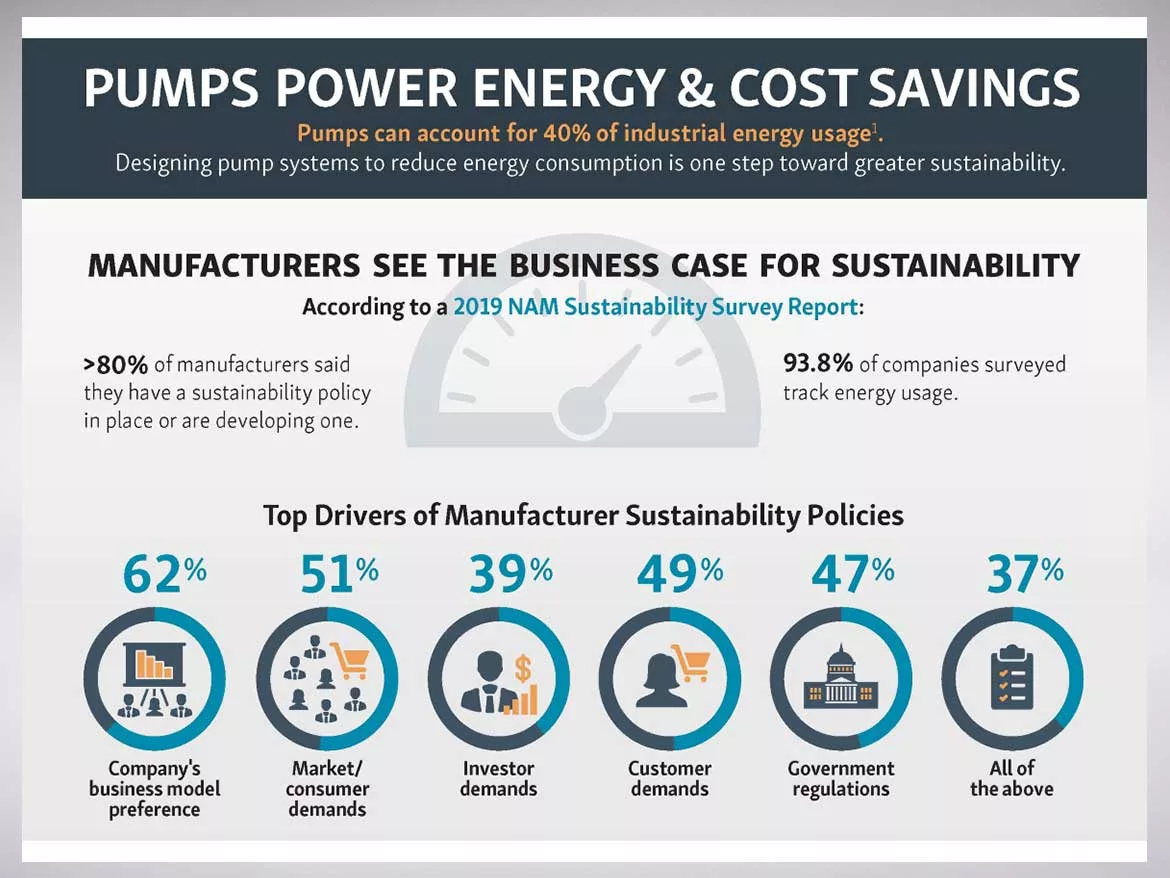
Designing pump systems to reduce energy consumption is one step toward greater sustainability.
With an increased focus on climate change, utilities have a unique opportunity to take on more responsibility around power usage. A potential historic investment of more than $400 billion toward clean energy and innovation may include utilities-focused policies including an Energy Efficiency and Clean Electricity Standard (EECES) that would push utilities and grid operators to identify new opportunities for reducing their customers’ power consumption1.
LED lightbulbs, solar panels, and other energy-saving investments have long been the focus of end-user rebate programs for the utility industry. Making such changes presents a long-term win-win for both parties by lowering bills for the end-user and preserving utility resources. Swapping traditional incandescent lightbulbs for LED variations, for example, can save up to 348 terawatt-hours (TWh) when implemented on a widespread level, according to the U.S. Department of Energy (DOE). This energy savings represents the equivalent annual electrical output of 44 large electric power plants and a total savings of more than $30 billion, based on current electricity prices2.
However, lighting upgrades only go so far. Where do utilities turn their attention next in their mission to lower end-user energy consumption rates? While several additional avenues exist for increasing customer efficiency, often overlooked are the energy-savings goldmines that are pump systems. Used in virtually every manufacturing plant, industrial facility, and commercial building, pumps serve as the next frontier for ecofriendly incentivization. By leading the charge for effective energy rebate programs around pumps, utilities can unlock significant savings for both their own facilities and those of their customers, all while demonstrating valuable expertise and contributing to collective industry advancement.
Discovering the Power of Pumps
With pump systems accounting for 40% of industrial fluid system energy usage, the answer is clear: pump systems play a major role. In fact, across all industrial sectors, pumps represent the highest energy consumption levels among motor-driven systems — presenting major energy savings opportunities for utilities to seize with the right customer rebate program.
Currently, public utilities are bound by legislative agreements requiring a certain percentage of taxpayer dollars be committed to energy efficiency. With those funds collectively equating to about $8 billion in North America, determining how that money is used is no small decision. In addition to training and research, utilities often spend their cash on rebate programs as a means of driving greater energy efficiency.
Pump systems fit the bill for straightforward, worthwhile energy-savings channels. In fact, research suggests that if an industrial plant using 40 pumps, operating at an average of 15 hp, upgraded or modified its pumps to reach a 50% power savings over DOE’s baseline requirements, the facility would save 1.3 million kilowatt hours (kWh) per year.3 The equivalent of more than 1 million pounds of coal burned or the electricity to power more than 150 homes for one year, this energy savings reduces the plant’s expenses by approximately $117,000 annually and $1.3 million over an estimated 11-year equipment lifespan. Weighed against the industrial sector at large, these figures reveal the hefty savings potential available in pumps.
Implementing the Right Toolkit
Beyond energy and cost benefits, encouraging customers to examine the sustainability performance of their pump systems and install more efficient options creates opportunity for immediate impact. Pump upgrades create a fast, simple equipment payback for a facility and the utility that powers it. Additionally, an existing wealth of resources made available by the Hydraulic Institute (HI) allows end users to take advantage of pump-centric rebate programs right away, shortening their path from rollout to adoption and making them a natural next step.
From research-based pump system standards to a robust database of pump manufacturers and qualified product list to measurement and categorization tools, such as a Pump Savings Calculator and Energy Rating Label Program, end users have access to a comprehensive ecosystem that sets and simplifies industry guidelines. Each resource has been established by HI in conjunction with standards from DOE and after stringent third-party lab testing that assesses energy consumption rates based on data rather than theory. To save time and offer consistent guidance, utilities can build their energy rebate programs around these resources and connect their customers with a complete toolkit that eliminates guesswork around various pump system technologies and investment rationale. Equipped with this information, end users can quickly assess their systems, identify appropriate solutions, and map out any necessary steps.
These offerings provide reassurance to manufacturers, which are able to easily understand opportunities for reduced energy consumption and feel confident making facility adjustments. From a utility perspective, the data-backed nature of the offerings also helps justify an examination and investment in end-user pump systems and promotes adherence with regulatory standards. In addition, these types of resources are not yet established for equipment such as compressors and fans, making pump systems the first immediate jump end users can take to effect notable change in their operations.
Making the Case with Customers
It may seem surprising that targeted rebate programs are not yet standard practice for the utility industry. Unfortunately, a lack of awareness can leave pump systems’ potential untapped, placing the onus on utilities to drive wider understanding and action in their customer base. Establishing a rebate program in conjunction with HI’s resources make this education more effective by defining pump system opportunities in ways that resonate with end users and provide structure for decision-making. Importantly, adopting these programs and communicating the ways pump investments can help meet customer goals could put the utilities sector at the forefront of an industry-wide domino effect that refreshes the energy efficiency conversation and creates real change. With market transformation as the goal for not only utilities hoping to improve efficiency but as an urgent, global sustainability goal, establishing a rebate program around pumps offers a powerful step forward. For more information, visit pumps.org.
References
1 https://www.kirkland.com/publications/blog-post/2020/08/biden-administration-electricity-sector
3 https://www.pumps.org/EnergyEfficiency.aspxLooking for a reprint of this article?
From high-res PDFs to custom plaques, order your copy today!