The Holy Grail of Decarbonization
All-electric buildings with distributed resilient microgrids are cost effective today and can keep your building humming along when others lose power.
A low-carbon grid will also support healthier communities, especially for historically marginalized communities that are disproportionately located near high-emissions powerplants and industries.
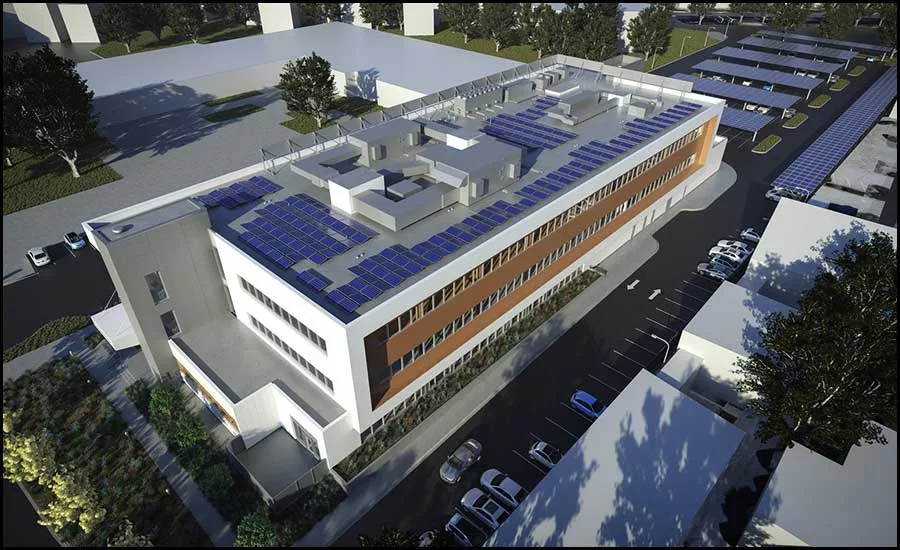
Exciting work is being done in California through ratepayer-funded research projects focused on developing low-cost, rapidly deployable building-enclosure retrofits for multifamily housing.
It’s time to run, not walk, on our pathway to decarbonizing existing buildings. There is always a lot of attention given to new, state-of-the-art, net-zero-energy buildings. Don’t get me wrong, I love working on those, too, and have spent the better part of the last 18 years working primarily on net-zero-energy buildings. However, the urgency of our climate crisis won’t be met by building new buildings, even if they are net zero or built with low-embodied-carbon materials.
No matter how good a new building is, it still requires enormous amounts of energy to construct — whether in the extraction of raw materials, the processing of those materials into building components, the potentially extensive site grading, or even the emissions of single-occupant contractor trucks often commuting hours to get to job sites. We cannot fill a hole by digging, no matter how small the shovel. I’ve been lucky enough to work with and be inspired by folks like Larry Strain, Kate Simonen, Wes Sullens, and many others in the material reuse world, who have helped me refocus my attention on what to do with all of our existing buildings. As a result of many discussions and struggling through my own building retrofits with little precedent, I’ve established what I see as the trifecta of building decarbonization.
Our Existing Buildings Need Deep Energy Efficiency Retrofits
It doesn’t make a lot of sense to electrify an inefficient building without improving its performance first. Besides adding unnecessary strain to the electrical grid, poor-performing buildings tend to have spikey load profiles, little to no thermal resilience, and likely insufficient switchgear capacity to take on the additional electrical load from a larger-than-would-otherwise-be-necessary new heat pump. By focusing on efficiency first, we increase the likelihood that a building can be effectively electrified without needing major infrastructure upgrades.
In addition, through enhanced building envelope upgrades — such as increased insulation, replacement window systems with low-emissivity, insulated glass units, and air sealing — we can often reduce peak loads enough to make electrification quite cost-effective with far shorter payback periods. This is particularly important in colder climates, where heat pumps must work harder on cold nights. By improving a building’s thermal performance first, you can spare the owner from having to buy too much of a good thing.
High-Efficiency Heat Pumps and On-Site Renewables
The amazing increase in heat pump efficiency over the last decade has allowed heat pumps to become the catalyst to effective electrification. We have the technology to electrify nearly every building type across the country today. In the California market, if I use a heat pump with a coefficient of performance (COP) greater than 2.7 averaged across the year, I can beat natural gas’s operating costs with an all-electric design hands down.
A COP of 2.7 isn’t even considered a high-end efficient heat pump. In fact, using heat pumps with COPs between 2.5 and 3.5, we can beat natural gas in operational costs in nearly every state in the U.S. When we combine heat pumps with on-site solar panels and batteries, the math works out even better. Goodbye natural gas disruptions from cold snaps. Goodbye power outages due to wildfires.
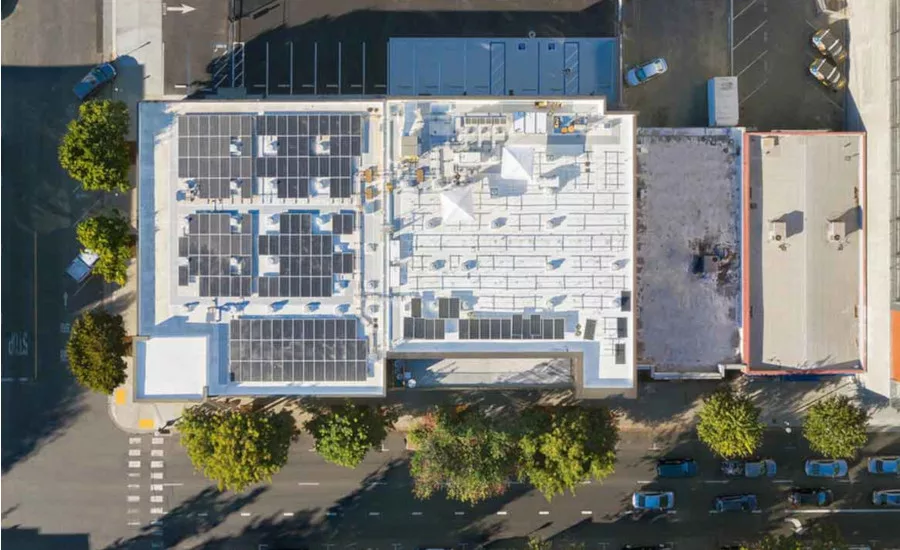
All-electric buildings with distributed resilient microgrids are cost-effective today and can keep your building humming along when others lose power. Instead of needing to build in resilience for both fossil fuels (natural gas, propane, fuel oil, etc.) and electricity to keep your building systems running, an efficient all-electric design only requires resilience for one energy supply.
Rapidly Moving Utility Grids to Renewable Energy with Enhanced Resiliency
In parallel with all-electric, net-zero building retrofits, we also need to transition each of our major electrical grids or independent system operators (ISOs) in the U.S. to renewable power. Not every building can be retrofitted to net-zero energy on site. Buildings in dense urban cores are often overshadowed by neighboring buildings, reducing the effectiveness of solar panels. Energy-intensive building types, such as hospitals and laboratories, often lack the site area needed for PV panels to offset all their annual energy use. It’s essential for our electrical grid to provide carbon-neutral power. We should still design these complex buildings that can’t be net-zero on-site to be all-electric with super-efficient building systems, as they will continue to have lower emissions as the grid goes green.
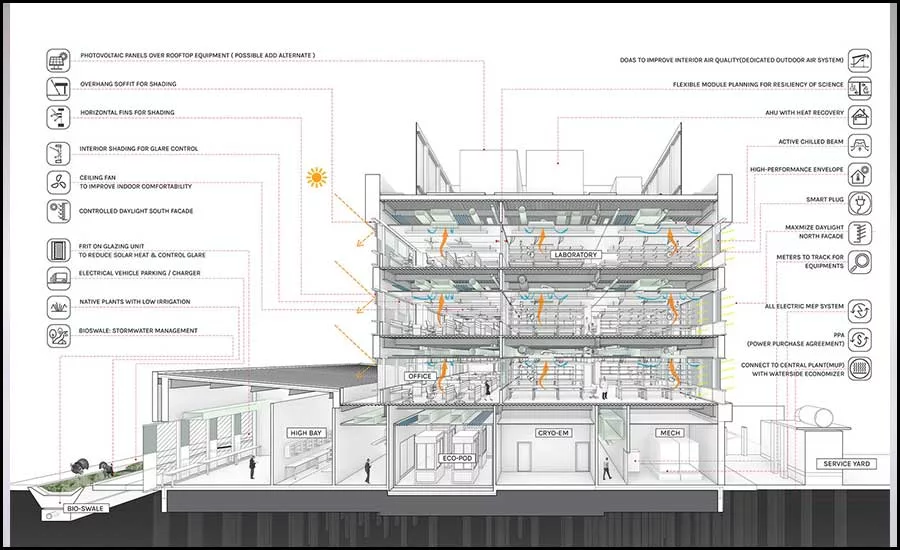
A low-carbon grid will also support healthier communities, especially for historically marginalized communities that are disproportionately located near high-emissions power plants and industries. These lower income and marginalized communities also deserve the benefits of healthy, safe, all-electric homes. Exciting work is being done in California through ratepayer-funded research projects focused on developing low-cost, rapidly deployable building-enclosure retrofits for multifamily housing.
These projects reduce residents’ utility costs along with the cost of all-electric retrofits, allowing more families to benefit and providing a model for equitable decarbonization.
SmithGroup is thrilled to be supporting these projects as well as developing the next generation of low-global warming potential (GWP) energy pods that will provide world-class efficiency and IAQ to these homes.
The need for more rapid decarbonization of the built environment could not be more pressing. The great news is that we have the technology, and we have the buildings. Now we just need to start running.
Looking for a reprint of this article?
From high-res PDFs to custom plaques, order your copy today!