Protect Facilities from the Next Grid Failure with This Alternative Fuel
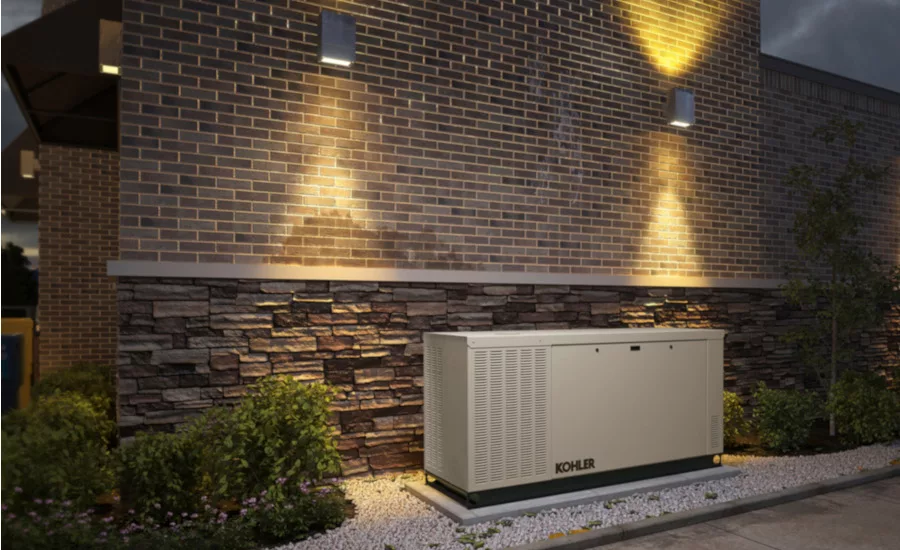
Propane backup generators can help businesses increase safety and resiliency and avoid economic losses.
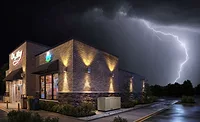
Whether planned or unplanned, loss of grid power can happen at any time — and can wreak havoc on commercial buildings that may be sensitive to power outages.
Unexpected outages have increased as the U.S. places growing electricity demands on a century-old grid. In fact, the U.S. endures more blackouts than any other developed nation. And, according to federal databases at the U.S. Department of Energy (DOE) and the North American Electric Reliability Corporation (NERC), the number of U.S. outages lasting more than an hour have increased steadily over the past decade. These increasingly common power interruptions can cost American businesses as much as $150 billion per year, according to data from the DOE, with weather-related disruptions accounting for the most per event.
Fortunately, propane backup generators can help businesses increase safety and resiliency and avoid economic losses. Additionally, these systems ultimately provide peace of mind, especially for commercial operations with refrigeration needs or other inventory-loss concerns that could be triggered if utility power is interrupted.
Commercial propane generators are typically installed as fully automated systems that respond quickly to provide power after an electric grid disruption, typically in 10 seconds or less, and their autonomous design requires little to no involvement for the building occupants to activate, maintain, or shut off power from the generators.
Superior resiliency
Many commercial buildings are required to provide backup power solutions to meet building codes (IFC and IBC) for life safety. In buildings with emergency power, building operators are required to provide on-site storage of fuel. Because of diesel’s lack of stability, propane emergency generators off a superior option. Propane is an independent and highly portable energy source, so it can be stored on-site and provide energy resiliency no matter where a building is located.
Reliable power that can be tailored to meet the needs of any building
Propane backup generators can be configured to service the most critical building loads, maintain full operation in the event of power failure, or help with peak-shaving and demand-response programs that provide additional revenue for building owners. They can power critical systems including smoke, fire, elevators, heating and cooling equipment, and health and safety equipment, to name a few. Additionally, propane standby generators are available in a wide variety of capacities, so there’s a model that can meet the needs of any size commercial property including ports, hospitals, offices, fire and police departments, and restaurants. Commercial units can range from 5- to 400-kW capacities and are available in single- and three-phase configurations and voltages of 120, 240, and 480 V.
Sustainable operation
For many commercial building projects, next in line to achieving resiliency is achieving sustainability. As building owners and operators look to become more environmentally friendly and meet state and federal emissions regulations, they’ll be seeking clean energy sources to power their buildings, too.
Propane offers a clean, low-emissions energy solution that meets or exceeds U.S. Environmental Protection Agency (EPA) requirements for commercial generators. Propane burns cleaner than its diesel counterparts, reducing emissions such as nitrous oxides (NOx), sulfur oxides (SOx), particulate matter, and carbon dioxide. Most notably, data from the DOE shows 16% greater carbon dioxide emissions per unit of energy for diesel compared with propane. Propane can be stored on-site, either above or below ground, without risk of land or groundwater contamination. Diesel, on the other hand, has the potential for contamination from spills and leaks that are retained in the soil. For more information, visit www.propane.com/generators.
Looking for a reprint of this article?
From high-res PDFs to custom plaques, order your copy today!