Eliminating Boiler Feed Failures with New Condition Monitoring & Diagnostic Technologies
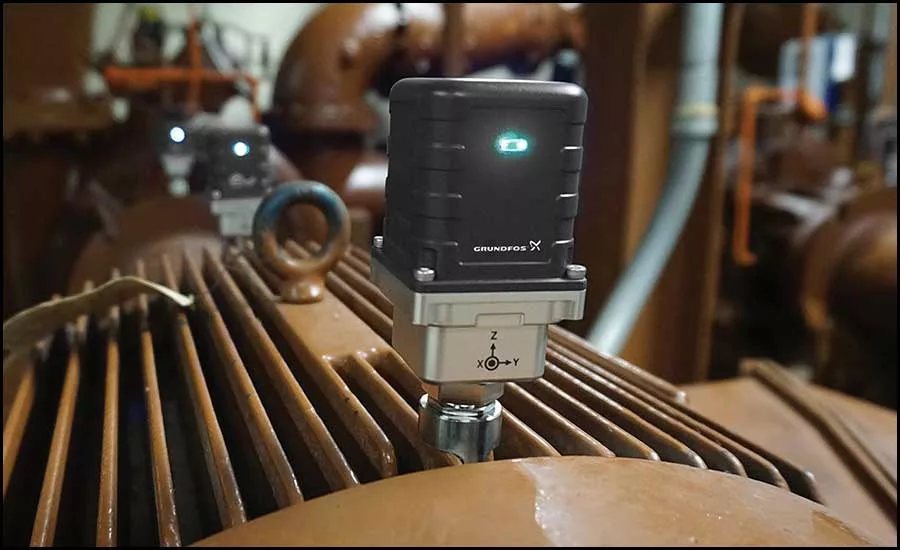
Grundfos Machine Health utilizes advanced sensing instrumentation and artificial intelligence (AI)-driven diagnostics to continuously and accurately diagnose machine issues as they arise.
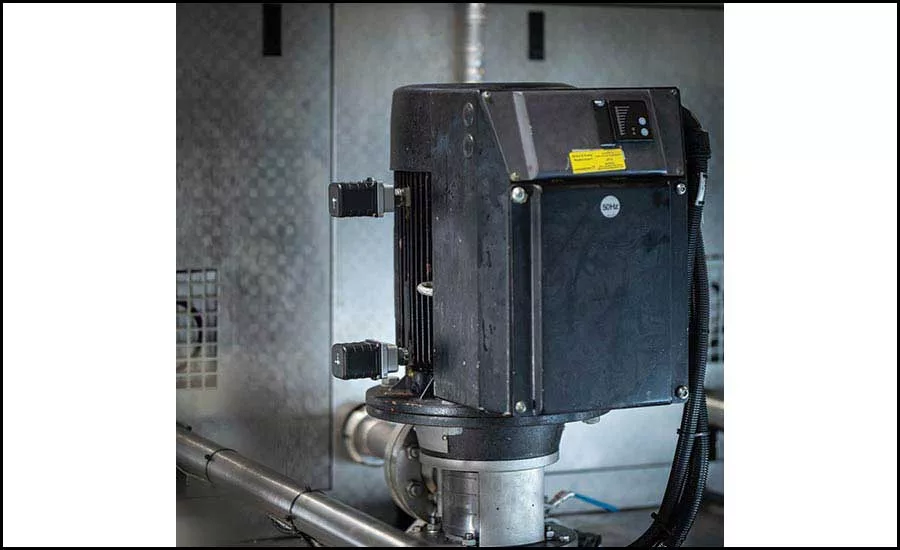
Grundfos Machine Health (GMH) sensors, which comprise one component of the GMH continuous diagnostics system, are installed on a Grundfos CR model pump at Grundfos’ main factory in Bjerringbro, Denmark.
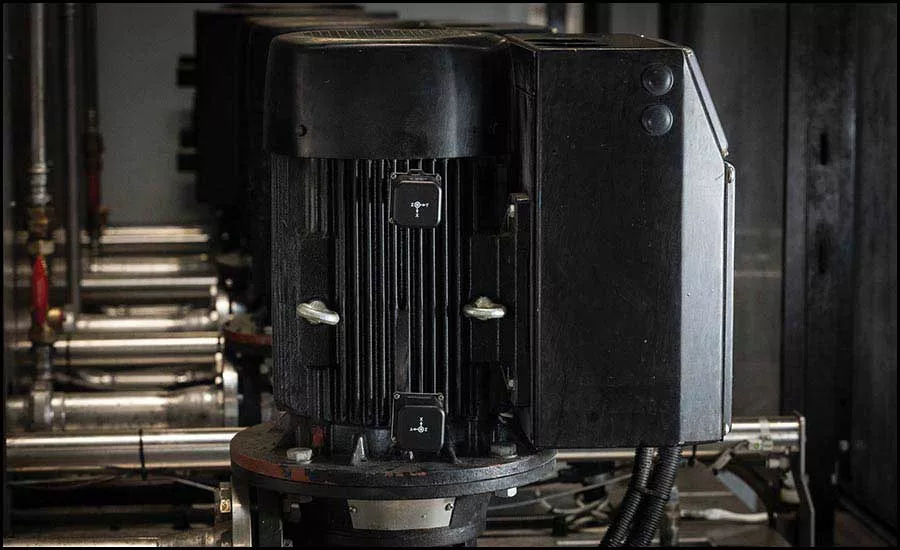
Shown here is a Grundfos CR model pump with the Grundfos Machine Health continuous diagnostics solution installed.
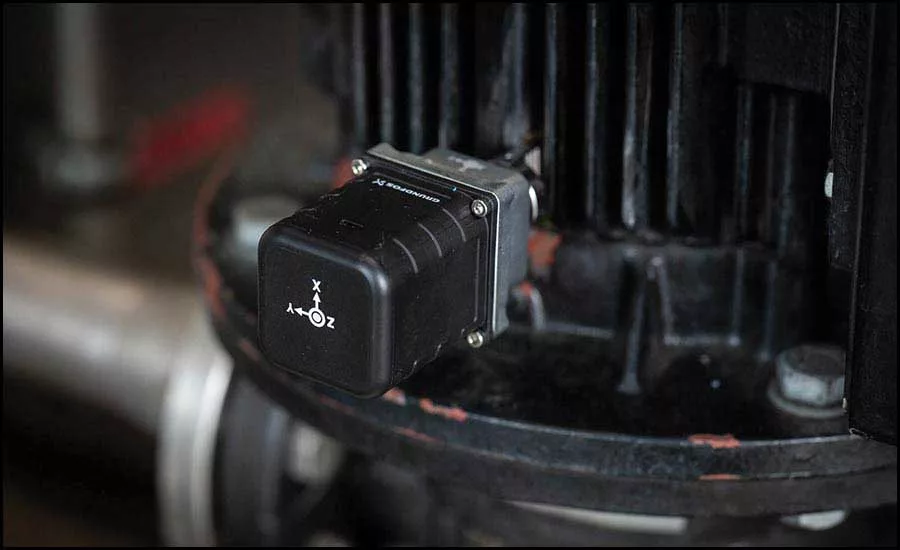
Grundfos Machine Health sensors collect tri-axial vibration data as well as temperature and magnetic data, from a motor driving a Grundfos CR model pump.
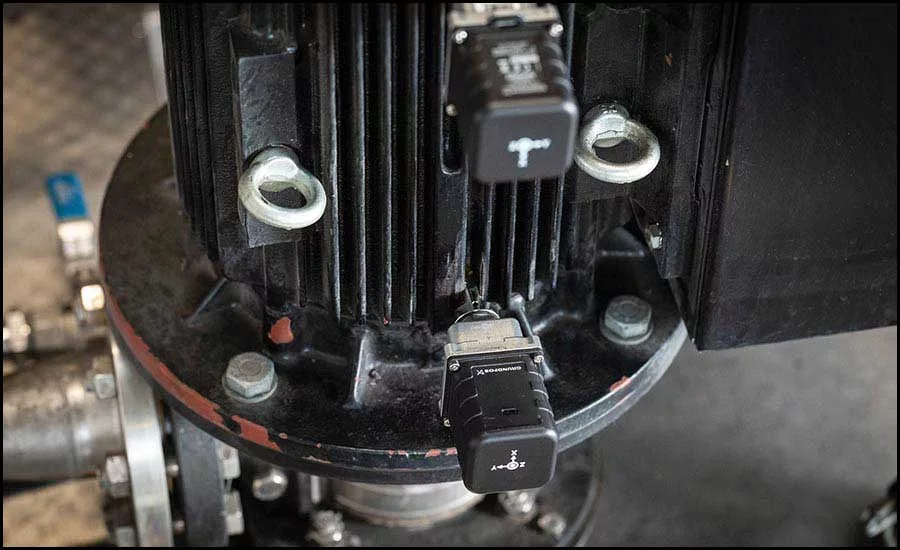
On the instrumentation side, Grundfos Machine Health sensors collect a broad range of vibration frequencies as well as temperature and magnetic flux data.
Imagine if you could eliminate the unexpected failure of your boiler feed water (BFW) pumps. How would that impact your operation?
For more than 10 years, BFW pumps have comprised one of the most prevalent causes of unplanned downtime among the facilities that rely on them. As an active participant in the boiler industry, you most likely know that pain all too well.
BFW pump failures are not only common but critical, dangerous, disruptive, and expensive. In learning this insight, it occurred to me that in my own work consulting with facility leaders regarding their asset reliability challenges, those facility leaders almost always mention BFW pumps as primary candidates for reliability improvement.
So, why is this problem so persistent, and what can facilities do about it?
A BFW pump study presented in 2013 at the International Pump Users Symposium by Amr Mohamed Gad and Dr. Nicholas White of RasGas demonstrates part of the challenge. The study tracked performance loss in a BFW pump that ultimately seized. After 16 months of operation, the pump had a high-temperature alarm on the thrust bearing. That thrust bearing was replaced twice during the following six months with no root cause identified. The pump continued degrading in performance and efficiency until the 25th month of operation, when, again, the thrust bearing activated a high-temperature alarm. The pump was found seized upon inspection with substantial cavitation damage and casing erosion.
In this case, until the machine failed, the facility was unable to identify any damage to the casing, inner walls, and rotor parts. Meanwhile, they spent resources replacing the thrust bearing multiple times, which only temporarily resolved a symptom of the deeper root cause: incorrect material specification for the pump casing. The study found that inadequate monitoring and monitoring instrumentation were contributing factors leading to the pump failure. The temperature threshold alarms did not help to identify the root cause, and the final threshold alarm did not prevent seizure of the pump.
The Grundfos digital solutions team has the primary goal of understanding end users’ most impactful machine issues and employing advanced technology to help address those issues. In line with the aforementioned study, part of the challenge in addressing critical machine failures is identifying elusive root causes at an early stage (adequate monitoring). Many facilities managers already boast robust maintenance schedules that effectively prevent most unexpected failures. However, scheduled maintenance tasks often address only the symptoms of an underlying issue. As a result, facilities overspend on maintenance resources to find they still experience unexpected failures and costly inefficiencies.
Today, new technologies enable facilities to identify developing machine issues much earlier and with greater accuracy. Grundfos digital is working to help deploy such technologies with its end users. This includes Grundfos Machine Health (GMH), a machine-health system that utilizes advanced sensing instrumentation and artificial intelligence (AI)-driven diagnostics to continuously and accurately diagnose machine issues as they arise.
On the instrumentation side, GMH sensors collect a broad range of vibration frequencies as well as temperature and magnetic flux data. The GMH diagnostic engine is rooted in vibration analysis, which is well regarded as one of the most effective means of identifying precise mechanical issues. By implementing an advanced continuous diagnostics system rooted in vibration analysis, rather than relying on threshold alarms, facilities can identify the root causes of developing issues with accuracy, providing them with an opportunity to take action early and avoid serious damage and failures. A continuous diagnostics system will also validate repairs and installations, confirming the root cause is resolved.
In our experience, the results are immediate and transformative. A monitoring system that accurately diagnoses root causes at an early stage will virtually eliminate unexpected failures and substantially reduce repair expenses. All downtime becomes planned, and, in turn, we see an impact not only on uptime and maintenance costs but also on safety, regulatory risk, supply chains, and cross-functional collaboration.
If your team continues to struggle with BFW pump issues, consider reevaluating your condition monitoring strategy and the availability of adequate monitoring and diagnostic technologies. A continuous diagnostics system could be well worth the investment.
Looking for a reprint of this article?
From high-res PDFs to custom plaques, order your copy today!