20 to Watch: Women in HVAC - Samantha Nakamura
Senior Mechanical Engineer, WSP USA
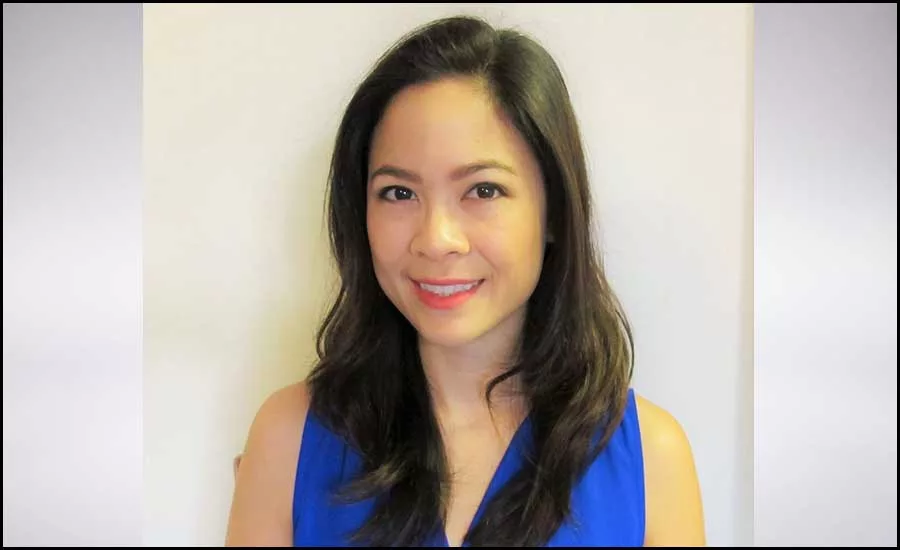
Name:Samantha Nakamura
Title: Senior Mechanical Engineer, WSP USA
Age: 30
Educational Experience: Bachelor’s of science in mechanical engineering (BSME), University of Notre Dame
Professional Credentials/Accreditations:LEED Accredited Professional Building Design and Construction (LEED AP BD+C) and a professional engineer (P.E.) in Hawaii and California
Organizational Affiliations/Achievements/Awards: ASHRAE Hawaii Chapter President 2020-2021
What caused you to/when did you fall in love with engineering?
I was originally drawn to engineering because my dad was an engineer in the U.S. Navy, and he encouraged me to consider it as a career in which I could cultivate my math and science skills and apply them in a way that helps people. It is common for many engineers to be encouraged by a family member and have an interest in science, technology, engineering, and mathematics (STEM) when they’re young, so nothing too special in my case. It wasn’t until I took an elective course in college in biomaterials that I really fell in love with engineering, as it opened my eyes to how there are mechanics within the human body at the molecular level that are some of the purest, most ingenious designs we could ever imagine. I began to appreciate the elegance of the design of biological processes, and it was very inspiring. Much of our man-made inventions draw from designs found in nature, and I love when I learn about new engineering innovations that mimic systems from the natural world.
What has been the most rewarding aspect of working in the skilled trades?
There is something special about working with a team to essentially create a building out of thin air. Architects, engineers, and contractors all come together with their unique skills and a common goal; we put things on paper, and the final product is a lasting part of a community. We don’t produce a product that is going to be discarded in two years for the latest model; instead, we shape the landscape of our communities. Buildings that we erect together, if done right, will be around for decades to come. We create places where people work, live, learn, spend leisure time, and more. It is extremely rewarding to know that future generations will enjoy the projects on which I have worked. Because of this, I see a great importance in designing systems for the future and ensuring that our buildings are sustainable and resilient.
Describe the proudest moment in your career.
When I found out I passed the P.E. exam, it was a pretty stellar moment. When I look at old mechanical drawings for buildings of projects I am working on, it’s always a man’s name on the stamp. I was very proud to be able to stamp my name on mechanical plans, so that, years from now, when younger generations of female engineers might be looking through them, they’ll see a woman’s name and hopefully by then it won’t be uncommon. Another close second was when I traveled to Rwanda with a group of WSP engineers to build a bridge for Bridges to Prosperity. It was a once-in-a-lifetime adventure and probably the biggest service project I’ll ever undertake (but hopefully more are on my horizon). This nonprofit organization partners with industry professionals to send engineers to remote destinations that might lack safe and accessible infrastructure to provide a community with a new footbridge. The bridges help connect community members to services like health care and schools and help people reach markets to sell their goods. I had never done anything like this before, and when our team completed the bridge construction and watched 100 young children running across in celebration, it was the most heartwarming experience I’ve ever had as an engineer.
What challenges do women face in this profession? Can you give a personal example?Why aren’t there more women in engineering? How can we increase the number of women in engineering?
As a young consulting engineer, I have had to assert myself with clients and contractors as a person who knew what I was talking about, and I just figured it was because I was young. Now, having been in my role for more than eight years, I still face the same challenge every now and then — some statements I make are not taken seriously until a male colleague repeats it or vouches for me. There are still so many people who will not trust women engineers as experts in their own field. I like to believe it is getting better, but as more women are able to rise to positions of leadership in engineering, more people will change their biases. Women in management, presidential, or professor roles can be inspirations for future generations of women engineers and can serve as mentors to encourage them that it’s a woman’s career too. It is great to have male colleagues advocating for women but it doesn’t quite have the same effect.
What does your day-to-day job entail?
As a mechanical engineer for a design consultant, I typically manage medium- to small-size projects from developing proposals to HVAC design to construction administration. I perform HVAC calculations, lay out systems in CAD and Revit, and work with vendors to get equipment selections. I also answer requests for information (RFIs) and submittals during construction phase and will visit the project site periodically. I spend a good amount of time meeting with clients to solve design challenges and answer questions about the mechanical systems for each project I’m working on. For LEED projects, I will occasionally do energy modeling and advise clients on LEED requirements to achieve desired levels of certification.
What drives/motivates you every day?
I am often inspired by my co-workers at WSP to keep learning and doing better. We are always focused on making sure our designs make the most sense for the owner while being as environmentally conscious as possible. With new technology developments in the industry happening all the time, my ASHRAE Hawaii community also supports my endeavor to continually grow in my knowledge of the latest trends and discoveries in HVAC. When I think about future generations having to live on this planet, it motivates me to make sure I did everything I can to deliver a sustainable project. I also emphasize this to the students in the engineering class I teach.
How has the COVID-19 pandemic impacted you personally and professionally?
I am very fortunate that I am still able to continue delivering quality projects and service my clients from home during the pandemic. Luckily, most of them are also working from home, and we are all dealing with the same difficulties that come with that. I am very fortunate to not have to be dealing with homeschooling kids or anything like that right now, and I have a lot of compassion for people who are working from home and helping their children stay on task with school. The pandemic began as I was halfway through teaching an introduction to HVAC engineering course at the University of Hawaii with my colleague Charles Chaloeicheep, and it was hard to make the switch from in-person classes to Google Meet classes. Engaging students virtually is much more difficult, but we managed to end the semester on a pretty good note. Many of our students were able to eventually get their engineer in training (EIT) certifications and enter the HVAC industry here in Hawaii after graduation.
What remains on your engineering bucket list — what do you aspire to do that you haven’t accomplished yet?
I would like to see our governments investing in more sustainable building projects, so I would like to work on a net-zero state government project. This is less of a personal goal for my own experience, but more to see our local governments placing a bigger emphasis on building for the future and setting an example for the rest of the community, not just placing Band-Aids on buildings that are chock full of old technology that drain energy and waste resources.
For access to more podcast episodes, click here.
What’s one thing no one knows about you?
I like to spend the first 15-20 minutes of my day meditating. I’ve been doing it every day for almost the past two years. It helps me to focus my mind before the beginning of the day and to let go of whatever happened the day before. I think it is a valuable practice that more people might want to consider exploring, if they haven’t. It helps me in my work, to adapt to changing situations with more ease and less stress, and to deal with difficult people or challenging problems. Meditation practice helps me to see things from a different perspective, which can help with problem-solving. When I can quiet my mind, sometimes answers bubble up to the surface. Engineering can be a very stressful job at times, and it is important to take time for myself to de-stress and clear the clutter.
List any mentors who’ve helped you succeed and describe exactly how they’ve shaped your success.
I would probably consider my first mentor in the field of HVAC to be my uncle, Gary Niver, who worked in the industry for decades and helped me to get my first two internships. It was not something I envisioned as being a “dream career” when I was a college student, but when I learned more about it as an intern, I realized it is a wonderful way to make a living, and it can be very rewarding. Those internships helped me land my first job out of school, which was extremely valuable. What the industry needs is people who introduce young engineers in college to HVAC career opportunities, because while they may not have the glamorous allure of the Silicon Valley tech startups or big-name aviation or automotive manufacturers, the community is vast, and the opportunities are endless. I also think of my manager at WSP, Kevin Luoma, as someone who has helped me to continuously grow as an engineer and has encouraged me to pursue all the certifications and licenses that I obtained over the years.
What advice do you have for prospective female engineers considering entering the field?
TBuilding strong relationships is No. 1. For instance, find a support group of other women (and men) studying engineering who are experiencing the same challenges. These individuals can help you persevere on days when it seems easier to give up. Engineering is all about collaboration, and there’s no rule that says we must go it alone. I had a great group of engineering friends in college who helped me to push myself and pick myself back up, and it was invaluable. We are all still close friends to this day. Additionally, while it is crucial to be able to advocate for yourself to advance your career, the current reality of the world is that it can be hard to do that as a woman in a STEM field. The value of finding people who will help to advocate for you is immeasurable. Surround yourself with people who also believe in you, as they will be important assets on days when it’s hard for you to believe in yourself. Sometimes, it’s family or friends, and, other times, it will be your co-workers or colleagues from professional organizations.
Looking for a reprint of this article?
From high-res PDFs to custom plaques, order your copy today!