20 to Watch: Women in HVAC - Stephanie Drenten Ferro
Project Manager, Building Optimization Practice, Heapy
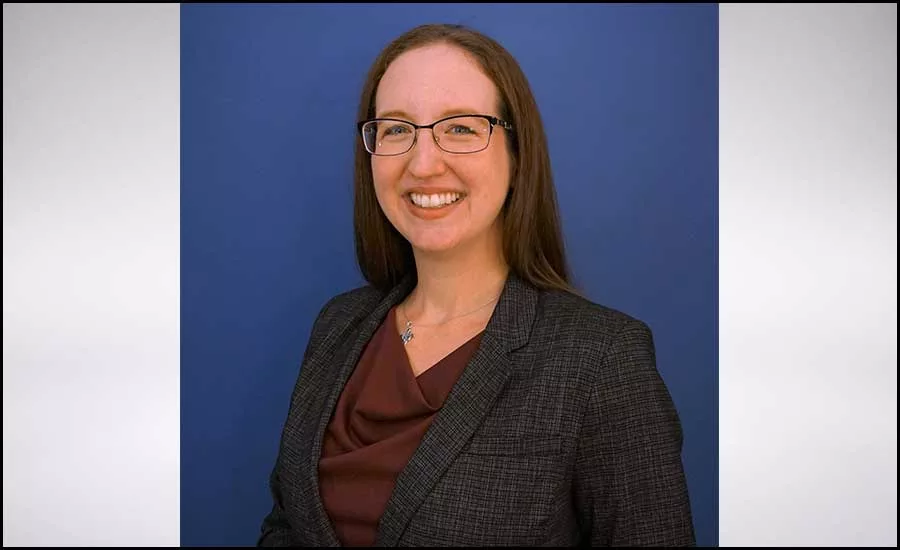
Name:Stephanie Drenten Ferro
Title: Project Manager, Building Optimization Practice, Heapy
Age: 31
Educational Experience: Bachelor’s degree in mechanical engineering, Rose-Hulman Institute of Technology; MPhil engineering for sustainable development, University of Cambridge
Professional Credentials/Accreditations:Certified Energy Manager (CEM), Association of Energy Engineers (AEE); Commissioning Technician (CxT), AABC Certification Group (ACG); and an Engineer In Training (EIT)
Organizational Affiliations/Achievements/Awards: Board chair for the Cleveland 2030 District
What caused you to/when did you fall in love with engineering?
Engineering has always been a part of my life, mainly thanks to my dad. Early on, he picked up on my desire to understand how the world worked, and, together, we connected my passions to his passions. The pivotal moment for knowing I would be an engineer occurred during a family vacation to Florida between fifth and sixth grade, when we had the opportunity to visit Kennedy Space Center. While there, my dad encouraged me to talk with an aerospace engineer about what he does. I vividly remember walking away from this conversation thinking, “Wow, I want to do that.”
What has been the most rewarding aspect of working in the skilled trades?
Working in the skilled trades allows me to connect with so many different types of people and be a part of critical projects that improve lives. I love working with clients, taking the time to understand their true needs, developing, and delivering a project that addresses those needs. I work mainly with energy efficiency and sustainability, so one of the biggest rewards is finding ways to improve building operations and knowing the financial savings you’ve helped provide will support the client’s mission.
Describe the proudest moment in your career.
The proudest moment so far in my career must be completing a massive energy audit project for the six Ohio Veterans Affairs (VA) campuses. This project asked our team to audit 20 categories of energy-consuming systems throughout all buildings on all six campuses in approximately six months. To do this, the team had to survey 5.5 million square feet of space and then take all our findings and translate them into a useable plan for the VA campuses to implement. Leading this team to a great success while staying on time, maintaining budgets, and exceeding the client’s expectations was an awesome experience.
What challenges do women face in this profession? Can you give a personal example?Why aren’t there more women in engineering? How can we increase the number of women in engineering?
I would say the greatest challenge women face in engineering is doubt, both from colleagues and themselves. This is something I have faced from an early age with a math teacher telling me he doubted I would become an engineer to colleagues telling me they doubted I could handle myself appropriately in the field. Hearing this doubt from those around you builds up your own internal “imposter syndrome,” or self-doubt, around the question: Do I really belong in this profession or at this job? I know many women who started their careers in engineering but never found the right support system to remove this self-doubt and have since left the field. If we all acted more as allies and dedicated our efforts to the success of our colleagues, I believe this could truly help increase the number of women in engineering.
What does your day-to-day job entail?
Every day is different, which is one thing I love. Some days, I am in the field working with my commissioning team to verify proper building construction; other days, I am meeting with clients working to understand how my team can solve what keeps them up at night. Finally, other days are spent in the office helping my colleagues further develop ongoing projects. It is a fantastic feeling to know you can positively impact clients representing schools and universities, factories, offices, hospitals — really every walk of life. Ultimately, as a project manager, my work boils down to supporting my colleagues through development and pushing projects forward, supporting my clients through identifying their needs and completing projects focused on addressing those needs, and supporting my community by helping to drive a sustainable and energy-efficient future through the projects we accomplish.
What drives/motivates you every day?
In undergrad, I completed a leadership development training program hosted by my university. The biggest item I took away from this training was to understand your personal “why” and figure out how to apply it to your daily work. I found my “why” to be positively driving sustainable change within my community and seeing that impact take shape. I know that sounds lofty, but this translates directly to truly understanding the needs of my clients and figuring out ways to help them. For example, I have dealt with many nonprofit clients who want to reduce energy consumption or greenhouse gas emissions but did not feel they had the budget to make this change. Being able to connect them to programs and incentives while custom-tailoring my scope of work to meet their needs means I can provide them this sustainable change. Taking their project from concept to installation and verification is the reward I need to see to stay motivated.
How has the COVID-19 pandemic impacted you personally and professionally?
The COVID-19 pandemic has had so many impacts. First, it has meant that I have spent the majority of 2020 working solely from home; therefore, my main co-worker has become my husband. Luckily, this has been a seamless transition, as my husband and I have built routines in support of one another. Secondly, the COVID-19 pandemic has changed many of the projects I work on, from schedule pauses and escalations, project cancelations, or new COVID-focused work, I have experienced the full gamut. COVID-19 has really pushed my team to think outside the box for how to continue to provide outstanding support to our clients and keep up with their changing needs.
What remains on your engineering bucket list — what do you aspire to do that you haven’t accomplished yet?
The biggest item on my engineering bucket list is to become a professional engineer (P.E.). I have completed the first step to this by passing the fundamentals of engineering (FE) exam and becoming an engineer in training (EIT). I also have all of the training and development requirements needed by my home state to become a P.E.; however, I have let other development (like going back to school for a master’s degree) take precedence and have delayed my studying for the final examination needed to become fully licensed. Now, I find it hard to set aside my work and professional life to make this a full priority.
For access to more podcast episodes, click here.
What’s one thing no one knows about you?
One thing I don’t share very often is that I love photography. I keep an Instagram account focused on artistic captures of what I am experiencing in my daily life. I also like using my DSLR camera to capture pictures and am always looking for the next great print to frame.
List any mentors who’ve helped you succeed and describe exactly how they’ve shaped your success.
I’ve been blessed with many mentors who have helped me throughout my career, but the mentors who stand out the most are three undergraduate professors from Rose-Hulman Institute of Technology who each saw a passion within me and helped to encourage it to grow. First is Dr. Don Richards, who was a key professor for me. He taught many of the courses that directly led to a career path that focused on building optimization. He also connected me to an internship and on-campus opportunities that were foundational in my career development. We first met each other through a program called United Campus Ministries, and, since then, he has supported me professionally, academically, and religiously. Richards was also the professor I turned to for a recommendation and support when pursuing an MPhil at the University of Cambridge. He was instrumental in this process. Second is Dr. Patricia Brackin. Academically, what stands out about Brackin was her insistence that I take a lead or a management roll on my senior design team, where I was the only female. She pushed me to ensure my voice was being heard and helped me have my first “professional leadership” experience. A few years later, Brackin gave me the opportunity to grow further by returning to campus as a guest lecturer for a few of her courses. Third is Dr. Julia Williams, who helped me to hone my technical writing skills and understand that engineering can be more than design. I owe her two things: One, the idea that my best skill is to be a technical translator of complicated engineering, and, two, my participation in the Rose-Hulman leadership development course, which put me on a track to understand how to apply every skill I bring to the table, not just the technical ones.
What advice do you have for prospective female engineers considering entering the field?
The best advice I can give to prospective female engineers is to fight for what you want and don’t doubt yourself. Be vocal about what support you need to be a success and work with mentors or a support system to help erase that imposter syndrome that sneaks in. I’ve found once I have a trusted relationship built with colleagues, sharing with them the challenges I’ve faced and the self-doubt I experience, a common ground can be found that helps us both to succeed.
Looking for a reprint of this article?
From high-res PDFs to custom plaques, order your copy today!