20 to Watch: Women in HVAC - Abbe Bjorklund
Director of Engineering and Utilities, Dartmouth College
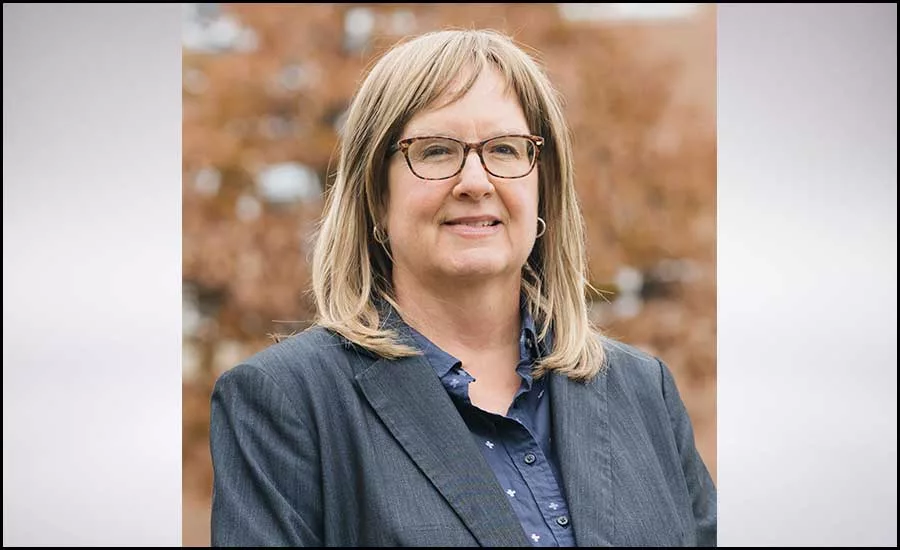
Name: Abbe Bjorklund
Title: Director of engineering and utilities, Dartmouth College
Educational Experience: Bachelor’s degree in mechanical engineering from the University of Massachusetts, Amherst; master’s degrees in mechanical engineering and architecture studies, Massachusetts Institute of Technology
Professional Credentials/Accreditations: Registered professional mechanical engineer in multiple states; Certified Energy Manager (CEM), Association of Energy Engineers (AEE); Commissioning Process Management Professional, ASHRAE; and LEED Accredited Professional (LEED AP)
Organizational Affiliations/Achievements/Awards: Member of ASHRAE, International District Energy Association (IDEA), and AEE. Papers published and presented at multiple industry conferences and professional meetings, including for ASHRAE, IDEA, AEE, the American Public Power Association (APPA), United States Green Building Council (USGBC), Electric Power Research Institute (EPRI), and several others
What caused you to/when did you fall in love with engineering?
I was motivated to study engineering when I graduated from high school because I wanted to have a career where I could do work that would contribute to solving the energy crisis and global warming, focusing on the built environment. As I started my engineering education and career, I quickly found I really enjoyed solving real-world problems and designing and implementing projects that would save energy and reduce greenhouse gases.
What has been the most rewarding aspect of working in the skilled trades?
Identifying and solving problems and identifying ways to make systems, in particular building and utility systems, perform better is extremely rewarding.
Describe the proudest moment in your career.
That’s a hard one. In general, it has been when my ideas and work have resulted in the successful implementation of a project, such as improving the energy efficiency and performance of a building or utility system. I have been fortunate to have had the opportunity to work on several such projects throughout my career.
What challenges do women face in this profession? Can you give a personal example?Why aren’t there more women in engineering? How can we increase the number of women in engineering?
Women in engineering face the same issues that women in any male-dominated field or profession face — the perception that because they are women they are less qualified, capable, or credible. I have been fortunate to have had several male and female teachers, bosses, colleagues, and mentors throughout my education and career who have encouraged, supported, and given me the opportunity to demonstrate and prove my capabilities. The barriers keeping women from engineering begin when they are young girls growing up. They need to be exposed to and encouraged to learn science, technology, engineering, and math (STEM) subjects. That is when they find out that they enjoy and are good at these subjects. With encouragement from their families and teachers, they will continue into STEM majors and careers. On average, only about 20% of engineering students are women, but at Dartmouth College, where I work, more than 50% of engineering students are women. Dartmouth is different because its liberal arts curriculum encourages and allows students to take courses, including engineering courses, across curriculums and majors; therefore, students who are not planning to major in engineering are able to enroll in engineering courses, find out that they enjoy and are good at it, and eventually end up majoring in engineering. This is different from most colleges and universities, where engineering courses are typically only open to declared engineering majors.
What does your day-to-day job entail?
As Dartmouth College’s director of engineering and utilities, my staff and I are primarily responsible for overseeing the design of the building mechanical, electrical, and plumbing (MEP) and campus utility systems on our campus; operations and maintenance of our central heating plant and associated heating distribution systems; supporting our operations team in operating, maintaining, and troubleshooting our campus MEP systems; energy commodity procurement and energy efficiency program management for the campus; and strategic planning and budgeting for campus MEP and utility system improvements and renewal. My days are filled with lots of meetings with my staff, colleagues, and consultants to plan and review progress on projects and initiatives and with the campus administration to convince them to approve funding of these initiatives.
What drives/motivates you every day?
Feeling that my work is important and valued continues to drive me.
How has the COVID-19 pandemic impacted you personally and professionally?
I have had to alter my personal and professional life — distancing; wearing masks; hand-washing and sanitizing; minimizing contact with others; working from home as much as possible; remote meetings; and not being able to go to restaurants, concerts, travel, get together with some of my friends and family, etc. Our engineering group has been an active part of our COVID-19 planning and operations team, first in shutting down our campus MEP systems last spring to save energy when most students, professors, and staff were sent home and then starting last summer, and into the fall and winter, gradually ramping up spaces on campus to allow partial occupancy. A key responsibility for my team has been reviewing the ventilation systems and altering them, as needed, to provide appropriate air changes, filtration, and outdoor air.
What remains on your engineering bucket list — what do you aspire to do that you haven’t accomplished yet?
I was part of the Sustainability Task Force that developed sustainability goals for Dartmouth’s campus, which were adopted by the college’s president in 2017. Those goals include reducing campus greenhouse gases by 50% by 2025, 80% by 2050, utilizing 50% renewable energy by 2025, and reaching 100% renewable energy by 2050. Over the past five years that I have been working at Dartmouth College, a lot of my work has been focused on developing and implementing plans to meet these goals. I might not be around in 2050, but I hope to be instrumental in setting the course to achieve these goals.
For access to more podcast episodes, click here.
What’s one thing no one knows about you?
I have gone skydiving (jumped out of airplanes)!
List any mentors who’ve helped you succeed and describe exactly how they’ve shaped your success.
I’ve been fortunate to have several mentors throughout my life, but I will mention two here. My mother, Doris Bjorklund, studied architecture and planning in college in the 1940s and worked as an architectural designer when it was a male-dominated field. She encouraged me throughout my life to pursue my dreams. Rebecca Ellis was one of the founders of Sebesta Blomberg, an engineering consulting firm that I worked for prior to coming to work at Dartmouth. Rebecca mentored me in the commissioning process for building MEP systems, from design through operation. Through her example, she also demonstrated the importance of team building, training, and management. Rebecca also happens to be a long-term contributor to this magazine.
What advice do you have for prospective female engineers considering entering the field?
Follow your passion!
Looking for a reprint of this article?
From high-res PDFs to custom plaques, order your copy today!