The Art and Science of Control Valve Selection
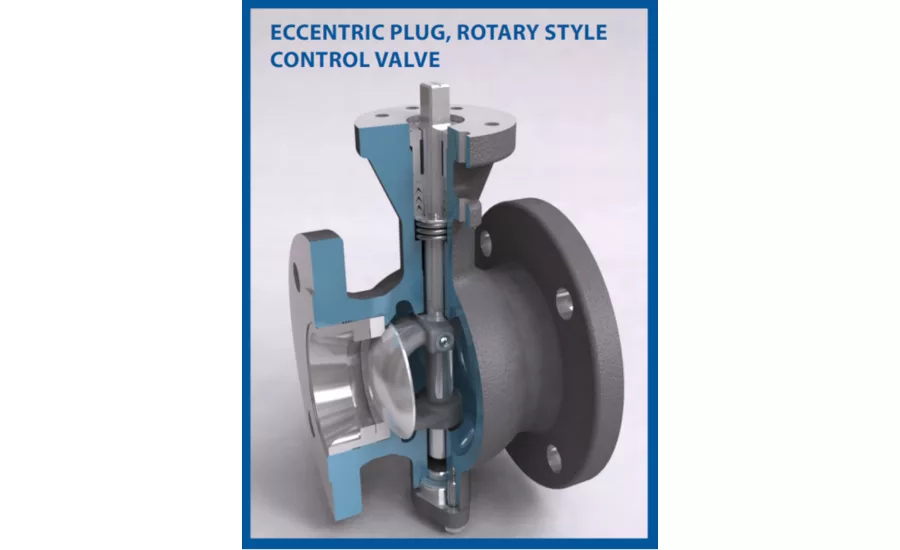
With the plug to shaft connection two axis offsets, the plug pulls away from the seating surface rather than wiping across it. The plug’s motion leaves a significant portion of the plug in the flow path, allowing good valve authority throughout its range.
If you suddenly have the need for a two-way, flow control valve — from a valve-selection standpoint — what kind of questions do you ask yourself?
Many, perhaps, don’t ask any questions and may make rash decisions for what was quick, easy, and simple to source. The fact is, if performance, reliability, and product longevity are desired outcomes, then asking and answering a series of questions can be relevant and important.
- What Is the Fluid? This can determine materials of construction for erosive or corrosiveness.
- What is the temperature of the fluid? This can also influence material selection and valve assembly construction choices.
- What are the inlet pressures and presumed pressure drops for each flowing condition? This can and should determine the control valve type.
- What is the inlet pipe size (diameter) and required flow rates? This can determine a relative valve range size that one should be focused on along with rangeability requirements for turn-down (maximum flow vs minimum controllable flow).
These are all important considerations to consider before focusing on the control valve selection. Others, no doubt, will include successes and failures previously used: the space/location of the valve to be fitted along with actuation and accessory requirements. To get started, once you have tabulated the answers to all your questions, you can begin to review the characteristics and best uses for all control valve types.
Control Valve Types
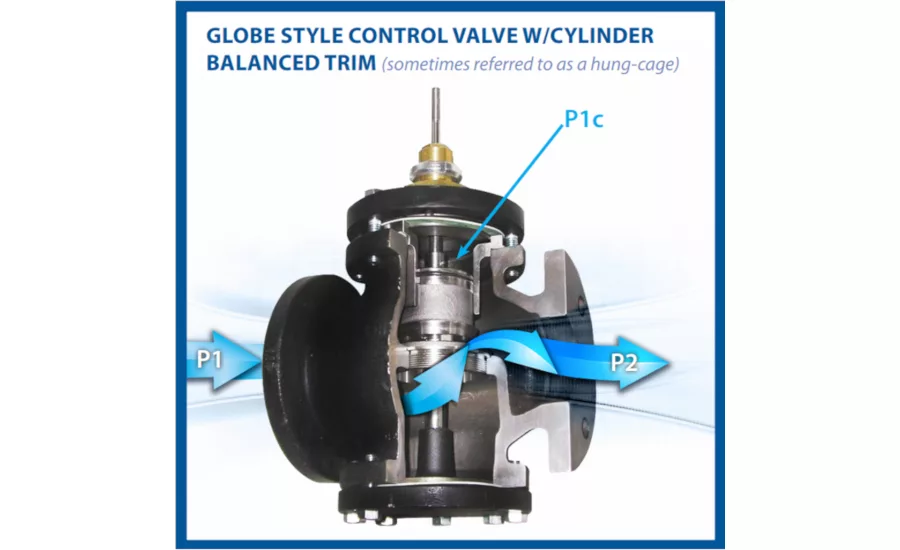
- Modulating, Sliding Stem, Globe Style Control Valve — Often considered the best all-around choice for all non-viscous fluids that are applied in a wide range of flowing differential pressure drops. All sizes: larger valves can be expensive.
- Eccentric Plug, Rotary Style Control Valve — Often considered the best all-around choice when it comes to ¼-turn options for all fluid types and slurries applied in a wide range of flowing differential pressure drops. It’s economical when compared to globe valves in larger sizes but will have higher aerodynamic noise than globe valves.
- ¼-Turn, V-Ported Concentric, Segmented Ball Valve — This is a good, low-cost choice that is best reserved for low-flowing differential pressures. It is often claimed to include high turn-down, making it not usable in most real applications. This option will have an inherently low valve authority.
- ¼-Turn, V-Ported Concentric, Full Ball Valve — This is a smaller version of the segmented-ball that typically is available in sizes up to 2 inches. It boasts the same characteristics as its cousin.
- ¼-Turn, Concentric, Full-Port, Ball Valve — This is often not a good choice as a control valve, though some may try to modulate with it. It’s typically only good for low flowing differential pressures and is best when used in continuously modulating applications between 25%-75% of stroke. It will have inherently low valve authority and offers very low cost — typically up to 2 inches.
- ¼-Turn, Butterfly Valve — This is often not a good choice as a control valve, though some may try to modulate with it. It’s typically only good for low flowing differential pressures and is best when used in continuously modulating applications between 25%-75% of stroke. It will have an inherently low valve authority and very low cost — typically 2 ½ inches and larger.
Control Valve Trim Styles
For the Rotary/¼-Turn Control Valve types, there are not many trim style choices of note to discuss that influence initial valve selection. However, for the Globe Style Control Valve, there are a few different trim styles to discuss for proper application selection.
- Single Seat, Unbalanced — This is often the lowest-cost choice for small- to medium-flowing differential pressures. It may become impractical for larger-sized globe valves for actuation cost.
- Single Seat, Cylinder-Balanced — This is often the lowest cost solution for medium-flowing differential pressures up to about 450°F with clean fluids for the elastomeric cylinder seal.
- Double Seat, Balanced — Balanced valves do offer higher close-off pressures with smaller actuators, which can save money. At best, the double-seat design is only rated for ANSI Class III leakage, and that is only at room temperature. Due to the valve stem typically being made of a different material than the valve body, the inherent growth rate in temperature between these two metals will induce greater leakage as fluid temperature increases from ambient (as with steam). As such, a double-seat valve is never chosen for steam but can excel for dirty or turbid water compared to other balanced designs.
- Single-Seat, Cage-Retained-Seat (caged), Unbalanced — This is a medium-cost choice for small- to medium-flowing differential pressures. It may become impractical for larger-sized globe valves for actuation cost and offers better reliability and serviceability of the trim.
- Single-Seat, Cage-Retained Seat (caged), Balanced — This is a medium-cost solution for medium-flowing differential pressures up to about 450°F with clean fluids for the elastomeric cylinder seal. It typically offers better reliability and serviceability of the trim. Some manufacturers will offer higher-temperature seals, but those are usually at ANSI Class II leakage.
- Single-Seat, Cage- Balanced, Multi-Stage Trim — This is typically the highest cost for severe-service, high-pressure drops. It comes in two major categories: (1) for liquids, referred to as anti-cavitation trim in one-, two-, or three-stage reductions, or (2) for gases and steam, referred to as aerodynamic trim, which ‘tunes’ the frequency of the noise to the human inaudible spectrum. Both choices are expensive and, for the inherent Cv reductions, generally require larger valves. There are other design solutions to consider as alternates, like multiple control valves sequenced to keep pressure drops above the vapor pressure and silencers and noise absorbing insulation blankets to address aerodynamic noise.
When it comes to control valve selection, the type of control valve you choose is vitally important to overall valve and system performance, including reliability and longevity. Whatever your choices are, it is always recommended to have your full process conditions verified against your control valve choice by a computerized valve sizing and selection software with documented reports for historical verification.
Looking for a reprint of this article?
From high-res PDFs to custom plaques, order your copy today!