Realizing the Benefits of Digital Twins

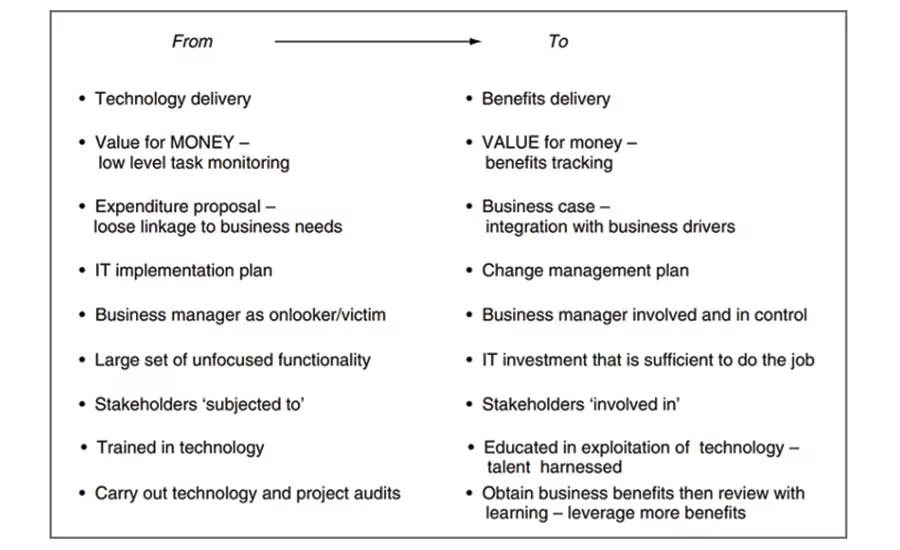
It’s critical to begin the journey in realizing smart buildings with the end in mind. Picture not only the buildings and what they look like but also the organization in the future. What will it look like? What business objectives have been set for the next year, two years, five years, or decade? Strategy is the map, design is the route, and implementation provides the vital milestones you’ll need to ensure success.
It is often found that if the changes identified could be undertaken, many of the benefits could be realized with current systems, indicating that the problem is the way individuals are working or using existing systems or the inability of the organization to implement “best practice.” A concentration on the business benefits and the change management implication at the start of the process will also encourage business managers to become involved. The challenge is that while technology should be the enabler and the tool to realize business benefits, it’s not often that companies talk about the tools more than they talk about the benefits that should be derived. Innovation doesn’t start with the future, it starts with the now and continues into the future.
The effective engagement of business managers is often lacking and it is recognized as a factor that repeatedly causes organizations to fail to realize benefits from IT-initiatives. Discussions that are essentially about the functionality of IS/IT, or are dominated by this, are usually of little interest to business managers who can even feel threatened due to their lack of technology understanding and are therefore unable or unwilling to contribute to the project.
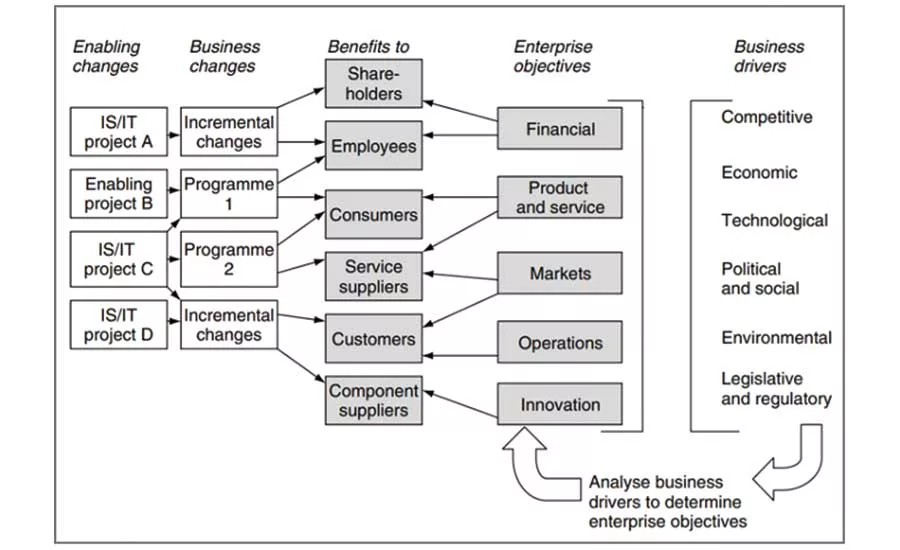
Starting from the right, understanding the global context, what drivers are needed, and then reverse engineering this to understand the “as-is situation” could be the key for future innovation efforts. This could be tailored to not only the enterprise objectives but also to specific initiatives where companies know what the desired outcome they are looking for. An example of this could be a decision-maker who needs to make data-driven decision making on how they should work with smart buildings in the future. What would be the benefits they are looking for? For whom? What changes need to be done? Who would own then, and at the last stage, what technology should be used to make these changes happen? Understanding the as is from an organizational perspective is vital because technology is the easy part. As I’ve argued before, existing companies are built to die. But, with this approach, they will definitely increase their likelihood of success.
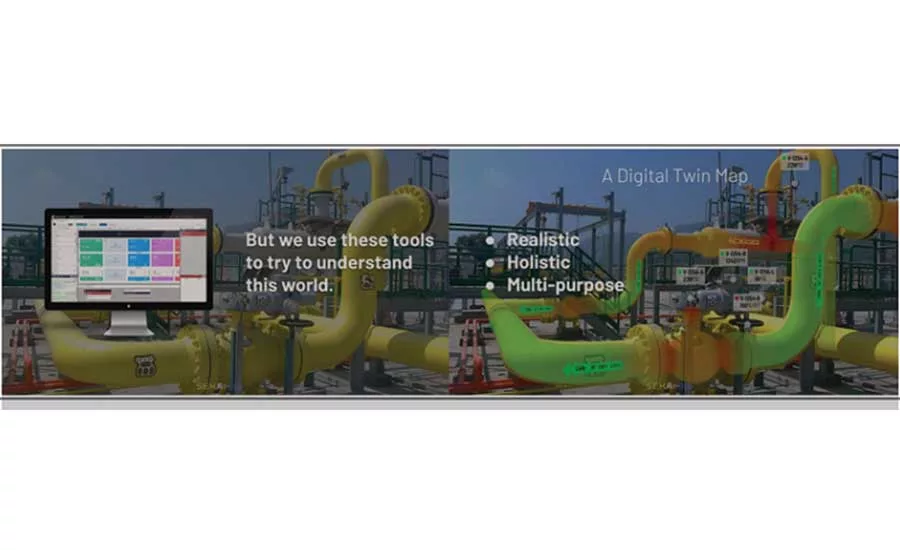
One key aspect of the benefits management approach described is to create an environment in which both business and IS/IT staff participate fully and willingly in the discussions, to contribute and share their knowledge and learn from their colleagues. These conversations would also benefit greatly when having a Digital Twin perspective in mind, adding to the fact that they have a shared understanding in both the benefits that they want to derive. And also that they now have the visual building in the middle, where they can actively show how investments could be beneficial for whom, much easier.
The most important rationale for joining up the network is to understand the dependencies between the identified changes, the people and stakeholders that need to be involved and the realization of benefits, and who owns what part of the process during the initiative. The linkages show that a given benefit will only be realized if the connected changes are successfully achieved, which is where the digital twin once again provides the contextual value necessary to bring it home and act as the one true source of data for the whole life cycle. Also utilizing harmonization tools, it is easy to grab asset data from one data source and add that into either just a drawing or the BIM models that have been handed over from the construction phase. Easy, right? Yes, it actually is. But who will do it? Who can do it?
Mind the Gap — Handover, what Handover?
And here is the big problem. Today, with how current companies are working/not working, the value that should follow the building during the whole life cycle gets destroyed during the handover phase. That is why all this technology focus in silos, talking about what constitutes a digital twin, doesn’t always make much sense from a real-world perspective.
Because who will buy it? Which company today during the asset management phase has people responsible for digital twin management? Who has the people who know how to create value from it during the entire life cycle? Who has the culture of wanting to innovate and create value during the asset management phase, where benefits are talked about and there is an actual vision and mission of providing value to whom? Do companies have a North Star-strategy depicting what the new normal means?
In the world I live in, no they do not. And that is the challenge.
I’m writing more about this over at Beyond Buildings, where’s there’s also some in-depth material to understand this challenge to its core because it is such an apparent problem that no one seems to understand or care about. Possibly due to the simple fact that communication across disciplines with the building life cycle in mind does not happen at all. Not within the different disciplines during the construction phase and especially not during handovers, where there’s a rush to get things done. And the utilization of modern tools in the property management phase in a holistic, organizational way is not how the world operates. Yet.
Which is why we need to go beyond buildings, understand the benefits that need to be derived, use modern technology to do things better, and start realizing the true potential of buildings.
And that is why I am here to advise companies what the world is going to do a month, a year, and a decade from now. WINNIIO has a complete understanding of what is needed to stand out from competition, advise on pros and cons, and be the strategy partner for both technology and organization-advice in a smart world environment (construction/industry/smart buildings, and cities).
Editor’s Note: This article originally appeared in AutomatedBuildings.com’s July issue. See the original post in its entirety at http://www.automatedbuildings.com/news/jul20/articles/waern/200626021707waern.html.
Looking for a reprint of this article?
From high-res PDFs to custom plaques, order your copy today!