Impact of Evaporative vs. Air-Cooled Compressor Cooling Systems on Carbon Emissions and Water Consumption in Grocery Stores
![Figure 1. U.S. Energy-Related Carbon Dioxide Emissions, 1990-2013. [2]](https://www.achrnews.com/ext/resources/ESMAG/ISSUES/2020/07-July/Carbon-and-Water-Consumption_Feb22-2019.webp?t=1594601673&width=1080)
![Figure 2. Energy-related Carbon Dioxide by End-use Sectors, 1990-2013. [3]](https://www.achrnews.com/ext/resources/ESMAG/ISSUES/2020/07-July/Carbon-and-Water-Consumption_Feb22-2019---2.webp?t=1594601934&width=1080)
![Figure 3. Green House Gas Emissions from Commercial Sectors (excluding power plants, O&G, mining, P&P and waste). [4]](https://www.achrnews.com/ext/resources/ESMAG/ISSUES/2020/07-July/Carbon-and-Water-Consumption_Feb22-2019---3.webp?t=1594601967&width=1080)
![Figure 4. Carbon Intensity of the U.S. Economy, 1949-2013. [5]](https://www.achrnews.com/ext/resources/ESMAG/ISSUES/2020/07-July/Carbon-and-Water-Consumption_Feb22-2019---4.webp?t=1594601994&width=1080)
![Figure 5. Energy Consumption by End Use in Supermarkets. [6]](https://www.achrnews.com/ext/resources/ESMAG/ISSUES/2020/07-July/Carbon-Water-C_Feb22-2019-5_900x550.webp?t=1594647412&width=1080)
![Figure 6. Rendering of the Supermarket Model Building Exterior. [8]](https://www.achrnews.com/ext/resources/ESMAG/ISSUES/2020/07-July/Carbon-Water-C_Feb22-2019-6_900x550.webp?t=1594647448&width=1080)
![Figure 7. Rendering of the Supermarket Model Building Interior. [9]](https://www.achrnews.com/ext/resources/ESMAG/ISSUES/2020/07-July/Carbon-Water-C_Feb22-2019-7_900x550.webp?t=1594647492&width=1080)
![Figure 8. DOE climate zones and representative cities. [10]](https://www.achrnews.com/ext/resources/ESMAG/ISSUES/2020/07-July/Carbon-Water-C_Feb22-2019-8_900x550.webp?t=1594647523&width=1080)
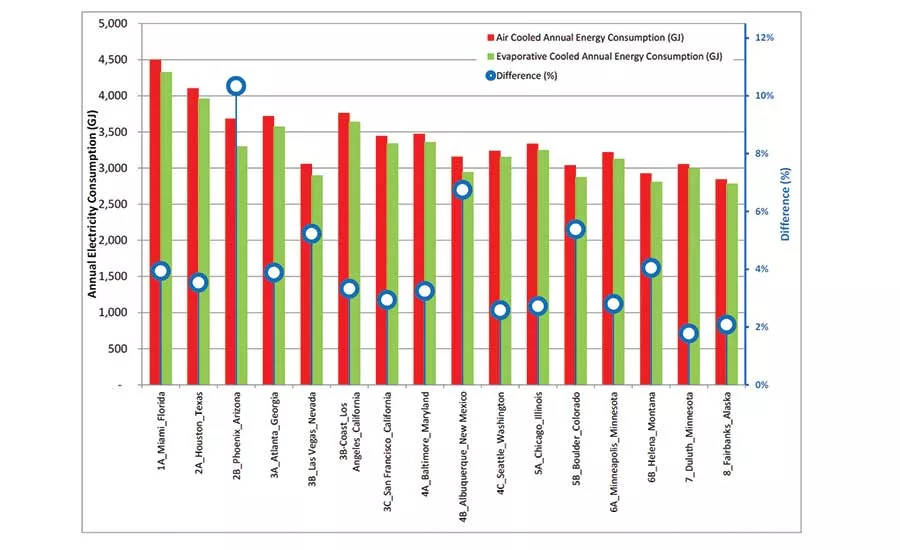
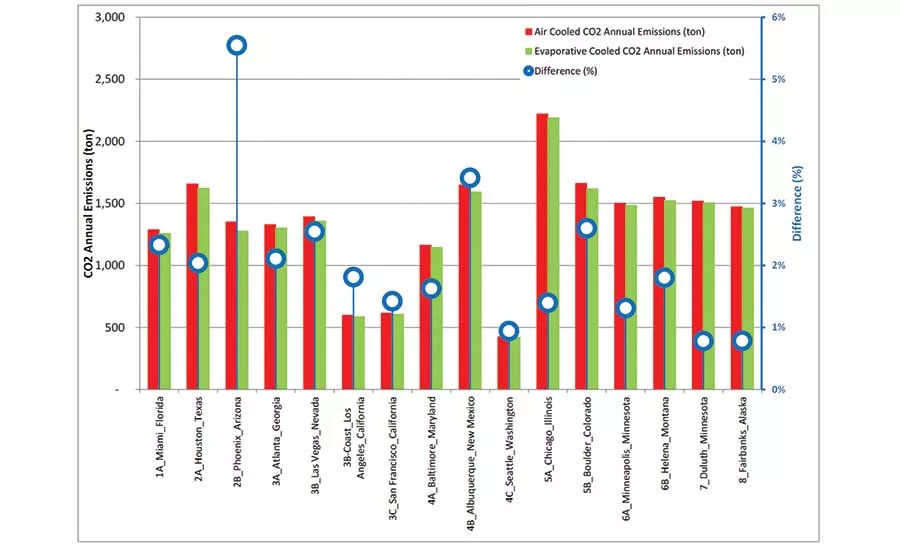
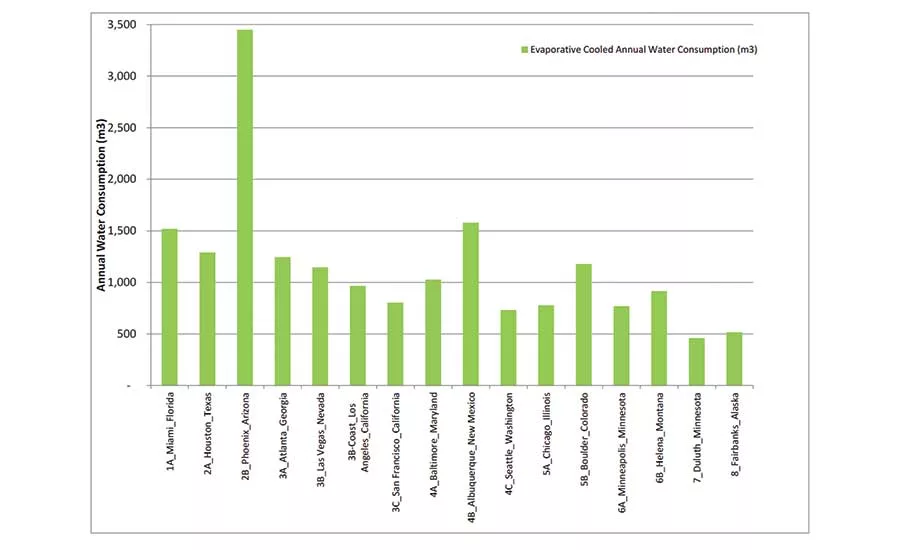
Figure 1 illustrates the changes in carbon dioxide emissions over the past few decades, while Figure 2 illustrates the contributions of each sector of the economy to such emissions.
Figure 3 illustrates the distribution of the greenhouse gas emissions from commercial sectors, excluding power plants, O&G, mining, P&P, and waste, across the continental U.S.
The good news, though, is that the carbon emissions per GDP has been steadily declining over the same period indicating better overall efficiency. Figure 4 illustrates this trend.
Impact of Supermarkets Cooling Systems
Refrigeration systems in commercial supermarkets are among the biggest consumers of energy in such buildings and hence their impact on the greenhouse gas emissions is the highest. In a typical U.S. grocery store, refrigeration and lighting represent between 44%-77% of total use depending on climate, making these systems the best targets for energy savings. Figure 5 illustrates the energy consumption profile by end use in typical supermarkets.
The Analytical Energy Model
This study analyzed two different compressors rack cooling options: an air-cooled option and an evaporative-cooled option.
The energy model used in all the simulations was the 45,000 ft2 (4,181 m2) supermarket model from the DOE Commercial Building Benchmark Models as developed by the U.S. Department of Energy (DOE), Lawrence Berkeley National Laboratory (LBNL), Pacific Northwest National Laboratory (PNNL), and the National Renewable Energy Laboratory (NREL) under the Net-Zero Energy Commercial Building Initiative. [7] Figures 6 and 7 illustrate the supermarket model building used in the energy simulations.
All energy simulations were done using the latest publicly available version of EnergyPlus (8.3.0) as also developed by the DOE and the National Renewable Energy Laboratory (NREL).
The 16 different climate zones modeled cover the entire spectrum of U.S. climate conditions. The climate zones modeled across the U.S. are shown in Figure 8.
The data from the energy simulation model was captured for a full 24/7/365 at 10 minutes intervals each hour in 16 climate zones with two compressor rack cooling system options for a total of 2,803,200 data points.
Figures 9, 10, and 11 illustrate the annual electricity consumption, carbon dioxide emissions, and water consumption of the different refrigeration systems from the simulations.
Conclusions
The aim of this article is not to give designers, owners, or operators a direct how-to manual for their supermarkets and grocery stores refrigeration systems. The objective rather is to illustrate the environmental as well as the economic impacts of the different choices of their refrigeration systems.
The analysis of the environmental effects from the different refrigeration systems revealed the implicit tradeoffs between optimizing electricity consumption, carbon dioxide emissions, and annual water consumption. These, as well as other aspects not addressed in this paper, should be considered when assessing the refrigeration systems in such applications.
References
[1] Inventory of U.S. Greenhouse Gas Emissions and Sinks: 1990-2013. U.S. Environmental Protection Agency. April 15, 2015.
[2] U.S. Energy-Related Carbon Dioxide Emissions, 2013. October 2014. U.S. Department of Energy, Washington, DC 20585.
[3] Ibid.
[4] Ibid.
[5] Ibid.
[6] Managing Energy Costs in Grocery Stores. 2002. National Grid. E Source Companies.
[7] The Benchmark buildings are available from the U.S. Department of Energy website at http://energy.gov/eere/buildings/commercial-reference-buildings.
See also Torcellini, P. et al. (2008). DOE Commercial Building Benchmark Models. National Renewable Energy Laboratory.
[8] Clark, J. 2015. Energy-Efficient Supermarket Heating, Ventilation, and Air Conditioning in Humid Climates in the United States. National Renewable Energy Laboratory. Technical Report NREL/TP-5500-6.
[9] Ibid.
[10] Bonnema, E., et al. 2010. Large Hospital 50% Energy Savings: Technical Support Document. National Renewable Energy Laboratory. Technical Report NREL/TP-550-47867).
Looking for a reprint of this article?
From high-res PDFs to custom plaques, order your copy today!