Polypropylene Pipe Applications in Craft Breweries
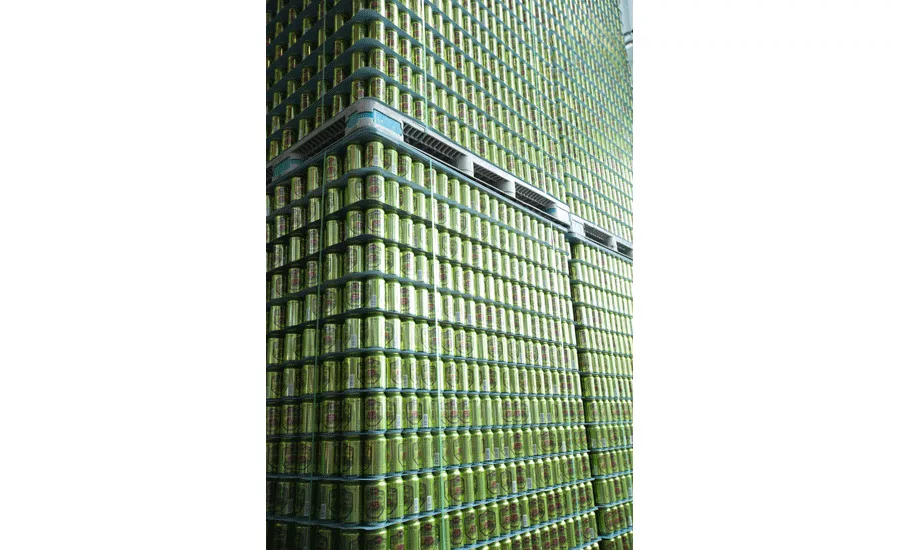
Craft breweries (or microbreweries) are typically characterized as independently owned breweries producing small amounts of beer with an emphasis on quality, flavor, and brewing technique. In recent years, the number of craft breweries has been steadily increasing. According to the Brewers Association (BA) — the trade association representing small and independent American craft brewers — the number of craft breweries in the U.S. has increased from 3,814 in 2015 to 6,490 in 2018. In 2018, according to the BA, small and independent brewers collectively produced 25.9 million barrels of beer, increasing craft’s overall beer market share by volume to more than 13%.
Growth brings opportunities and challenges, and the craft brewing industry has seen plenty of both. In addition to the typical business challenges of competition, staffing, and regulation and compliance, craft brewers also must build the infrastructure to create and deliver their products. This means purchasing (among other items) kettles, kegs, boilers, bottling and canning lines, conveyors, cooling systems, storage tanks, fermentation tanks, refrigeration equipment, and piping systems.
Piping Transformation
While many elements of the brewing process have endured for centuries, the piping industry has transformed the efficiency and reliability of the systems used to produce and transport products.
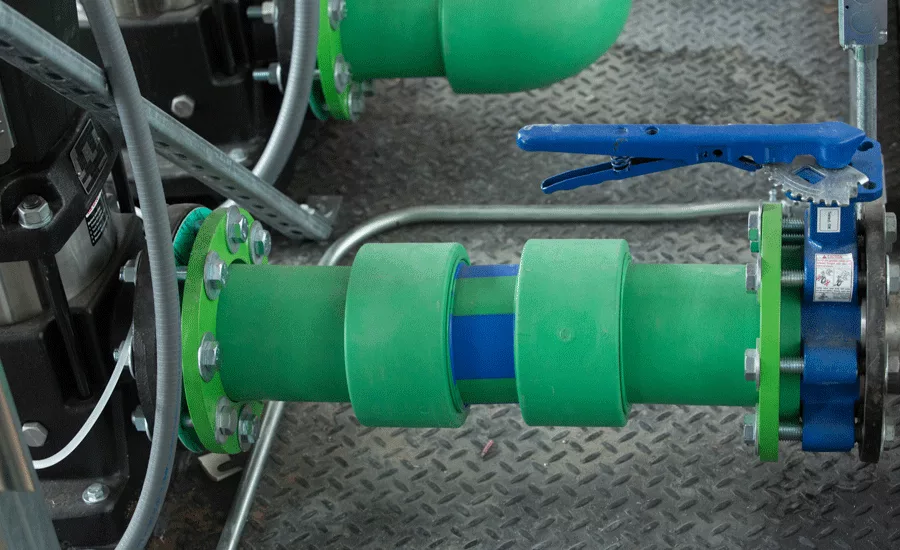
Just as many brewery owners are making their marks with exceptional, unique products, polypropylene piping is revolutionizing the way craft breweries are piped. Applications for polypropylene include glycol lines, domestic water, compressed air, heating and cooling, and CO2 lines. Some polypropylene pipes that are NSF/ANSI 51-listed for food-grade applications can even be used to transport the finished product. As a chemically inert material, polypropylene will not leach into or affect the taste or smell of the liquids it is transporting.
A Significant Upgrade
In many craft brewery applications, polypropylene represents a significant upgrade from metal pipe, such as copper or steel. Polypropylene does not react with water, glycol, or other products and ingredients found in breweries. It will never scale or corrode, and it does not become brittle over time or fail when exposed to extreme temperatures.
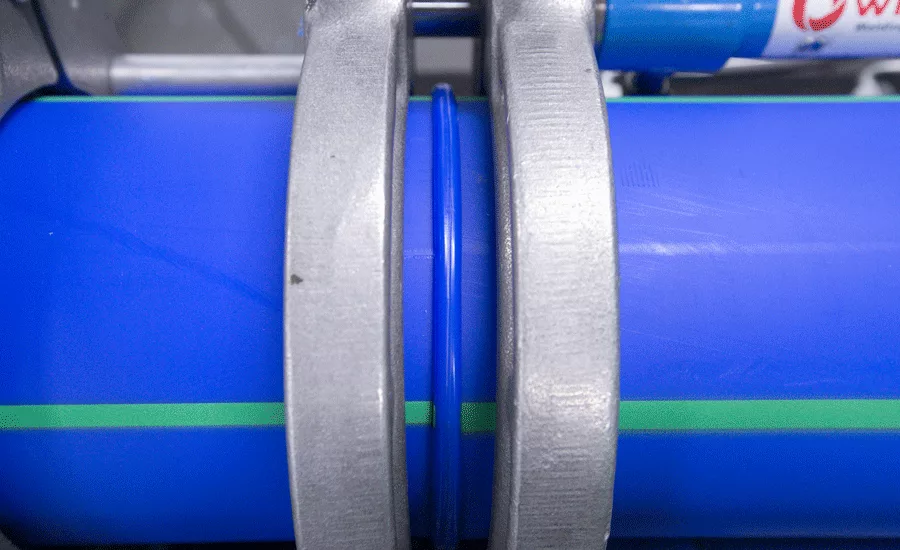
Traditional piping materials either require welding, which can be time-consuming, expensive, and may release harmful VOCs into the environment, or rely on foreign substances, such as glue or solder, or mechanical connections, such as gaskets and threads, to join the pipe and fittings. Polypropylene pipes, on the other hand, are joined using heat fusion — a fast, reliable process that makes seamless connections. To form a connection, the material is heated, joined together under pressure, and then allowed to cool. The joined materials become one solid and homogenous piece with no leak paths. When properly installed, operated, and maintained, polypropylene pipe has an anticipated lifespan of 50-plus years.
Additional Benefits
Polypropylene is up to 70% lighter than steel pipe (depending on the size and wall thickness of the pipe) and, with the proper heat fusion tools, can be easily installed in overhead locations common to breweries with fermenting vats.
To accommodate system expansions as craft breweries grow, polypropylene offers fusion outlets that can be added by drilling into the pipe and heat-fusing a fitting directly into the pipe wall.
Many brands of polypropylene pipe are stabilized for both high and low temperatures and are safe for use in almost any part of a system. In addition, the pipe’s inherent R-value of 1 or higher (depending on the wall thickness of the pipe) can eliminate the need for insulation or reduce the amount of insulation required, especially on glycol lines.
By way of background, certain parts of the brewing process require temperatures as low as 24°F. This requires brewers to use glycol in lines that connect the process chillers to the fermenting vats. The key is to find a material that can transport the chilled fluid without using fluxes or glues. The flux used when brazing copper can cause impurities in the line, and glycol can degrade the glue that is used to join certain other piping materials, such as chlorinated polyvinyl chloride (CPVC). That makes heat-fused polypropylene pipe an ideal fit.
In addition, polypropylene’s heat fusion process can be taught, in just a few hours, to virtually anyone who has mechanical aptitude and an understanding of piping systems. Along with skilled support and oversight, this can enable breweries to train their own personnel on heat fusion installations or repairs.
Finally, as many craft breweries and their customers are environmentally aware, they can appreciate the fact that polypropylene pipe is cleaner to manufacture than steel pipe and also is 100% recyclable at the end of its long life.
Real-World Results
Polypropylene pipe has been selected by craft brewers across North America. Comments from the brewers themselves attest to the effectiveness of polypropylene in brewery applications.
“As a startup, you need to save money when you can, and labor is an area where we could do that,” said Adler Lentz, a partner in Nashville, Tennessee-based Smith & Lentz Brewing Company, where polypropylene pipe was selected for the brewery’s glycol cooling system. “The quote for copper was about $20,000, and, for a startup, that is a big chunk of change. So when we got that quote, we looked at other options. And that’s when it started to make sense that we should use [polypropylene] and do the installation ourselves. We saved about $12,000 by doing this.”
Eventide Brewing in Atlanta selected polypropylene for its glycol cooling system.
“We have experienced zero leaks, not even a little leak,” said Nathan Cowan, CEO. “Our next project will be 10 times the size of what we have now, and we plan on using [polypropylene] when we expand.”
An Epic Saga
Epic Brewing Co. was founded in Salt Lake City in 2009. In 2012, Epic opened a new location in Denver, and in 2019, the company undertook an expansion at the Denver operation that more than tripled the number of fermentation tanks there. Polypropylene pipe has been there every step of the way for the brewery.
“For us, it has been all polypropylene ever since we had it installed in Salt Lake City,” said Jordan Schupbach, director of brewing operations. “It’s a product we’re familiar with and totally satisfied with, so there’s no reason to change.”
Major Heating & Air Conditioning, Denver, installed hundreds of feet of polypropylene pipe at the expansion of Epic’s Denver operations. The company has five technicians trained on heat fusion.
Todd Ramer, service manager at Major, said polypropylene pipe offers many benefits for not only the brewer but also the installing contractor, including light weight and installation time savings.
“From a contractor’s perspective, it really beats running steel or copper,” Ramer said. “It’s so lightweight that I can fabricate and hang the 3-inch mains by myself. But the biggest thing is the time saved. It’s astronomical compared to welding and brazing. I knocked out the latest expansion at Epic in a week and a half. If I had done it welding steel, it would have been three or four weeks.”
Ramer also noted that tapping into existing lines is easy with polypropylene. During the recent expansion, in addition to the socket and butt fusions used to join the pipes, Ramer estimated he installed about 200 fusion outlets.
“It’s much easier to do expansions of existing [polypropylene] lines than steel lines,” he noted.
Other craft breweries have selected polypropylene pipe for geothermal heating systems (Arbor Brewing Company, Ypsilanti, Michigan), domestic hot and cold water supply systems (Main Street Brewing, Vancouver, British Columbia, Canada), or, at Founder’s Brewing Co. in Grand Rapids, Michigan, an innovative heat reclamation system that allows the brewery to use the heat generated for the brewing process to help provide space heating in the 75,000-square-foot brewery.
“We chose [polypropylene] because of its unique ability to handle the 80°-120°F fluid with minimal expansion and contraction,” said Brad Strouse, account manager, Seaman’s Mechanical, Grand Rapids, of the Founder’s system. “The fusion process was also a significant factor as this ensures structural integrity for an eco-friendly cost.”
Conclusion
Ultimately, many craft breweries are started by skilled innovators who have a passionate desire to craft products that stand out for their uniqueness and exceptionally high quality. Although they are founded by beer lovers, not piping experts, there is a growing realization among craft brewers that polypropylene pipe can be used in many ways throughout a brewery to help the owners reach their goals of excellence. Quite simply, it can help brewers craft a better brew.
Looking for a reprint of this article?
From high-res PDFs to custom plaques, order your copy today!