Another Coronavirus Conversation with Dr. Stephanie Taylor
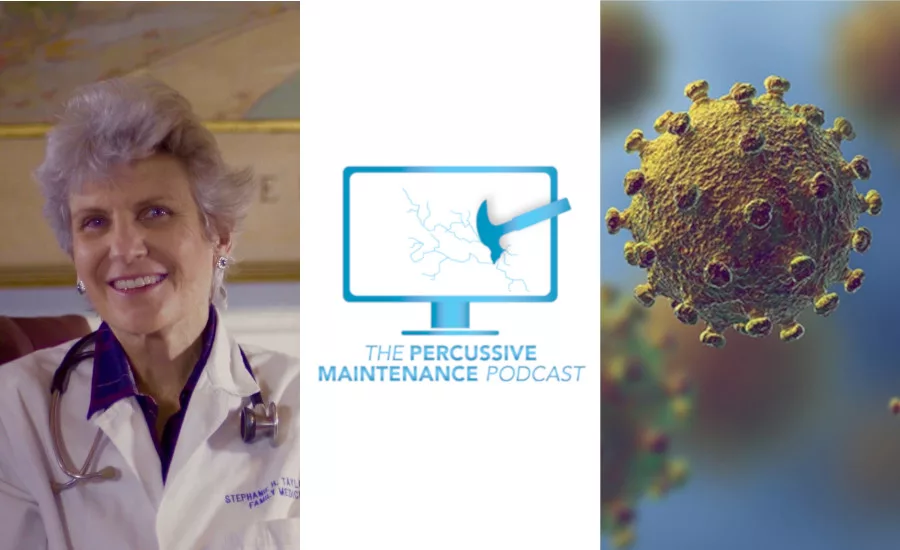
As of June 13, more than 2 million cases of COVID-19, or the coronavirus, have been reported in the U.S. More than 115,000 people have died from complications related to the disease.
Dr. Stephanie Taylor, a graduate of Harvard Medical School, is the CEO of Taylor Healthcare Commissioning Inc. After working as a physician for many decades, Dr. Taylor obtained a master’s in architecture as well as an infection control certification. Her lifelong commitment to patient care includes focusing on improving the health care physical environment and clinical work processes to help patients heal quickly and save hospitals valuable dollars.
Recently, Dr. Taylor joined Herb Woerpel, editor-in-chief of Engineered Systems, to continue a conversation on the virus that began back on March 17. Here is a transcript of that conversation.
For access to more podcast episodes, click here.
Engineered Systems: Back on March 17, when we first discussed the COVID-19 pandemic, a total of 4,226 cases had been reported and a total of 75 people have died. Today, more than 2 million cases have been reported in the U.S. and 115,000 people have died. These numbers are astonishing!
Dr. Stephanie Taylor: Yes, I agree. And, you know, I think that back when this began, and even in the middle of March, we weren't quite sure what the trajectory was going to be. You know, we still don't know 100% what the trajectory is because the testing capabilities — both for whether you're sick or whether you've had the disease — are still in development. But we do know that it is a highly infectious virus. And it has spread quickly and widely, partly because people are infectious even before they're symptomatic. So, yes, this has had a devastating consequence to our health.
Engineered Systems: The reality is that these numbers could be exponentially higher. A recent study examining the effect of large-scale anti-contagion policies have had on the COVID-19 pandemic states that about 60 million novel coronavirus infections in the U.S. and 285 million in China have been prevented due to stay-at-home orders issued across the globe.
Taylor: Whatever is decreasing the numbers, will decrease the numbers, or has decreased the numbers — in my opinion, it’s difficult to parse out what exactly has caused that? Yes, I think the behavioral implementations of wearing a mask and social distancing have helped. I'm doing a study with a group of MIT statisticians and epidemiologists, and we're trying to parse out the consequences of changes in viral transmission due to outdoor and indoor weather factors, factoring in behavioral implementations, such as businesses being closed and social distancing. And we're finding that — and this actually is a great topic for Engineered Systems — the parameters that have to do with managing the air and surfaces are very, very powerful. And in some places, statistically, as powerful as behavioral interventions. So, whatever we're doing, it's good when the numbers are going down. The exact cause of those numbers going down I think, is still not totally clear.
Engineered Systems: As humans, with our short memories and attention spans, it’s difficult for us to be confined to one space for any extended period of time. Thus, as of today, June 12th, all 50 states have loosened stay-at-home restrictions. While nobody wants to spend all of 2020 locked in their homes, socializing and participating in activities outside of our home can be somewhat dangerous, correct?
Taylor: It depends on how you're socializing. Our common sense serves as a good guide. If you can be in a situation where you can maximize the effects of dilution — being in big spaces or experiencing a breeze if you're outdoors or utilizing optimal ventilation if you're in a building. Dilution is a good thing. You know, there are other parameters that are very beneficial. And anyone who reads my articles or has heard me speak before knows that I'm a huge proponent of managing our relative humidity in buildings between 40 and 60%, which is a very holistic and effective form of infection control.
If you're in a dry room and you're singing, shouting, laughing, or kissing with people, you're going to have a greater chance of getting the infection versus those who are kind of using their common sense.
Pay attention to what the CDC [Centers for Disease Control and Prevention] and the World Health Organization are telling you. In addition, manage your buildings, manage your indoor environment, humidify, and have optimal ventilation.
Engineered Systems: Let’s talk about ways to mitigate the spread of COVID-19. Many establishments are mandating masks. What are your thoughts on masks, yay or nay?
Taylor: So, with masks, there are all sorts of big and great questions. Masks initially were advanced to prevent the spread of large droplets and transmission from people who are sick but might not know it. If you're sick and you know it, you should be home. But, given that people can be infectious before they are experiencing symptoms, masks were encouraged so that you don't walk up to some unsuspecting person and sneeze or cough infected droplets on them. We now know that this virus is also spread through tiny aerosols, which are not contained by masks unless you have the surgical version of an N95, which we don't have, nor should we have because health care workers need them. That said, I think masks are important for two reasons: There is some containment of the large droplets that could be potentially infectious, and I think, equally important, masks tell us that we're taking this whole crisis seriously. So, I think masks are both realistically effective and they're a bit of a talisman that we are taking this epidemic, pandemic seriously.
Engineered Systems: Before the term COVID-19 ever entered our vocabulary, you’ve been a proponent of maintaining indoor relative humidity between 40%-60%. In fact, you’re leading a crusade to petition the World Health Organization to review the scientific evidence related to indoor humidity and respiratory immune system response, viral transmission, and virus inactivation.
Taylor: Starting in 2012-2013, I was involved in some research that was initially done in hospitals that clearly pointed to the correlation between low relative humidity in patient rooms and an increase in bacterial and viral infections. I was startled by this. Subsequent studies in nursing homes, schools, and in offices have shown that people are much healthier, obtain fewer infections, have increased productivity, and sleep better at night with this range of humidity. So, in doing more and more research on the relationship between 40%-60% indoor relative humidity and human health and decreased infections, it's absolutely a rapid, holistic, and effective disease infection control strategy.
And, now, here comes COVID-19 and it’s more important than ever that we decrease transmission of respiratory viruses. Relative humidity in that range is so effective and, in my opinion, it should be mandated.
Engineered Systems: You’re a member of the ASHRAE Epidemic Task Force. Tell us about this group, your involvement, and what the group hopes to accomplish?
Taylor: This Epidemic Task Force has been a really interesting and rapidly moving group. And so, initially, we were formed to help engineers and facility managers manage their buildings optimally. Initially, we were focused on the question: Is this virus actually transmitted over distances greater than 6 feet through the air? And all the available data that we have compiled said, yes, it can be transmitted over 6 feet, and we need to manage that. So we focused on that.
The second question we examined was: How do we optimally manage our buildings so that we protect people and yet don't spend exorbitant amounts of money on energy? So, that really came down to should we turn our mechanical system off — should we turn air recirculation off in buildings? So those are kind of the two questions that ash ASHRAE Epidemic Task Force has focused on.
Engineered Systems: What about natural ventilation? Now that summer is on the horizon, will opening our windows and letting in fresh air have any impact on the COVID-19 virus?
Taylor: Outdoor air ventilation is very, very important, and if you can ventilate 100% outdoors, given that it's warmer and more naturally humid outdoors, that's great. Open your windows, open your open your vents, and get as much outdoor air in your building as possible. When it’s colder out, and you have to maintain temperature through heating, we do not advise 100% outdoor ventilation in those circumstances because the amount of energy consumption you would need to heat cold air and properly humidify it has consequences that we don't want. So, in the summertime, yes, have as much outdoor ventilation as possible until that's no longer feasible because of temperatures. Use your HVAC systems, use your recirculation, but make sure you put into place the other recommendations, such as ultraviolet light germicidal radiation, either in your ductwork or upper room; use the proper filtration — ASHRAE recommends a minimum MERV 13 for recirculated air; keep your indoor humidity level at 40%-60%; clean your surfaces as the CDC is recommending; etc. These are all important strategies. But the short answer is, in the summertime, yes, utilize as much outdoor ventilation as possible.
Engineered Systems: Any key initiatives or breaking concepts coming out of ASHRAE we need to know about?
Taylor: You know, not really that I can think of, other than what we've already talked about, which is, you know, in the summertime use outdoor ventilation. If you are wondering about how to manage specific building schools, how to utilize heat exchangers and different mechanical systems, than I am not as qualified to talk about those topics as a professional mechanical engineer.
I would recommend you go to the ASHRAE Epidemic, Task Force website. There's an amazing wealth of information checklists, guidelines for all building types, multi-residential buildings, schools, etc. Any information you want or need can likely be found there.
Engineered Systems: One question we’ve fielded over and over here at Engineered Systems is this: Can HVAC systems spread the COVID-19 virus? What do you think?
Taylor: Intuitively, you know, my own personal sense tells me that some viruses are going to probably be able to sneak through. We have no scientific data that that confirms that we have found the RNA, or the virus’s genetic material — on the exhaust vents of some HVAC equipment. There's been no documented transmission through the HVAC system. My guess is there probably are going to be a few viral particles that pass through. But, whether or not the infectious dose is potent enough to infect somebody in a distant part of your building is undecided, though I don't think that's likely. The benefits of running your HVAC system — of warming the air and humidifying the air without spending lots and lots of fuel consumption — easily makes it a very feasible trade off. So, my suggestion is to use recirculated air as little as possible but as much as necessary.
Engineered Systems: As building owners and facility managers aim to improve the present and future conditions of their buildings, what impact will COVID-19 have on the future of building design?
Taylor: As a physician and somebody in architecture, I am grateful. Because of this pandemic, we're actually looking at buildings through a slightly different lens. No longer are we just focusing on real estate value. No longer are we just focusing on energy consumption, but we are really viewing our buildings as they were originally intended: as shelters. When it comes to how we are going to design buildings to protect the occupant health, not just the comfort, and what changes will actually result in terms of new building design, I think is still up in the air. Right now, we're looking at buildings through the lens of protecting occupant health in a way that we never have before. I think that isn't a very good trend.
Engineered Systems: Piggybacking on that last question… As a consulting/specifying engineer, what’s the most important thing I should be thinking about right now when it comes to ensuring buildings are in peak condition?
Taylor: So, again, if I had to choose one strategy to utilize in my building, it would be humidified air to 40%-60%. Feel free to use whatever technology you’d like to achieve that, whether it's evaporative humidification, steam, or aerosolized water droplets. I personally feel that humidification is the most effective strategy to protect us in our indoor environment.
Engineered Systems: Your July IAQ column focused on the differences between the European standards from REHVA and the American point of view from ASHRAE. Any pointers for engineers who may be encountering conflicting advice?
Taylor: Yeah, so I love how you get to the heart of the matter. So, the European standard says 100%, outdoor ventilation, no matter what. Whatever energy consumption you need to heat that air you have to spend to achieve it. REHVA doesn't talk about the benefits of humidification for reducing disease transmission. Those recommendations came out early, before it was evident exactly how beneficial humidification is. So, ASHRAE takes into consideration the energy consumption required to heat cold air and the resulting humidity losses. So, I think ASHRAE, in my opinion, is closer to the mark because it encourages building managers to create a balance between total outdoor ventilation and maintaining temperature and humidity in ways that are reasonable in terms of energy consumption.
Engineered Systems: One final question for you – and it’s a doozy. There is a great fear that we are on the cusp of a second wave of this virus. Any insight into if and when this will occur and what we can and should do to minimize its effect?
Taylor: Yes, I think there may be a second wave, though it may just be an ongoing manifestation of the first infectious outbreak that we're more aware of because of the increased testing. But whether it is a real infectious disease outbreak or just an ongoing transmission of what we already have, building managers can (and should) use as much outdoor ventilation as possible in the summertime, humidify your buildings, and use the proper filtration management surfaces. And then, of course, we encourage people to do the social distancing, wear masks, and wash their hands. But there is a lot we can do. And we're doing a lot. We're already doing much of it in our buildings, I believe.
Engineered Systems: Dr. Taylor, we’ve covered quite a bit. But, is there anything else you’d like to add while we have you on the stream?
Taylor: No, I just want to encourage everybody to really read Engineered Systems. I'm not just saying this because I’m here talking to Herb. I think it's a fantastic magazine. I really appreciate writing my column. And the other columnists are great. There is a lot of forward thinking that occurs in that magazine. So, again, I was not told to say this, but that's my last plug.
Engineered Systems: We appreciate that endorsement. If viewers or listeners are interested in connecting with you, where should they turn?
Taylor: Well, they can either email Engineered Systems or me at MD@TaylorCX.com. I'm happy to talk with you or answer emails, whatever I can do to be useful.
Looking for a reprint of this article?
From high-res PDFs to custom plaques, order your copy today!