Dr. Stephanie Taylor Petitions the World Health Organization for 40%-60% RH Policy
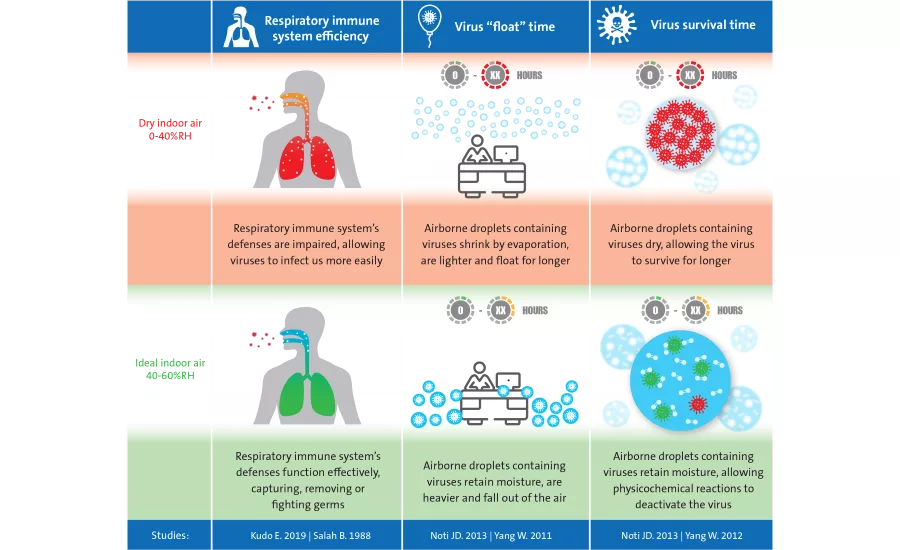
Dr. Stephanie Taylor, an infection control consultant at Harvard Medical School, ASHRAE Distinguished Lecturer, member of the ASHRAE Epidemic Task Group, and longtime Engineered Systems columnist, is seeking signatories for a petition asking the World Health Organization (WHO) to review the scientific evidence related to indoor humidity and respiratory immune system response, viral transmission, and virus inactivation.
“There is now overwhelming scientific evidence that a mid-range air humidity has significant benefits for human health,” Taylor said. “It is very possible for us to be managing the indoor air quality of our public buildings in line with this evidence. The time has come for regulations on indoor air quality to include a humidity level of 40%-60% RH. This is the optimal level for our respiratory immune system and will reduce the spread of seasonal respiratory illnesses and their burden on society.”
WHO sets guidance for indoor air quality on issues such as pollution and mold. It currently offers no recommendations for a minimum humidity level in public buildings.
If WHO was to publish guidance on minimum levels of humidity, building standards regulators around the world would need to update their own requirements. Building owners and operators would then take steps to improve their indoor air quality to meet this minimum humidity level.
Taylor insists implementing this mandate would lead to:
- Respiratory infections from seasonal respiratory viruses, such as flu, being significantly reduced;
- Thousands of lives saved every year from the reduction in seasonal respiratory illnesses;
- Global health care services being less burdened every winter;
- The world’s economies massively benefiting from less absenteeism; and
- A healthier indoor environment and improved health for millions of people.
Taylor is not alone in her quest, which is supported by medical officials around the world.
“The containment of the COVID-19 pandemic requires a worldwide lockdown,” said Prof. Dr. Adriano Aguzzi, professor and director of the Institute of Neuropathology at the University of Zurich and editor-in-chief of Swiss Medical Journal. “While this is extremely effective in reducing outdoor contagion, it does not prevent indoor transmission of SARS-CoV-2. All available evidence points to proper control of indoor humidity levels as a factor that drastically reduces the half-life of aerogenic viruses and may even enhance the mucosal innate-immunity defenses against them. I call on the World Health Organization to review the many studies relating to low indoor humidity and health, and take action to mitigate seasonal illness and improve the health of building occupants across the world.”
Walter Hugentobler, MD, general physican and former lecturer at the Institute of Primay Care at the University of Zürich, believes maintaining an indoor humidity of at least 40% RH is a proactive way to combat the spread of viruses from infected to susceptible hosts, even before any symptoms appear or a diagnosis can be made.
“The respiratory tract’s defenses of both hosts are improved, due to the more efficient cleaning of the airways and enhanced immune defenses,” Hugentobler said. “Raising air humidity by humidification reduces the risk of microbial spread in hospitals and other buildings at low-cost and without causing negative effects. It can also be easily implemented in public buildings and in both private and workplace environments. Humidification gives people a simple means of actively combatting seasonal respiratory infections, including the fearsome SARS-CoV-2 virus, for which there are currently no vaccines or effective drug treatments. This is why I am calling on the WHO to review the available science on this important topic and develop guidelines on indoor air quality that will set a minimum level of humidity in public buildings for health.”
For more information, or to sign the petition, visit https://40to60rh.com.
Looking for a reprint of this article?
From high-res PDFs to custom plaques, order your copy today!