Power System Spec Reviews Save MEP Firms Man-Hours, Addenda, and Headaches
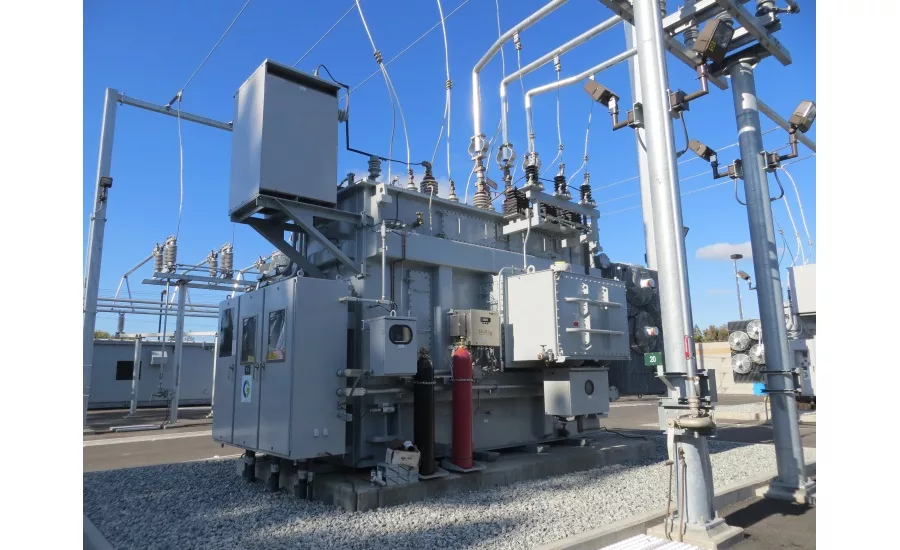
MEP engineering firms put great care into fine-tuning master specs to accurately communicate the specific needs of each of their projects far before sending them out to bid.
But master specs contain a lot of moving parts that your spec corrector needs to evaluate. Just refining the standby power system document for clarity and accuracy requires them to answer questions like:
• What starting KVA should be specified, and what voltage dip is acceptable for this application?
• Is a remote fill tank required on this project?
• Is a day tank required if you have a sub-base fuel tank and the generator system will be located in an outdoor enclosure?
• Is it worth specifying against Miami-Dade/Florida Building Codes (FBC) for this project based on its tornado risk (as in the Midwest) or proximity to the ocean (as on the coasts)?
• What’s missing in this spec that will affect the long-term performance and serviceability of this power system?
While specifiers have broad engineering expertise, it’s tough to answer one — let alone all — of these questions without years of experience designing and building backup power systems.
And there’s massive risk tied to leaving these questions unanswered. Putting incomplete or unclear power systems specs out for bid can lead to consequences like:
• Man-hours spent fielding requests for interpretation (RFIs) and compiling addenda to address them;
• Potential building code noncompliance;
• Poor performance outcomes if the spec doesn’t fully address the specifics of the project; and
• Tarnished reputation (and reduced bid opportunities) if the owner is not satisfied with the initial and long-term quality of the job.
MEP firms can mitigate these risks by partnering with an experienced standby power systems provider during the schematic design and pre-bid process. They’ll have the deep expertise necessary to answer these questions and clarify your construction documents before they go out to bid, saving you time, money, and headaches throughout the project.
The value of an impartial spec review
“Impartial” is the operative word here. When you send a spec to a power systems provider, there is a great deal of trust involved.
You trust that they will draw on their expertise to recommend changes that will improve the overall quality and serviceability of the finished power system — not pigeonhole you into a proprietary solution that only their team can provide.
To give you an idea of the type of impartiality you should expect during any spec review, let’s narrow in on a few real recommendations we made to an MEP firm last year.
To set the scene, the project was for a VA hospital expansion. We reviewed the spec for the permanently installed 500-kW emergency power system that would be housed in an outdoor, weatherproof enclosure.
Recommendation example No. 1: Eliminating conflicting information
The list below demonstrates how all of our recommendations are structured, with all recommended actions clearly called out in red.
You’ll notice we recommended removing items B (“remote radiator”) and C (“heat exchanger”). It says right above, in A, that this is to be a packaged generator system meaning a local radiator will serve as the cooling system.
We recommended removing F (“fuel fittings and day tank”) for a similar reason. If this were an indoor unit, it might require a remote fuel fill station (which we addressed in a different recommendation) and a day tank. But item K (“weatherproof enclosure”) clearly tells us this will be an outdoor unit meaning a sub-based fuel tank alone will suffice.
These revisions aren’t inconsequential.
If these items were not removed, then the power systems suppliers bidding for the job might assume that this project called for both an indoor and an outdoor unit with both a day tank and a sub-base tank.
Then, your team would have to spend precious man-hours fielding their questions and creating addenda to clarify your construction documents. And, as you know, expending unplanned man-hours cuts into your projected profit in any engineering project.
Recommendation example No. 2: Specifying the latest technology
This change is extremely simple to explain. Class F insulation hasn’t been used for generators for almost three decades, and Class H is the prevailing insulation technology for generators today.
Recommendation example No. 3: Making the power system hurricane-proof
This VA hospital is located a stone’s throw away from the Atlantic Ocean, meaning this power system needed to be designed to withstand corrosive ocean air as well as the occasional hurricane, and still kick on at a moment’s notice.
Miami-Dade/FBC building codes are the gold standard for coastal, high-wind environments. It calls for generator enclosures rated to withstand winds of 180 mph, and so we updated the spec to match that. In fact, we updated the entire document to reflect the standards set by Miami-Dade and Florida.
And without the protective coating we added in item 3, the metal enclosure would quickly corrode, threatening the longevity of the power system.
Recommendation example No. 4: Removing redundant sections
This construction document contained two different generator enclosure types. Because the skin-tight enclosure described in section 2.9 was better suited for this smaller unit, we recommended removing section 2.10 to eliminate potential confusion and questions during the bid process.
These weren’t the only recommendations we made — far from it. Here are just a few others:
• Decreasing the allowable voltage dip from 35% to 20%, a number that assures owners that essential equipment won’t drop off;
• Switching which generator brands were acceptable, specifying only those that provide the best service and support over the lifetime of their equipment; and
• Upgrading from a two-year limited warranty to a five-year comprehensive warranty with no deductible — giving the owner the peace of mind that labor and parts are covered.
We did a comprehensive sweep of the entire packaged generator system construction document and the transfer switch document, too.
Our goal? To make clear recommendations that eliminate confusion and add value to the project without requiring proprietary solutions. Then you, the MEP firm, can decide which recommendations you approve, which ones you reject, and which power systems supplier you choose.
Looking for a reprint of this article?
From high-res PDFs to custom plaques, order your copy today!