Survey: Six in 10 Code Officials Are Incapable of Completing Their Work Remotely
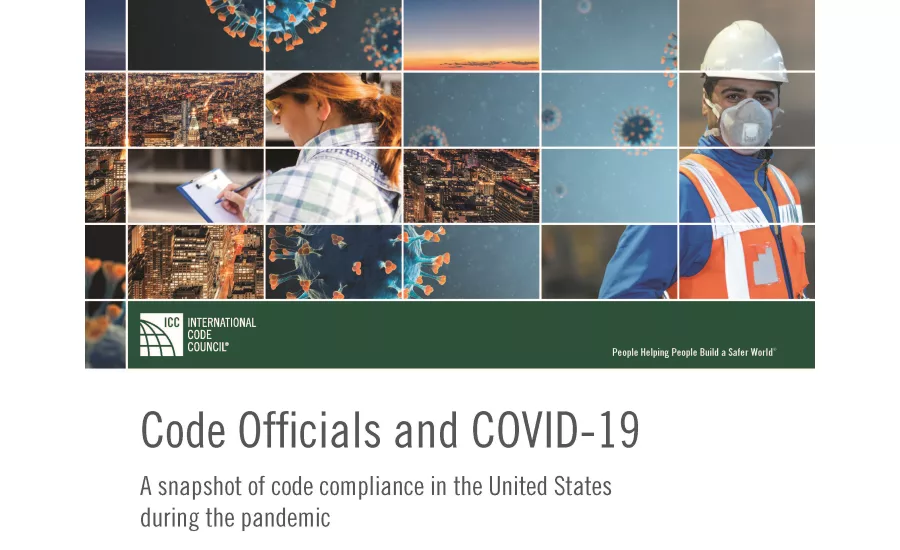
WASHINGTON — Although the U.S. Department of Homeland Security has determined the work of building and fire prevention departments to be essential to the nation’s response to the coronavirus pandemic — and no state has made a contrary determination — six in 10 do not have the capability to remotely carry out critical aspects of their work.
Those are the results of a recent International Code Council (ICC) survey of more than 1,150 building and fire department officials from all 50 states and the District of Columbia conducted March 22 to April 1. The intention of the survey was to learn how code officials are coping with the professional challenges brought on by the COVID-19 pandemic.
Respondents came from jurisdictions of all sizes ranging from 1,000 people to over 4.6 million. The survey collects trends, ideas, solutions, and best practices from code officials about how they are keeping up with new building permits and new construction during the pandemic months.
With many departments already under resourced, and many state and local governments facing severe revenue downturns resulting from the coronavirus pandemic, it is critical that federal coronavirus response funding be directed to building and fire prevention departments that need it to continue their essential functions. Such investments would speed the restart of our economy and produce lasting reductions in departmental operation costs and permitting timelines.
The recently passed Coronavirus Aid, Relief, and. Economic Security Act (CARES Act, HR 748), provides state, local, tribal, and territorial (SLTT) governments with $150 billion through a Coronavirus Relief Fund (CRF) for necessary spending in response to this public health emergency, $45.4 billion through FEMA’s Disaster Relief Fund (DRF), and $5 billion through the Community Development Block Grant (CDBG) program. Funding that enables code departments to work remotely should be an eligible activity under the CRF, and both the DRF and CDBG program have funded code enforcement activities previously. The Code Council has also urged the U.S. Congress to allocate support specifically for code department remote capabilities as part of a fourth coronavirus response measure Congress is currently considering.
The main survey findings are:
- The majority of departments surveyed (93%) are still performing inspections, either remotely or in-person. This falls in line with what the Code Council expected given that many areas have classified construction and code compliance activities as essential.
- More than half (65%) of respondents said that some or all employees who conduct plan review or inspections are working remotely.
- A large percentage of jurisdictions (66%) use a combination of electronic and hard copy versions of building safety codes, while a much smaller percentage of jurisdictions (7%) have advanced to using all electronic. Twenty-seven percent of respondents said their jurisdiction used only hard copies. This could create challenges where hard copies are shared and departments do not have enough hard copies for each now-remote employee that needs them. In fact, 23% said their employees do not have access to needed hard copy code books.
- Many jurisdictions have made the switch to electronic services, but a large percentage still do not have the capacity to go virtual. In particular: 40% do not have the capability to do electronic/remote plan reviews, 30% do not have the capability to do any aspect of electronic/remote permitting, and 61% do not have the capability for electronic/remote inspections.
- To expand services to fight the coronavirus pandemic, many health care facilities are putting beds in alternative locations, like school gymnasiums, hotels, outpatient surgical centers, or in temporary structures in their parking lots. Twenty-six percent of respondents have encountered requests for permits for temporary occupancy and/or temporary structures as a result of the COVID-19 pandemic.
“The results of this survey show how quickly and efficiently many code council governmental members have moved from office work to telework and have adapted to a new virtual work environment,” said Dominic Sims, CBO, CEO, ICC. “Now more than ever, we are reminded of the importance of building safety. Throughout this crisis, the ICC will remain committed to its mission to advocate for building safety professionals around the world and identify new ways to contribute to public safety.”
Code officials are essential to keeping our communities safe and protected, especially during these difficult times when we find our greatest protection from remaining inside, Sara Yerkes, senior vice president of government relations, ICC.
“Their continued service to ensure building and public safety is critical,” she said. “We commend the offices across the nation that have virtually reframed their operations, and we urge Congress, states, and local governments to recognize the need for an allocation of resources directed to building departments to continue the important work of ensuring new construction and remodeling projects meet fundamental safety standards.”
This survey is ongoing, and the ICC will continue to collect responses to these important questions. Forthcoming will be a document outlining best practices on virtual code compliance activities. For more information, visit www.iccsafe.org.
Looking for a reprint of this article?
From high-res PDFs to custom plaques, order your copy today!