search
Ask ACHR NEWS AI
cart
facebook twitter instagram linkedin youtube
  • Sign In
  • Subscribe
  • Sign Out
  • My Account
  • NEWS
  • TECHNOLOGY
    • Heating & Boilers
    • Cooling & Chillers
    • Pumps & Flow Controls
  • SECTORS
    • Commercial
    • Health Care
    • Data Center
    • Educational Facilities
  • DESIGN | CONSTRUCTION
  • OTHER TOPICS
    • High-Performance Buildings & Automation
    • Ventilation and IAQ
    • Commissioning
    • HVAC Retrofits
  • TODAY’S BOILER
    • Today’s Boiler Archives
    • Today’s Boiler Digital Edition
  • MORE
    • Case Studies
    • Podcasts
    • Videos
    • Directory
    • Webinars
    • ES NEWS Store
    • White Papers
  • SIGN UP
  • Back to The NEWS
Engineered Systems NEWSHVAC Engineering TechnologyHVAC Engineering SectorsVentilation and IAQToday's BoilerHeating & BoilersCommercial HVAC

Today's Boiler

Venting Variety: Boiler Ventilation Systems Are Evolving Beyond AL29-4C

Examining multiple options, including 316L, polypropylene, and more.
By Robert Empie
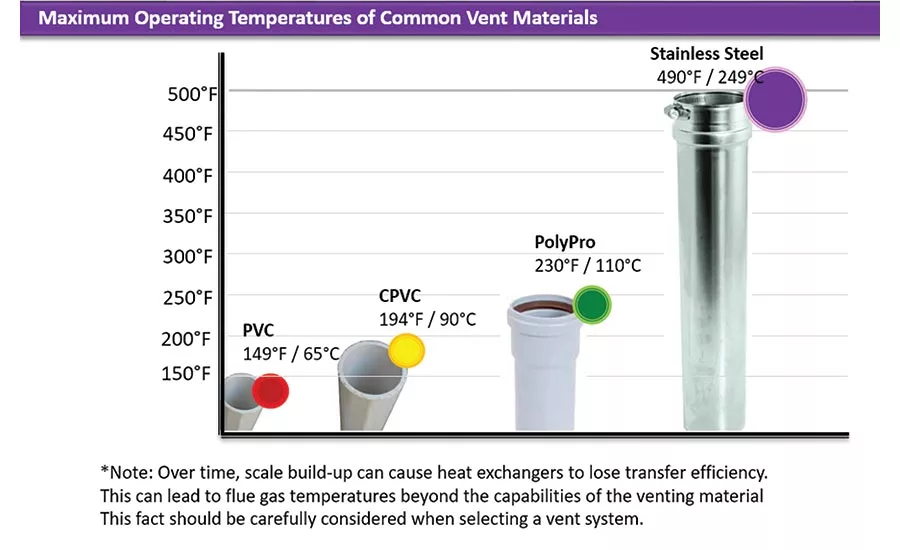
Figure 1. Maximum operating temperatures

Figure 1. Maximum operating temperatures of common venting materials.
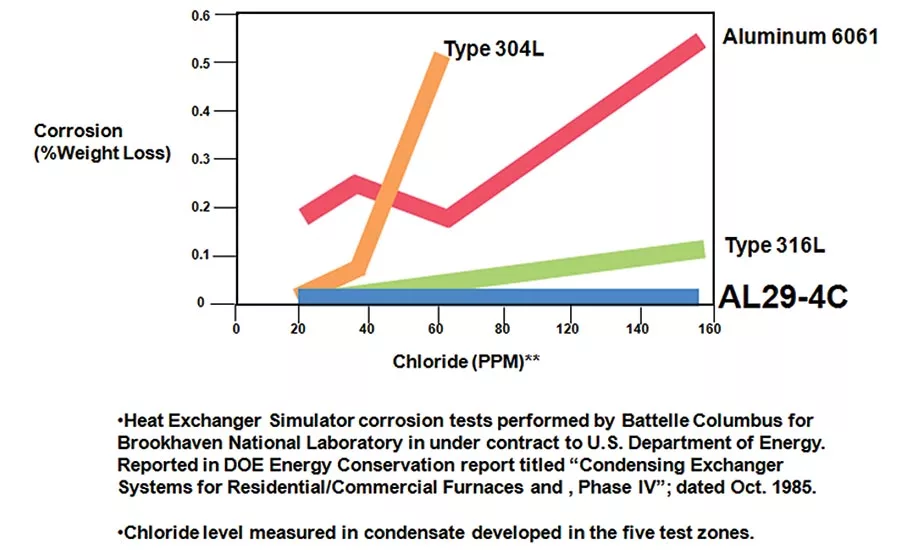
Figure 2. Heat exchanger corrosion

Figure 2. Heat exchanger corrosion percentages by type of venting material.
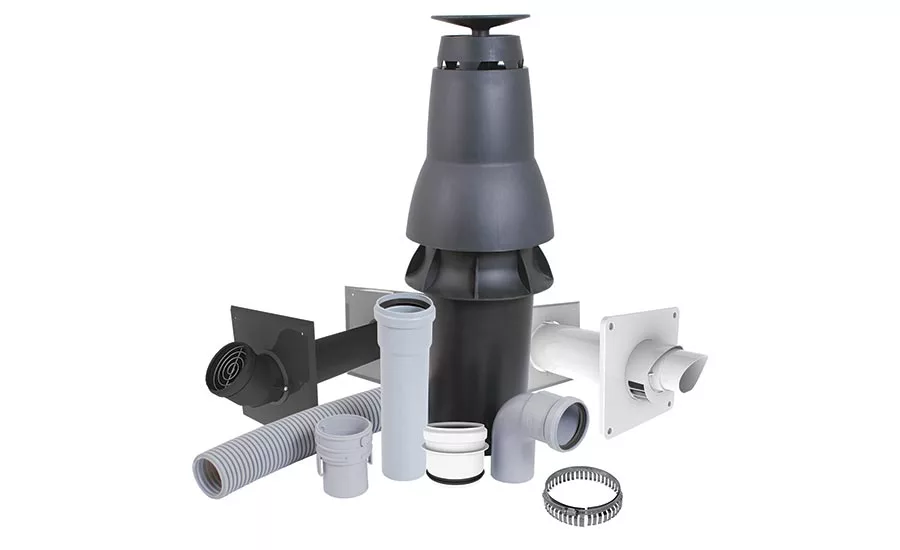
Figure 3. Polypropylene

Figure 3. Polypropylene is another vent material that has gained global acceptance and increased usage.

Figure 1. Maximum operating temperatures
Figure 2. Heat exchanger corrosion
Figure 3. Polypropylene
November 19, 2019

Things are changing in the world of venting for condensing boilers. For many years, the choice for venting high-efficiency appliances was limited to AL29-4C stainless steel. AL29-4C was first used in the early 1980s by the power generation industry for condenser tubing and a little later for vent pipe for Category II, III, and IV gas-burning appliances. Now, in addition to AL29-4C, there are other options available, such as 316L stainless and polypropylene vent systems, for the same Category II, III, and IV gas burning appliances. Both of these new options have proven records, as they have been used for 30-plus years in Europe for venting condensing appliances in addition to being used for internal components in appliances by many OEMs. In most cases, 316L was the only option for venting condensing appliances in Europe prior to the arrival of polypropylene.

It is only recently that these new options are being included in appliance manufacturers’ installation instructions in addition to being identified in project specifications.


316L

The 316L option is a great, low-cost alternative to AL29-4C as it is readily available almost everywhere AL29-4C venting is sold. 316L is also a great option for multi-fuel appliances capable of burning either gas or oil. 316L has been used as the default material in all-fuel applications, chimney relining, and Class A chimneys due to its excellent corrosion-resistance in a wide variety of environments. 316L has earned its reputation based on extensive usage in coastal or marine environments, where it is able to withstand the external corrosive severity inherent in that part of the world.


Polypropylene

Polypropylene is another vent material that has gained global acceptance and increased usage. It has often been called the “steel” of the plastics industry. Having a temperature rating of 230°F/110°C for flue gases, polypropylene offers a more environmentally friendly option to other plastic materials currently used as venting on appliances and furnaces. An additional benefit of polypropylene is that it is lightweight when compared to comparable metal venting options and faster to install when compared to comparable plastic venting options. The various polypropylene systems are gasketed and have mechanical locking mechanisms as part of their product listing approval. Therefore, the learning curve for those who are used to installing stainless steel systems for special gas vent applications is negligible. The other time-saving advantage of polypropylene systems over other plastic vent materials is the lack of glue and sealants required to make proper connections. By not using glues or adhesives to make proper gas- and liquid-tight joint connections, installations are cleaner and can be completed quicker. An even more significant selling point is the fact that there is not any required cure time. Therefore, system startups can be executed immediately rather than a day or two later. An important point to remember when using polypropylene is that it is susceptible to UV degradation. Outdoor venting needs to contain specific polypropylene components that have been treated to be UV-resistant.

We have all heard that life is about choices, and this is now equally true for venting high-efficiency appliances. Being thoroughly aware of all the benefits and advantages of each of the three vent materials will equip you to make the best choice for your application every time.

Share This Story

Looking for a reprint of this article?
From high-res PDFs to custom plaques, order your copy today!


Robert Empie is product application manager for Duravent.

Recommended Content

JOIN TODAY
To unlock your recommendations.

Already have an account? Sign In

  • HVAC-enrollment

    The Trades Are Back: HVACR Programs See Nearly 30% Enrollment Spike

    A new wave of future technicians is entering the pipeline.  
    News
    By: Matt Jachman
  • 2025 Top 40 Under 40

    2025 Top 40 Under 40 HVACR Professionals List

    The 11th annual Top 40 Under 40 list highlights those...
    HVAC Light Commercial Market
    By: Hannah Belloli-Oster
  • LG Ductless Mini-Split Systems

    The 9 Types of Heat Pumps

    As the U.S. moves toward electrification, heat pumps are...
    Air Source Heat Pumps
    By: Joanna R. Turpin

More Videos

Today's Boiler

Spring 2026 Issue

Today's Boiler - Spring 2026 Cover

Read More from Today's Boiler

Case in Point Logo

Smarter Hydronic Design for Data Centers - Free Webinar - January 22, 2026

Related Articles

  • System Architectures Chart

    Supermarket Refrigeration Systems Are Constantly Evolving

    See More
  • Daikin Applied Chiller.

    Chiller Refrigerant Choices Are Evolving with New Regulations

    See More
  • Are You Evolving With the Digital Times?

    See More

Related Products

See More Products
  • EHEP002028.jpg

    Principles of Heating, Ventilation, and Air Conditioning in Buildings, 1st Edition

  • Lessons Learned in a Boiler Room: A common sense approach to servicing and installing commercial boilers

  • 9781482253894.jpg

    Boiler Operator's Handbook, Second Edition

See More Products

Related Directories

  • Nu-Air Ventilation Systems Inc.

    Designs and manufactures high quality heat and energy recovery ventilators (H/ERV). Markets are commercial, residential, multi-unit residential and institutional, 40-4000 cfm.
  • S&P USA Ventilation Systems LLC

    S&P USA is committed to providing ventilation solutions for all applications. Our company is dedicated to enabling people and buildings to breathe better, cleaner air.
×

Sign Up. Stay Informed.

The #1 trusted source for the HVACR industry since 1926

SUBSCRIBE
  • RESOURCES
    • Advertise
    • Contact Us
    • Advisory Board
    • Classifieds
    • Submit a Letter
    • Directories
    • Store
  • ACCOUNT CENTER
    • Create an Account
    • Start a Subscription
    • Manage My Account
    • Sign Up for Newsletters
    • Visit Customer Service
    • Update Preferences
  • SERVICES
    • Marketing Services
    • Reprints
    • Market Research
    • List Rental
    • Survey/Respondent Access
  • STAY CONNECTED
    • LinkedIn
    • Facebook
    • Instagram
    • YouTube
    • X (Twitter)
  • PRIVACY
    • PRIVACY POLICY
    • TERMS & CONDITIONS
    • DO NOT SELL MY PERSONAL INFORMATION
    • PRIVACY REQUEST
    • ACCESSIBILITY

Copyright ©2026. All Rights Reserved BNP Media, Inc. and BNP Media II, LLC.

Design, CMS, Hosting & Web Development :: ePublishing