Case in Point
Energy Company Eliminates Costly Refrigerant Leaks with Monitoring System
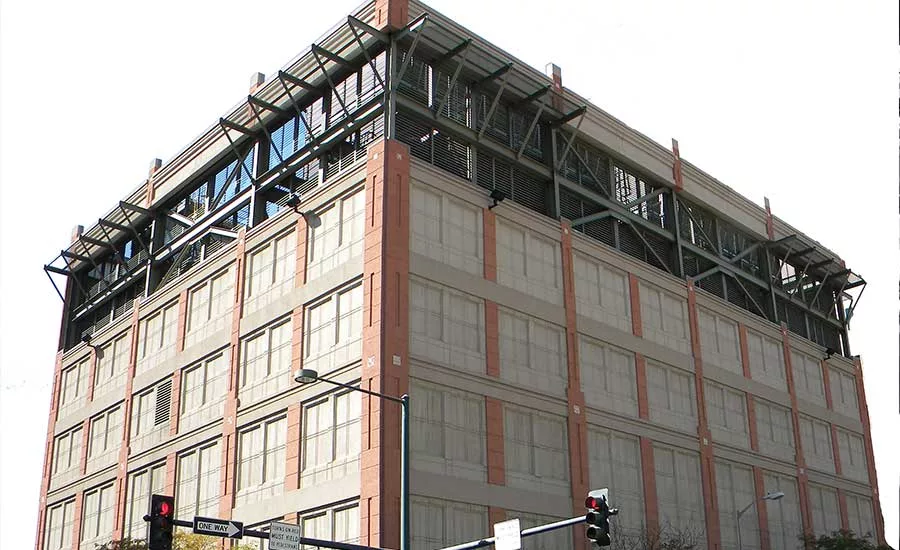
Xcel Energy’s Thermal Energy Department in Denver is responsible for 16 chillers in five different downtown locations. By employing refrigerant monitoring, the team is able to more efficiently troubleshoot refrigerant issues before they cause major issues.
Xcel Energy, an electrical energy provider in Colorado, was in need of refrigerant monitoring updates for its chilled water building in downtown Denver. The different types of refrigerant monitoring systems that were in use offered no communications ability among plant locations in the city. The thermal energy team was spending time conducting constant walk-throughs of five separate buildings to check the functionality of 16 chillers and related mechanical equipment, including the refrigerant.
There was also inconsistent monitoring and the absence of data that could identify leaking refrigerants. This, plus the lack of consistency and reliability in the refrigerant equipment used throughout the plants, made troubleshooting difficult and finding correct spare parts from manufacturers arduous.
Today, Xcel Energy uses Bacharach HGM-MZ (Halogen Gas Monitor – Multi-Zone) refrigerant monitors in its five locations to monitor the chillers. Each plant has its own Bacharach MZ, and they all communicate with the BAS, which records levels of refrigerant readings while each plant is continually monitoring for potential refrigerant leaks. The MZs use an NDIR (non-dispersive infrared) sensor that enables early refrigerant leak detection to 1 ppm and a pump that allows for fast sequential sampling up to 16 points.
Michael O’Malley is the operations manager at Xcel Energy’s Thermal Energy Department in Denver. He and his team are responsible for a system that includes five different locations, 16 chillers, and four miles of underground pipes that distribute chilled water to important downtown buildings.
After evaluating refrigerant monitoring products, O’Malley thought it important to find active sampling refrigerant monitoring equipment. A system that used a pump for sequentially monitoring different locations would get air through to the sensor and the possibility of increasing sampling frequency could help to prevent any serious consequences. To be proactive, O’Malley wanted to set up alarm sensitivities at levels lower than what a passive refrigerant monitor is able to detect.
“The cost of a large refrigerant leak to our organization could range from $10,000 to $100,000 or more, depending on the size of the leak,” said O’Malley.
Using different refrigerant gases, such as R-22, -123, and -134a, at multiple locations, it was also important that the same monitoring system within the different buildings look for all these refrigerant types.
The implementation and installation of the first new refrigerant monitor involved a collaborative effort between Xcel Energy, Bacharach, and the local representative. A number of refrigerant monitors were installed at different Xcel Energy facilities, so there were some concerns about product reliability. O’Malley wanted to make sure the products would last and not require a lot of maintenance. Once Xcel Energy selected the unit it wanted, the initial installation went great, recalled the local representative. Shortly after, however, they were experiencing issues with filters and false alarms. Due to Denver’s mile-high altitude, the diaphragms in the pump were working much harder than necessary. The issue was quickly remedied by replacing the sealed unit with a more robust rubber diaphragm that would not crack or break.
The MZ was installed at a remote plant, and, as budgets allowed, a total of five MZs were installed.
The role of technology is inseparably linked to the chilled water plant. It remains an important safety factor to the team to have highly sensitive leak detection technology incorporated into the refrigerant monitors. Using an advanced sensor that recognizes a variety of refrigerants and a system that provides faster cycle times for all monitoring zones would provide continual sampling to detect any refrigerants that might leak into the mechanical room.
“It’s important that the operations team have confidence that it’s safe to go into the room — that no refrigerant leak happened in the mechanical space and that nothing is leaking into the environment,” said O’Malley.
The local representative noted that Xcel Energy was not using the same gases in all the chillers and not all those gases were supported in the product they were using. This situation could be addressed by the HGM-MZ’s library of gases built into the monitor plus the accuracy of the refrigerant readings provided.
“It’s critical we find refrigerant leaks early,” said O’Malley. “Most importantly, we are concerned with the negative effects on the environment. I don’t want refrigerants getting into the atmosphere.”
Because of the time it took to check the legacy product, it was critical to have a product that would constantly be drawing sequential samples at the chillers and recording refrigerant levels to ensure the product was in operation, no matter the location.
Being able to rely on the equipment in continual operation was another important consideration. Bacharach’s representative remembers visiting the Xcel Energy chiller plant and noted it was the largest underground chiller plant he had ever visited. He recalls that Xcel Energy wanted a set-it-and-forget-it type of unit and that they had some concerns surrounding code compliance.
The facilities supplied with water by Xcel Energy are either directly owned by the building’s owners or are leased. At any time, customers can request records from Xcel Energy on the management of the system.
“If a customer wanted to see records on how we’re managing the system, all we would have to do is pull the data to show them the preventive maintenance we are doing and the historical data,” said O’Malley. “The monitor can talk back to the building management system if the pump goes bad or if the unit sees refrigerant. You don’t have to walk by it to find out. Functionally, it ‘talks’ the building system’s language.”
Looking for a reprint of this article?
From high-res PDFs to custom plaques, order your copy today!