Cold Rooms: Thermostatic Expansion Valves and Solenoid Valves

Editor’s Note: This is the fifth part in our series of articles on cold rooms. Read Part 1 here: Part 1 —Cold Rooms: An Introduction.
As with any refrigeration system, controlling the flow of refrigerant is vital in making a cold room operate properly. Two of the most common types of refrigerant control valves are thermostatic expansion valves and solenoid valves.

Thermostatic Expansion Valves
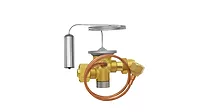
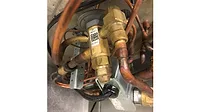
Thermostatic expansion valves (TXVs) work as a type of throttling device and are one of the four essential components in a refrigeration cycle, along with evaporators, compressors, and condensers. As with other throttling devices, TVXs cause refrigerant to expand as it flows, reducing the pressure. This in turn lowers the refrigerant’s temperature, allowing it to absorb heat inside the cold room via the evaporator. The goal of any throttling device is to keep the evaporator as full of refrigerant as possible and ensure that all of the refrigerant evaporates. This helps avoid damage to the compressor from getting liquid refrigerant in the suction port. Unlike some other throttling devices, however, TXVs regulate the refrigerant flow automatically based on the needs of the evaporator.

The basic parts of a TXV are the sensing bulb, the diaphragm, the equalization area, and the superheat setting spring, which work against each other to control the valves operation. First, the sensing bulb, which is filled with a special fluid corresponding to the specific refrigerant used, is mounted on the suction pipe on the downstream side of the evaporator; as the temperature of refrigerant rises, it causes the sensing bulb fluid to expand driving the diaphragm down. Next, the superheat setting spring pushes back, creating constant pressure. Finally, the evaporator pressure in the equalization area varies according to different operating conditions, such as refrigerant temperature, ambient temperature, and bulb and spring pressures. Based on the balance created by these three pressures, the valve will open or close, ensuring that a stable superheat is maintained even when there are varying ambient conditions.
While other throttling devices are available, TXVs work best for cold rooms due to their ability to regulate the flow of refrigerants based on the needs of the system. This refrigerant regulation not only ensures that the cold room will operate as efficiently as possible, it also means that the cold room will need a lower refrigerant charge, saving money during daily operation as well as regular maintenance.
Solenoid Valves
Solenoid valves are a style of regulating valve that use electromagnets to open or close. Valves come either normally open (NO) or normally closed (NC), depending on the needs of the system. Each solenoid is equipped with a coil containing the electromagnet, which controls an internal armature assembly. For example, in a NO solenoid, when the valve is activated, it drives the armature assembly down, closing the valve.

Solenoid valves can be used to redirect the refrigerant (closing an NO valve or opening an NC valve) and are often operated using a controller, though most can also be operated manually. Solenoids work well for a multitude of cold room applications, including hot gas defrost and humidity control.
Initiating a hot gas defrost is ideal right after loading. When warm product is put into the cold room, the thermostat senses the rise in temperature and turns the compressor on, starting the refrigeration cycle. If the cycle runs long enough, the evaporator may begin to ice over. When the hot gas from the condenser cycles back through the evaporator a second time, it melts any ice that may have formed.
When it comes to extending the shelf life of food, humidity control is just as important as temperature control, which is another great application for solenoid valves. If the temperature inside the cold room is sufficiently low but the humidity is too high, one way to lower the humidity without further lowering the temperature is to use only half of the evaporator. If the cold room has two evaporator coils, installing an NO solenoid valve in front of one to be controlled by a humidistat will lower the cold room’s humidity without affecting the temperature.
As we have seen throughout this series, each component can have a major impact on the operation of the refrigeration cycle, and these valves are no exception. These two small valves have the power to affect the rest of the cold room in major ways, so choosing the ones that work best for the specific needs of the cold room is vital.
Looking for a reprint of this article?
From high-res PDFs to custom plaques, order your copy today!