search
Ask ACHR NEWS AI
cart
facebook twitter instagram linkedin youtube
  • Sign In
  • Subscribe
  • Sign Out
  • My Account
  • NEWS
  • TECHNOLOGY
    • Heating & Boilers
    • Cooling & Chillers
    • Pumps & Flow Controls
  • SECTORS
    • Commercial
    • Health Care
    • Data Center
    • Educational Facilities
  • DESIGN | CONSTRUCTION
  • OTHER TOPICS
    • High-Performance Buildings & Automation
    • Ventilation and IAQ
    • Commissioning
    • HVAC Retrofits
  • TODAY’S BOILER
    • Today’s Boiler Archives
    • Today’s Boiler Digital Edition
  • MORE
    • Case Studies
    • Podcasts
    • Videos
    • Directory
    • Webinars
    • ES NEWS Store
    • White Papers
  • SIGN UP
  • Back to The NEWS
Engineered Systems NEWSHVAC Engineering TechnologyHVAC Engineering SectorsHeating & BoilersPumps & Flow ControlsCommercial HVAC

Common Boiler Mistakes

Another great troubleshooting and tips collection looks at how to solve a wide assortment of problems and, maybe more importantly, how to avoid a range of others in the first place.

By Ray Wohlfarth
Individual two-way zone valves with no bypass pipe

FIGURE 1. Individual two-way zone valves with no bypass pipe. The system had excessive flow when only one or two zones opened.
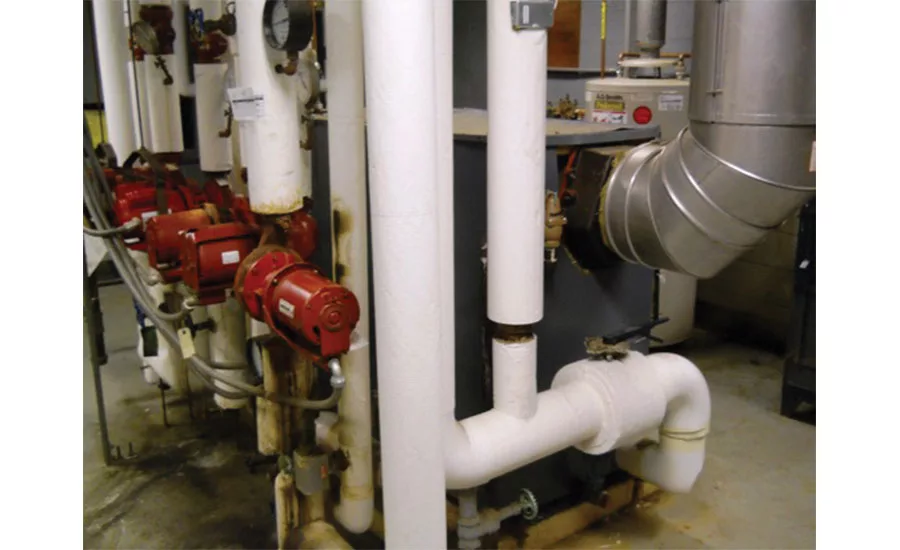
Individual zone circulators on return pipes

FIGURE 2. Individual zone circulators on return pipes. The boiler was damaged from lack of flow when only one or two zones were calling.
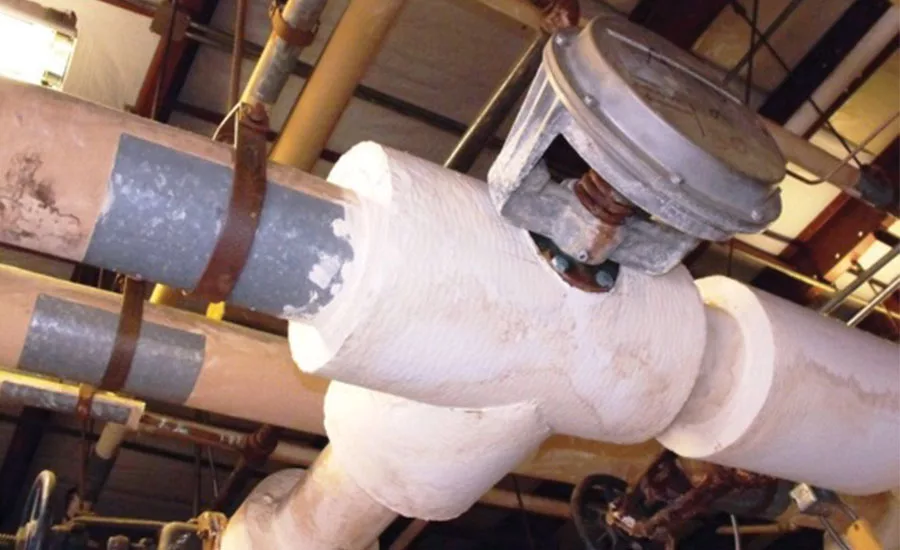
A three-way valve

FIGURE 3. A three-way valve. This caused boiler damage from thermal shock.

Individual two-way zone valves with no bypass pipe
Individual zone circulators on return pipes
A three-way valve
March 7, 2018

I used to watch old western movies with my mother when I was a child. Each movie showed a scene with vultures circling eyeing their next prey. It reminds me of designing a boiler project as the industry vultures are waiting to pounce and feast on any mistake you make. The following are some common mistakes and tips to avoid problems on commercial boiler projects.


Has it ever worked?

Common Boiler Mistakes:

  • Sizing
  • Choosing a boiler
  • Water Treatment
  • Startup
  • Flue
  • Horizontal vs. Vertical
  • 7 Times Rule
  • Condensing Boiler Flues
  • Acids
  • Combustion air
  • Heat in the boiler room
  • Hydronic Boiler Rooms
  • Steam Boiler Rooms

A bit of advice: assume the existing system never worked correctly. At the initial meeting, I like to ask, “In which areas do you have the most complaints?” I suggest we could look to address those areas when we replace the heating system. I also like to note the problem areas we discussed in the proposal in order to protect myself. Once you touch the system, you own all the problems. “It worked before you got here” is a refrain commonly heard.


Sizing

When a customer asks you to design a new heating system, the first thing you would most likely do is perform a heat loss analysis for the building. While this is recommended for hydronic systems, it is a waste of time for low-pressure steam systems. To correctly size a low-pressure steam system, you have to size it according to the connected load. The connected load is all the radiators and system piping. If you size a steam system by heat loss, you will have a building that does not heat properly, an angry customer, and most likely a lawsuit.


Choosing a boiler

In all likelihood, almost every boiler will give the owner long life if installed correctly and maintained regularly. Rather than chose a particular boiler, I urge you to select a knowledgeable manufacturer’s representative or distributor. A professional representative could review the project and offer suggestions. Once you found an organization you want to work with, invite them to the job site with you. They have most likely seen many more boiler rooms than you and may see something which jumps out, a sort of red flag.


Water Treatment

Many of the new boilers have tighter tolerances and need extra filtration and water treatment. Some boilers, including hydronic and steam, require soft water to be supplied to the boiler.


Startup

When testing and adjusting the air to fuel ratio of a boiler, the boiler should operate for 15 to 20 minutes to allow the flame to stabilize before the final adjustments are made. Since most replacement boilers are usually started in late summer or early fall, the hydronic loop heats very quickly and shuts off on temperature. As a result, the air to fuel ratio may not be correct. I suggest you have the startup technician return once the outdoor temperature drops to recheck the readings and adjust the boiler efficiency. The boilers can operate longer in the colder weather allowing for a more accurate reading.


Flue

Many designers or installers will reuse the existing chimney or flue to save money. If you do, be sure it is in operable condition. Check all joints and note the size and pitch of the flue. Verify the stack is the correct category for the boiler. An installer connected a Category I boiler into a Category III stack. The stack was not designed to be operated in a negative state and collapsed, shutting off the flow of flue gases from the boiler.

Look for evidence of corrosion in the flue or chimney. This corrosion could be caused by low water temperatures, plugged flue passages, a leaking boiler, or a negative condition in the boiler room. If the boiler is either a Category III or IV, verify that the flue is of the correct type and it is airtight, as they require a positive flue to prevent flue gas leaks.


Horizontal vs. Vertical

If you are re-using the existing flue with a Category I boiler, remember the horizontal vent must be no more than 75% of the vertical height of the flue. If using B Vent, the horizontal length can be the same length as the height of the chimney, as per International Fuel Gas Code, 2006 503.10.9.


7 Times Rule

A common mistake is removing the old boiler flues but keeping the water heater flue. This is referred to as an orphan. There is a rule of thumb when checking the flue called the “7 Times Rule,” which is: The flow area of the largest common vent or stack shall not exceed seven times the area of the smallest draft hood outlet. Since most water heaters use a 3-in flue, the largest area to connect the water heater should have an area of 49 in, or a 7-in round one. If you are connecting to a square or rectangular chimney, you will need to estimate the areas.

Allow me to show you an example. If you remove the boilers from a square flue that is 12-in by 12-in square and want to see if we can leave an old water heater with a 4-in flue outlet, the 12-in by 12-in chimney is 144 in. This is greater than the rule of seven sizing for the 4-in flue, which is 87.92 in. On this job, we would have to make provisions for the water heater flue. A chimney liner would most likely have to be installed here.


Condensing Boiler Flues

If you are considering condensing boilers, most require separate vents through the wall. If you have three boilers, there will be three holes in the wall. Also, the combustion air for each boiler may also require a hole in the wall. The side of the building would look like a pirate ship. Some owners might not like the look of the flue pipes through the walls.

Another concern is what is below the new flue gas terminations. I visited a nursing home where the flues for the recently replaced boilers were vented above bushes donated and planted by a benefactor. Within a year, the acid in the flue gases killed the bushes and the maintenance director lost his job.


Acids

Carbonic acid is formed inside of condensing boilers when carbon dioxide is mixed with water. According to Neutra-Safe, a condensing appliance can produce one gallon of condensate for every 100,000 Btus burned. The condensate is acidic with a low pH range and could damage the drain pipes. Many municipalities do not allow the acids to be piped directly to the drains. Acid neutralizers are used and have to be maintained. The neutralizer is used to raise the pH  between 5-7.


Combustion air

Combustion air requirements for the boiler are typically overlooked. Be sure the openings are free and clear, and the dampers work correctly. I refer to the International Fuel Gas Code for the sizing requirements.


Heat in the boiler room

Since the new boilers are more efficient and have lower jacket loss into the boiler room than the old ones, the room may require additional heat. This is often not discovered until the heating season.


Hydronic Boiler Rooms

Reuse components?

Each customer seems to have limited funds when discussing a boiler replacement. As a result, we look at ways to cut the installed costs and reuse some of the existing components. Some of the items can be reused while others should not.

Expansion tank. I would look at the condition of the expansion tank and verify the size is adequate.

Pumps. I would be hesitant to reuse pumps over 10 years old. First of all, you do not know if the pump is sized properly. Secondly, the pump may be at the end of its life. ASHRAE suggests a life expectancy of 10 years for a pipe mounted pump and 20 years for base-mounted pumps.


Zone valves

I visited an apartment building having numerous comfort complaints. The return pipes from each apartment had an electric zone valve. The zone valves were connected to thermostats located in each apartment, allowing each tenant individual control. The supply pipe had a very large circulator. The owner had cranked up the boiler water temperature to over 200ºF, and some apartments still had no heat. I checked the delta T from the supply and return pipes and saw it was only 2ºF, which meant the system was not surrendering the heat due to excessive velocity. Most systems are designed for 20-degree delta T. If the system is pumping against closed valves, provisions should be made for either a speed control for the pump or a bypass in the piping to assure proper velocity.


Zone circulators

On another project, the designer used circulators on each return. Each circulator was controlled by a zone temperature control. The boiler was damaged and failed prematurely because there was insufficient flow for the boiler when only one or two zones called for heat. Be sure to check with the boiler manufacturer for the minimum flow they require.


Three-way valves

These are commonly found in commercial buildings and could severely damage the boiler if improperly installed. There are two types of three-way valves: mixing and diverting. The mixing valve has two inlets and one outlet. It is used to mix the two inlet temperatures to achieve the desired discharge temperature. The diverting valve has one inlet and two outlets. It is used to have the water go either into one pipe or the other. Sometimes, boiler damage occurs when using three-way valves and is called thermal shock.

Thermal shock happens when the water temperature difference is too wide. Typically, boilers are designed to handle a temperature difference of 20º to 30ºF. The problem occurs when the boiler is set to 180ºF and the supply water to the system is reset. If a slug of cold water hits the hot boiler, it could cause leaks and boiler damage. Some boiler manufacturers suggest installing a circulator and pipe which will pull water from the supply and inject it into the return piping if using a three-way valve. This is called a blend pump and will warm the return water and lower the temperature difference between the supply and return. One cast iron boiler manufacturer requires the blend pump to be piped in 10- to 20-pipe diameters upstream of the boiler return connection.


Reset control

The reset control will change the supply water temperature according to the outside air temperature. The colder the outside air temperature, the warmer the water. If the new heating system has non-condensing boilers, be sure to check with the manufacturer for the lowest permissible water temperature. That temperature is usually 140ºF. Operation below that temperature could allow the flue gases to condense which can damage the flue or boiler.


Vents

When the system is drained to replace the boilers, I urge you to replace the air vents in the system. One of the most time-consuming chores with a hydronic system is to vent the air. Air pockets can impede the heat flow. Another idea is to install a high-efficiency air vent in the main piping. Air inside the system can rust the piping from the inside out.


Pump away

The system circulator should pump away from the expansion tank. If the pump is before the expansion tank and pumps toward it, air could be introduced to the system which can cause corrosion.


Steam Boiler Rooms

Condensate return

Many of the older boilers used a condensate tank to return water to the boiler. When replacing a steam boiler, I would use a boiler feed system instead of the condensate tank. The boiler feed system has a tank that is much larger. In addition, the makeup water is introduced to the system inside the boiler feed tank. This reduces the chance of shocking the boiler. Also, the makeup water is chemically treated before entering the boiler.


Steam traps

I urge you to consider updating the steam traps in the facility when changing steam boilers. Steam traps have an estimated life span of five to 10 years. I would confidently wager the building still has the same traps that were original to the system. Steam trap inserts can be installed and are relatively inexpensive. 

We replaced the steam boilers in an apartment building, and that is when the problems started. We had many apartments with heating complaints. In addition, steam was spewing out of the boiler feed vent in the boiler room, filling the room with steam. The steam was even entering the electrical panels, creating a dangerous condition. Upon investigation, we found someone had removed the radiator steam traps from half of the apartments. The customer replaced all the steam traps and the system worked great. Their fuel consumption dropped dramatically with the new traps.


High-level spill

When using two or more steam boilers, the lag boilers always seem to flood. The flooding could cause the boilers not to operate or bang loudly when they do. ASME suggests installing a steam trap on each boiler located about 1 in to 2 in above the normal water line of the boiler. If the water level raises that high, the traps will open and direct the condensate to the boiler feed tank.


Controls

If you control low-pressure steam boilers in the same way as hydronic boilers, you will have an unhappy customer. Think of it like an airplane taking off. When the plane takes off, it uses full power until the airplane reaches cruising altitude. Once it does, the pilot pulls back the throttle. Multiple steam boilers should all be started at the same time and then once steam pressure is established, the boilers can be staged back or off.


Near boiler piping

The near boiler piping on a low-pressure steam boiler is crucial, and the owner’s manual has to be followed. The piping will affect the operation of the boiler. Many steam boilers are not piped correctly and could lead to comfort complaints.


Steam pressure

One of the other things to check is the steam pressure for the boiler. Low-pressure steam systems for comfort heating were designed to heat the building using 2 Psig steam pressure. If the system pressure is higher than that, the system may not work as designed. The Empire State Building is over 1,250 ft high and uses 2 Psig steam pressure for heat.

Good luck on your next commercial boiler project, and keep an eye out for vultures.

Top

Share This Story

Looking for a reprint of this article?
From high-res PDFs to custom plaques, order your copy today!


Ray wohlfarth

Ray Wohlfarth is president of Fire and Ice in Pittsburgh. He is currently a columnist for Plumbing and Mechanical and PM Engineer magazines and the author of “Lessons Learned in a Boiler Room.” Wohlfarth also taught a course for the Green Building Research Institute on green boilers and is the RP chair for West Virginia ASHRAE, membership chair for West Virginia Association of Physical Plant Administrators (WV-APPA), and a member of the Radiant Professionals Association.

Recommended Content

JOIN TODAY
To unlock your recommendations.

Already have an account? Sign In

  • HVAC-enrollment

    The Trades Are Back: HVACR Programs See Nearly 30% Enrollment Spike

    A new wave of future technicians is entering the pipeline.  
    Training and Education
    By: Matt Jachman
  • 2025 Top 40 Under 40

    2025 Top 40 Under 40 HVACR Professionals List

    The 11th annual Top 40 Under 40 list highlights those...
    HVAC Light Commercial Market
    By: Hannah Belloli-Oster
  • LG Ductless Mini-Split Systems

    The 9 Types of Heat Pumps

    As the U.S. moves toward electrification, heat pumps are...
    News
    By: Joanna R. Turpin

More Videos

Today's Boiler

Spring 2026 Issue

Today's Boiler - Spring 2026 Cover

Read More from Today's Boiler

Case in Point Logo

Smarter Hydronic Design for Data Centers - Free Webinar - January 22, 2026

Related Articles

  • The Butterfly Effect: Common Steam System Mistakes

    The Butterfly Effect: Common Steam Boiler System Mistakes

    See More
  • Wohlfarth Lead

    Replacing The "Engine" On Your Boiler System

    See More
  • Boiler 2022

    Will I See You at BOILER 2022?

    See More

Related Products

See More Products
  • Lessons Learned in a Boiler Room: A common sense approach to servicing and installing commercial boilers

  • 9781482253894.jpg

    Boiler Operator's Handbook, Second Edition

See More Products

Events

View AllSubmit An Event
  • November 13, 2025

    4 Lead Generation Mistakes You Might Be Making in Your Business & How to Fix Them

    On Demand From website gaps to follow-up breakdowns, you’ll walk away with practical tips to improve your lead flow process and turn your marketing investment into actual revenue results.
View AllSubmit An Event

Related Directories

  • Rite Boiler

    Rite manufactures and provides Low- and High-Pressure Steam Boilers, Hot Water Boilers, Blowdown Tanks, Boiler Feed System, Water Softeners, Chemical Feed Systems, and more.
  • Central Boiler

    Central Boiler, the leading manufacturer of outdoor furnaces. Among its many industry-leading accomplishments was the production of the first EPA-qualified outdoor wood furnace. Visit CentralBoiler.com
×

Sign Up. Stay Informed.

The #1 trusted source for the HVACR industry since 1926

SUBSCRIBE
  • RESOURCES
    • Advertise
    • Contact Us
    • Advisory Board
    • Classifieds
    • Submit a Letter
    • Directories
    • Store
  • ACCOUNT CENTER
    • Create an Account
    • Start a Subscription
    • Manage My Account
    • Sign Up for Newsletters
    • Visit Customer Service
    • Update Preferences
  • SERVICES
    • Marketing Services
    • Reprints
    • Market Research
    • List Rental
    • Survey/Respondent Access
  • STAY CONNECTED
    • LinkedIn
    • Facebook
    • Instagram
    • YouTube
    • X (Twitter)
  • PRIVACY
    • PRIVACY POLICY
    • TERMS & CONDITIONS
    • DO NOT SELL MY PERSONAL INFORMATION
    • PRIVACY REQUEST
    • ACCESSIBILITY

Copyright ©2026. All Rights Reserved BNP Media, Inc. and BNP Media II, LLC.

Design, CMS, Hosting & Web Development :: ePublishing