search
Ask ACHR NEWS AI
cart
facebook twitter instagram linkedin youtube
  • Sign In
  • Subscribe
  • Sign Out
  • My Account
  • NEWS
  • TECHNOLOGY
    • Heating & Boilers
    • Cooling & Chillers
    • Pumps & Flow Controls
  • SECTORS
    • Commercial
    • Health Care
    • Data Center
    • Educational Facilities
  • DESIGN | CONSTRUCTION
  • OTHER TOPICS
    • High-Performance Buildings & Automation
    • Ventilation and IAQ
    • Commissioning
    • HVAC Retrofits
  • TODAY’S BOILER
    • Today’s Boiler Archives
    • Today’s Boiler Digital Edition
  • MORE
    • Case Studies
    • Podcasts
    • Videos
    • Directory
    • Webinars
    • ES NEWS Store
    • White Papers
  • SIGN UP
  • Back to The NEWS
Engineered Systems NEWSHigh-Performance Buildings & Automation

Back To BASics — Control Loops

When it comes to mechanical system design, don’t be thrown for a ‘loop.’
By Ira Goldschmidt P.E.
Back To BASics - Control Loops

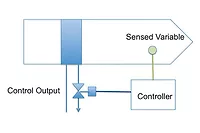
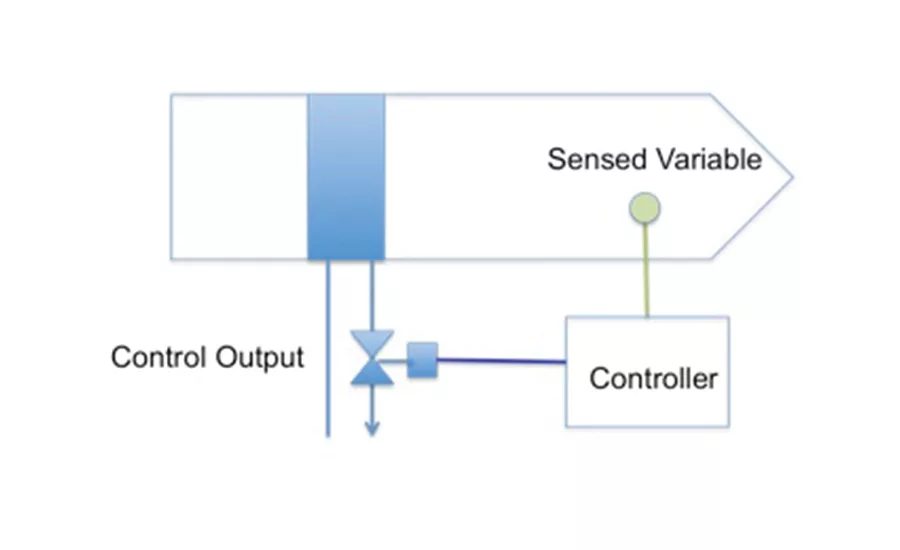
FIGURE 1. The elements of a control loop.

March 2, 2018

Good building mechanical design requires a firm grasp of the mechanical engineering fundamentals (thermodynamics, psychrometrics, the fan laws, etc.). The same can be said about the BAS design needed to control these mechanical systems. However, engineers are not normally taught control theory and its application to commercial buildings. Therefore, BAS designs often lack the same engineering foundation as that for the associated mechanical systems. This month, I will revisit an important aspect of control fundamentals.

Control loops are the foundation of how a BAS performs temperature control. There are often thousands of control loops in even a moderately-sized BAS, and there’s usually three or more control loops in a single VAV box controller. There are two types of control loops: open and closed. Open loop control bases its action on an input, but that action does not have an effect on the input. Examples include time clock control, reset schedules based on outside air temperature, etc. Open loops are important to temperature control but they should never be used when closed loop is the right approach.

Closed loops are the key element of temperature control. They differ from open loop control by the fact that the input (the “Sensed Variable” aka “Controlled Variable,” see Figure 1) provides feedback to the action of the loop. Sensors (e.g., temperature, pressure, humidity) provide the “Sensed Variable” value and feedback. There are two types of closed loops, depending on the device/equipment controlled: on/off and modulated (where “modulated” means that the device’s position or equipment’s capacity can be set to any one of a large number of positions between open/closed, low/high speed, etc.).

On/off control is used when the controlled device/equipment cannot be modulated (e.g., a single speed fan, solenoid valve, DX compressor, simple boilers/furnaces). The control algorithm used is essentially as a mathematical version of an on/off thermostat. On/off temperature control does not provide very accurate control, but it may be the only choice given the type or class of controlled device/equipment. Therefore, it still is an important ingredient to temperature control.

Modulated control is generally the most used type of temperature control in a commercial building. A “PID” algorithm is typically used by a BAS to implement closed loop control. In short, a PID algorithm (which is part of the “Controller” programming) compares the “Sensed Variable” to the setpoint, the value to which the “Sensed Variable” is expected to be maintained. Based on the error between the “Sensed Variable” and setpoint, the PID algorithm continuously determines a “Control Output” value (typically 0-100% which is then converted by the BAS hardware to 0-10vDC, 4-20maDC, etc.) with the goal of maintaining the “Sensed Variable” at the setpoint.


What’s the Challenge?

PID control loops require tuning of gain parameters to ensure that they can provide a response that reaches setpoint in a reasonable time and remains stable thereafter. These gain parameters determine how much affect a change in the error between the “Sensed Variable” and setpoint has on a change in the “Control Output” value.

If the gains are too sensitive, then the loop will continuously cycle (aka “hunt”) above and below setpoint. If not sensitive enough, then the loop will be slow to respond and may never reach setpoint. There are no universal “gains” that can be used for all or even a subset of HVAC applications. What’s more, the correct gain parameters can change over time as the controlled device/equipment performance changes over time. Therefore, getting and keeping PID loops functioning properly is one of the more challenging (and perhaps the most overlooked) aspects of operating/maintaining a BAS.

Share This Story

Looking for a reprint of this article?
From high-res PDFs to custom plaques, order your copy today!


Iragold

Ira has worked in the building industry for over 35 years as a controls tech, MEP designer, and consultant providing design/guidance for critical-facility BAS and intelligent building systems integration. He is a co-author of the ASHRAE BACnet® standard and Guideline 13 — Specifying DDC Controls.

WWW.ESMAGAZINE.COM/IRA
Use this handy shortcut to see Ira’s collected BAS wisdom in ES columns and other articles.

Recommended Content

JOIN TODAY
To unlock your recommendations.

Already have an account? Sign In

  • HVAC-enrollment

    The Trades Are Back: HVACR Programs See Nearly 30% Enrollment Spike

    A new wave of future technicians is entering the pipeline.  
    Training and Education
    By: Matt Jachman
  • 2025 Top 40 Under 40

    2025 Top 40 Under 40 HVACR Professionals List

    The 11th annual Top 40 Under 40 list highlights those...
    News
    By: Hannah Belloli-Oster
  • LG Ductless Mini-Split Systems

    The 9 Types of Heat Pumps

    As the U.S. moves toward electrification, heat pumps are...
    Heat Pumps
    By: Joanna R. Turpin

More Videos

Today's Boiler

Spring 2026 Issue

Today's Boiler - Spring 2026 Cover

Read More from Today's Boiler

Case in Point Logo

Smarter Hydronic Design for Data Centers - Free Webinar - January 22, 2026

Related Articles

  • Ira Goldschmidt, P.E.

    Back To BASics — Sensors And Actuators

    See More
  • Ira Goldschmidt, P.E.

    Back To BASics: DDC Controllers (Part 1)

    See More
  • Flow Chart

    Back to BASics

    See More

Related Products

See More Products
  • Modern Geothermal HVAC Engineering and Control Applications

  • ShowISBNImage.jpg

    Electricity, Electronics, and Control Systems for HVAC, 4/e

  • controltransformersdvd.jpg

    UNDERSTANDING CONTROL TRANSFORMERS

See More Products

Related Directories

  • Sterlco Steam Control Products

    Sterlco’s history dates back to 1916, and began by manufacturing valves, traps, and condensate pumps for steam and hot water systems.
  • Heat Controller

    Heating and air conditioning equipment for residential and commercial applications, 1/2 to 25 tons, under the Comfort-Aire and Century brand names.
  • Data-Basics Inc. (Manufacturer)

    SAM Pro Enterprise provides an integrated service management, wireless workforce and job cost accounting software for service, construction and national accounts.
×

Sign Up. Stay Informed.

The #1 trusted source for the HVACR industry since 1926

SUBSCRIBE
  • RESOURCES
    • Advertise
    • Contact Us
    • Advisory Board
    • Classifieds
    • Submit a Letter
    • Directories
    • Store
  • ACCOUNT CENTER
    • Create an Account
    • Start a Subscription
    • Manage My Account
    • Sign Up for Newsletters
    • Visit Customer Service
    • Update Preferences
  • SERVICES
    • Marketing Services
    • Reprints
    • Market Research
    • List Rental
    • Survey/Respondent Access
  • STAY CONNECTED
    • LinkedIn
    • Facebook
    • Instagram
    • YouTube
    • X (Twitter)
  • PRIVACY
    • PRIVACY POLICY
    • TERMS & CONDITIONS
    • DO NOT SELL MY PERSONAL INFORMATION
    • PRIVACY REQUEST
    • ACCESSIBILITY

Copyright ©2026. All Rights Reserved BNP Media, Inc. and BNP Media II, LLC.

Design, CMS, Hosting & Web Development :: ePublishing