search
Ask ACHR NEWS AI
cart
facebook twitter instagram linkedin youtube
  • Sign In
  • Subscribe
  • Sign Out
  • My Account
  • NEWS
  • TECHNOLOGY
    • Heating & Boilers
    • Cooling & Chillers
    • Pumps & Flow Controls
  • SECTORS
    • Commercial
    • Health Care
    • Data Center
    • Educational Facilities
  • DESIGN | CONSTRUCTION
  • OTHER TOPICS
    • High-Performance Buildings & Automation
    • Ventilation and IAQ
    • Commissioning
    • HVAC Retrofits
  • TODAY’S BOILER
    • Today’s Boiler Archives
    • Today’s Boiler Digital Edition
  • MORE
    • Case Studies
    • Podcasts
    • Videos
    • Directory
    • Webinars
    • ES NEWS Store
    • White Papers
  • SIGN UP
  • Back to The NEWS
Engineered Systems NEWSHVAC Engineering TechnologyHVAC Engineering SectorsHVAC RetrofitsCase in PointHeating & BoilersCommercial HVAC

Case in Point

Retail company reduces energy costs with HTHV technology
Retail company reduces energy costs with HTHV technology
October 27, 2017

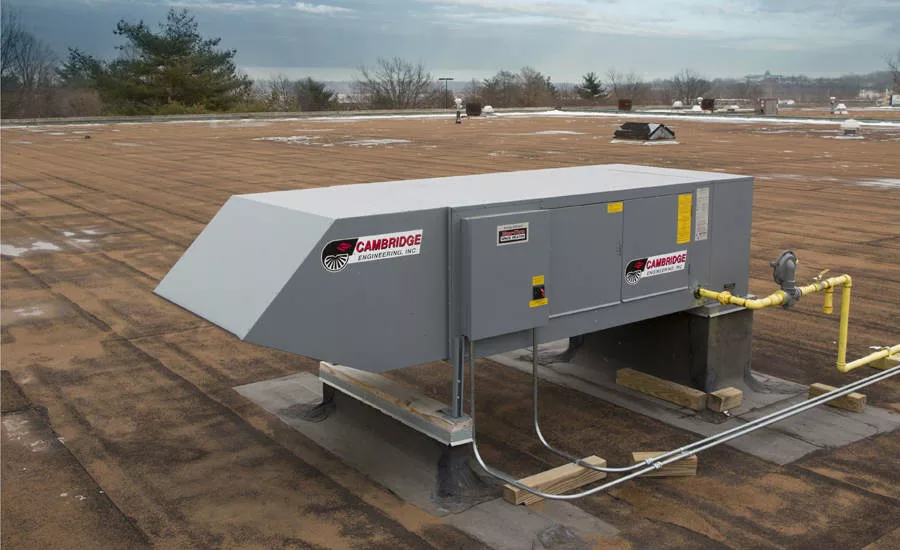
When a large national retailer wanted to reduce their energy costs at one of their new distribution centers in Topeka, KS, they turned to Cambridge Engineering and their High Temperature Heating & Ventilation (HTHV) technology to help them out. The plan was to use the HTHV technology on the new facility and compare the energy costs of HTHV technology to that of a similar building utilizing standard Makeup Air Units (MAU) to heat that particular facility.

The new distribution center in Topeka, KS had nearly the exact same footprint, 1,291,950 s/f, as an existing distribution facility in Columbus, OH. The distribution centers had similar Heating Degree Days (HDD)—the Topeka location had 5,215 HDDs based at 65° F, and the Columbus location had 5,545 HDDs based at 65° F as well. Both locations had 36’ high ceilings, R-19 insulation factor in the roofs and R-10 insulation factor in the walls.

The Topeka location had 15 rooftop mounted HTHV units providing a total of 27,806 MBH of heat, and the Columbus location had 15 standard rooftop mounted MAUs providing a total of 30,315 MBH of heat. The HTHV units used a total to 95 HP for the electric motors and the MAUs used a total of 150 HP for their electrical motors. This alone meant that the MAUs would use more electricity than the HTHV units. The HTHV units also introduced fewer CFM of air into the structures. The HTHV units generated 132,340 CFM while the MAUs generated 210,000 CDFM of air.

After the first heating season was completed, the natural gas utility bills for both locations were compared, and the findings were substantial. The Topeka facility used 47% less energy than the similar facility in Columbus. And, because the HTHV technology also provides destratification, the temperature variation in the Topeka building from floor to ceiling was no greater than 11° F and the temperature variation in the Columbus facility was 28° F from floor to ceiling.

Share This Story

Looking for a reprint of this article?
From high-res PDFs to custom plaques, order your copy today!


Recommended Content

JOIN TODAY
To unlock your recommendations.

Already have an account? Sign In

  • HVAC-enrollment

    The Trades Are Back: HVACR Programs See Nearly 30% Enrollment Spike

    A new wave of future technicians is entering the pipeline.  
    News
    By: Matt Jachman
  • 2025 Top 40 Under 40

    2025 Top 40 Under 40 HVACR Professionals List

    The 11th annual Top 40 Under 40 list highlights those...
    News
    By: Hannah Belloli-Oster
  • LG Ductless Mini-Split Systems

    The 9 Types of Heat Pumps

    As the U.S. moves toward electrification, heat pumps are...
    Ground Source Heat Pumps
    By: Joanna R. Turpin

More Videos

Today's Boiler

Spring 2026 Issue

Today's Boiler - Spring 2026 Cover

Read More from Today's Boiler

Case in Point Logo

Smarter Hydronic Design for Data Centers - Free Webinar - January 22, 2026

Related Articles

  • Case In Point

    Grocery Warehouse Reduces Energy Costs with Unique Refrigeration System

    See More
  • Major League Soccer Club

    Major League Soccer Club Efficiently Exceeds 55°F Goal with HTHV Technology

    See More
  • Ultimate Soccer sees game changer with HTHV technology

    Ultimate Soccer sees game changer with HTHV technology

    See More

Related Products

See More Products
  • Building Information Modeling: Planning and Managing Construction Projects with 4D CAD and Simulations

See More Products

Related Directories

  • Energy Recovery

    Energy Recovery's PX G1300 pressure exchanger for CO2 refrigeration systems lowers operating costs and energy consumption, increases efficiency, and reduces emissions.
×

Sign Up. Stay Informed.

The #1 trusted source for the HVACR industry since 1926

SUBSCRIBE
  • RESOURCES
    • Advertise
    • Contact Us
    • Advisory Board
    • Classifieds
    • Submit a Letter
    • Directories
    • Store
  • ACCOUNT CENTER
    • Create an Account
    • Start a Subscription
    • Manage My Account
    • Sign Up for Newsletters
    • Visit Customer Service
    • Update Preferences
  • SERVICES
    • Marketing Services
    • Reprints
    • Market Research
    • List Rental
    • Survey/Respondent Access
  • STAY CONNECTED
    • LinkedIn
    • Facebook
    • Instagram
    • YouTube
    • X (Twitter)
  • PRIVACY
    • PRIVACY POLICY
    • TERMS & CONDITIONS
    • DO NOT SELL MY PERSONAL INFORMATION
    • PRIVACY REQUEST
    • ACCESSIBILITY

Copyright ©2026. All Rights Reserved BNP Media, Inc. and BNP Media II, LLC.

Design, CMS, Hosting & Web Development :: ePublishing