Dehumidification For Health Care
Operating rooms are home to some of the widest swings in required room conditions. Review three dehumidification options on the way to tailoring the right design for your next projects.
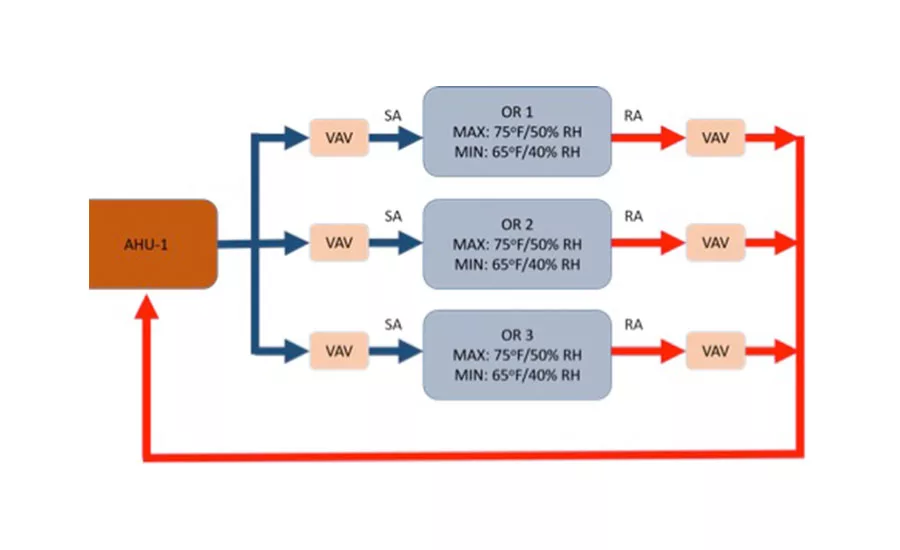
FIGURE 1. AHU system configuration.
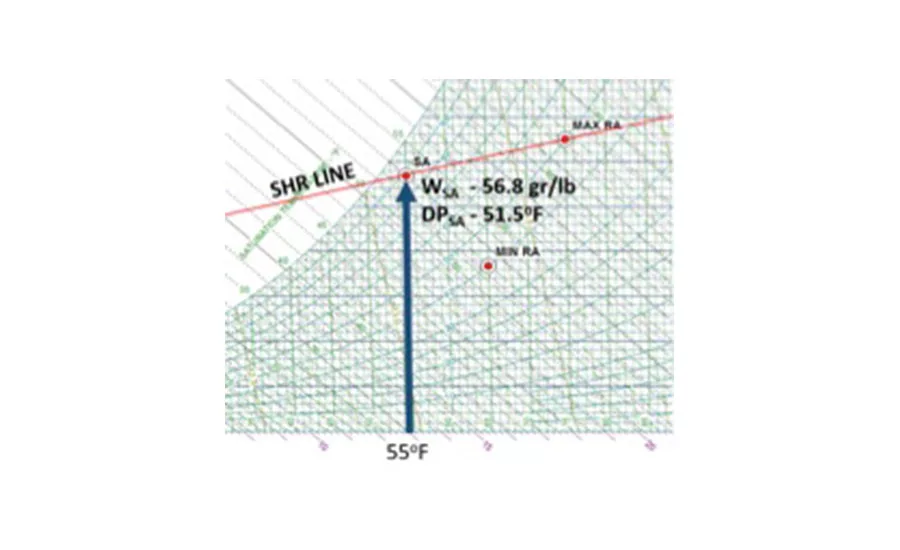
FIGURE 2. Upper limit system supply air temperature analysis.

FIGURE 3. Lower limit system supply air temperature analysis.
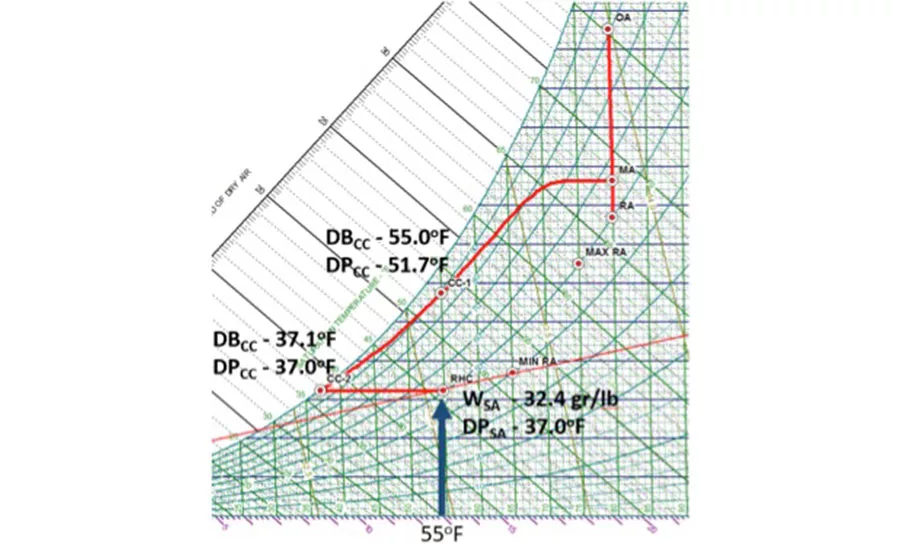
FIGURE 4. DX and glycol dehumidification.
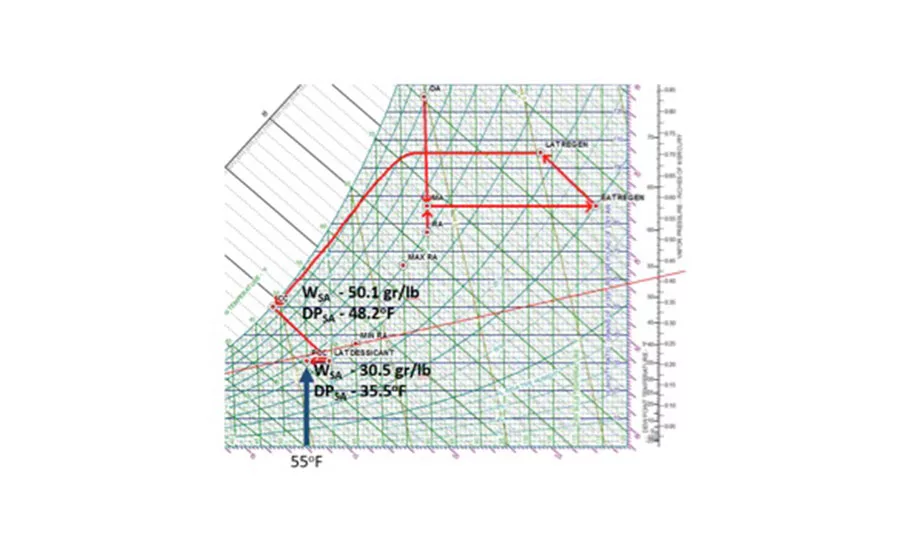
FIGURE 5. Desiccant dehumidification.
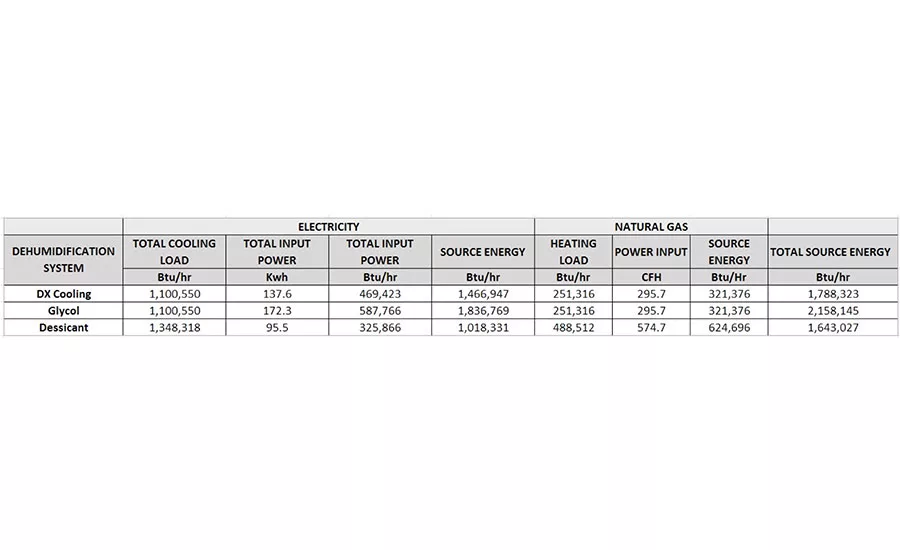
TABLE 1. Energy consumption of each system.
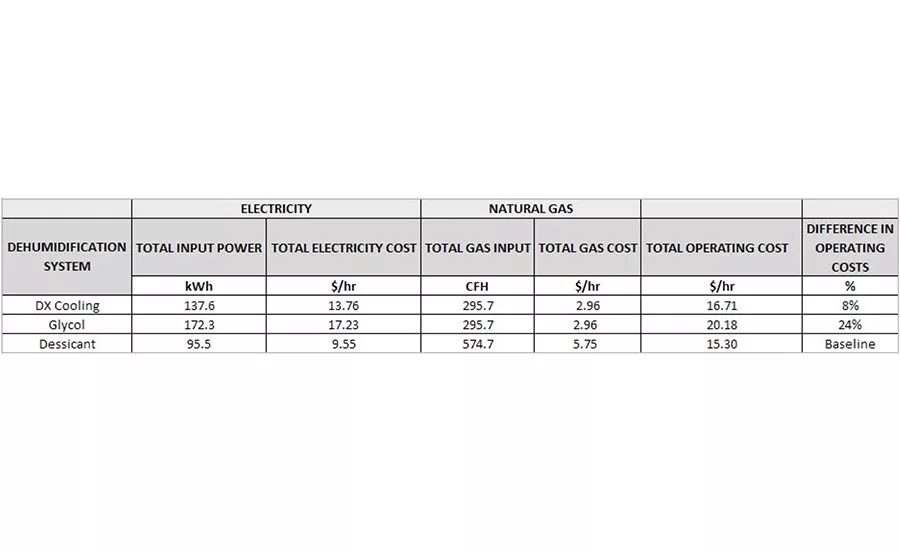
TABLE 2. Energy cost of each system.
Atypical approach when designing HVAC systems for operating rooms (ORs) is to go to ASHRAE Standard 1701 and identify what types of ORs are being designed (e.g., Class B, Class C). One would then determine the appropriate temperature and relative humidity design setpoints for all ORs in the suite. The next step would be to calculate the OR sensible and latent loads, followed by the selection and sizing of the related HVAC system. Since the OR HVAC system has been designed and sized per the requirements of ASHRAE 1701, one would expect that such system will meet all user expectations and operate as intended. Unfortunately, this “one size fits all” approach does not give the users the flexibility to perform complex procedures while having a reliable and energy efficient mode of operation.
With a continuous pressure to decrease turnover time while also providing the medical staff with utmost flexibility, the design of the HVAC systems for today’s operating rooms requires not just special attention but also complex analyses. As such, it is crucial for the OR HVAC systems to support a wide range of temperature and associated relative humidity setpoints. For instance, an orthopedic surgery room could require a design OR setpoint of 63°F and 40% rh; such procedure might then be followed by a long and demanding pediatric surgery that requires higher temperature and relative humidity setpoint (75°F and 50% rh).
It is important to note that Note O on Table 7-1 of ASHRAE Standard 1701 states that “Surgeons or surgical procedures may require room temperatures, ventilation rates, humidity ranges, and/or air distribution methods that exceed the minimum indicated ranges.” Due to various factors that affect the design, different HVAC system configurations must be analyzed in order to meet the ever increasing and ever more complex expectations from the OR HVAC systems.
This article focuses on three types of dehumidification methods that can be used to cater to the various OR design needs: 1) Low temperature DX dehumidification, 2) Low temperature glycol dehumidification, and 3) Desiccant dehumidification. This article compares the benefits and limitations of the three different dehumidification methods, and analyzes the energy impact and related cost for each. In order to simplify the energy analysis and to mitigate the risk of having system specific parameters (i.e., external fan static pressure) that could skew the results, the fan energy and related fan heat gain have been removed from the analysis for all three systems.
Design Conditions (shown in Figure 1)
The minimum OR temperature setpoint is 65°F and relative humidity setpoint is 40%, while the maximum are 75°F and 50% rh, respectively.
- The ORs are teaching type with high latent load; SHR line is 0.8.
- Supply air temperature setpoint is 55°F.
- VAV terminal devices with reheat coils are serving each OR.
- The AHU total supply airflow is 13,000 cfm.
- Each OR is designed to operate between the minimum and maximum temperature and relative humidity setpoints.
- The design mixed air temperature (i.e., between return air and outside air) is 79.9°F DB/68.4°F WB.
Dehumidification cannot be discussed without using the “infamous” Psychrometric chart, and the three dehumidification methods are illustrated in such charts throughout this article. The two typical design conditions that will be considered are: 1) At 75°F and 50% rh with a humidity ratio WRA of 64.9 gr/lb and 2) at 65°F and 40% rh with the humidity ratio WRA of 36.7 gr/lb.
The upper limit of 75°F and 50% rh ( WSA =~56.8 gr/lb, DPSA=~51.5°F shown in Figure 2) can be addressed using a standard approach, as this relatively “warm” dew point (DP) temperature can easily be achieved with a standard chilled water coil design. Unlike the upper limit conditions, however, lower limit conditions require a more complex approach.
With the intent of having the system supply air temperature (SAT) located somewhere on the sensible heat ratio (SHR) line and as confirmed by the latent heat gain equation, in order to maintain the lower temperature and relative humidity OR setpoints, the corresponding required supply air humidity ratio WSA is approximately 32.4 gr/lb and the required dew point temperature DPSA is approximately 37°F (Figure 3). In order to meet this relatively cold temperature requirement of 37°F dew point temperature and dry bulb temperature of 37.1°F, a more complex HVAC system must be considered. The remainder of this article analyzes three systems to meet these design conditions and the system energy consumption. With the intent of comparing “apples to apples,” it is assumed that all cooling is done at the AHU.
Low-temperature DX dehumidification. With a DX system, assume that two DX cooling coils, arranged in series, are required in order to cool the air down to a 37°F DP temperature (this may vary depending on the DX system and/or manufacturer). The maximum refrigerant saturated suction temperature should be around 35ºF to meet this condition. Depending on the coil type lower refrigerant temperatures might be required. However, in order to achieve a design supply air dry bulb temperature of 55ºF, a reheat coil is required to heat the air from 37°F DB back up to 55ºF before it leaves the AHU. Figure 4 shows this system in a psychrometric chart.
Low-temperature glycol dehumidification. From a psychrometric perspective, the second system is similar to the first system, but this one uses two glycol cooling coils that are installed in series to cool the air down to 37ºF DP temperature. The low-temperature glycol water, which has a concentration of 35% propylene glycol, is delivered by two low-temperature air cooled chillers. The design cooling coil glycol entering temperature is 20ºF DB, and the design cooling coil glycol leaving temperature is 29ºF DB.
Desiccant dehumidification. Unlike the two previous systems, desiccant dehumidification utilizes a series desiccant wheel to drive the air well below a 37ºF DP temperature, as shown in Figure 5. The cooling coil leaving air temperature is 48.5ºF DB. A separate preheat coil is used to regenerate the desiccant wheel making the preheat coil leaving air temperature to be 113.8ºF DB. A secondary cooling coil is required to cool the air that leaves the desiccant wheel down to 55ºF DP.
Although all three systems have the capability to meet the design conditions, the energy consumption and related energy cost of each system is significantly different. The following energy and energy cost analyses are completed based on the design condition. This article is not intended to determine which of the three systems is most suited for designing ORs. Project specific variables such as weather, first costs, operational costs, building type (i.e hospital, ambulatory surgery center) could tilt the balance in favor of each of the three systems.

TABLE 1. Energy consumption of each system.
The estimated energy and energy source consumption at design conditions associated with each system is presented in Table 1.
For estimating the electricity consumption for each system, the following assumptions were made:
- The desiccant system uses chilled water from a chilled water plant with an energy efficiency of 0.85 kW/ton.
- The low-temperature glycol air cooled chillers have an energy efficiency of 6.4 EER, including pump energy.
- The low-temperature air cooled condensing units have an energy efficiency of 8 EER.
For estimating the source energy consumption, the following assumptions were made:
- Electricity, 32% efficiency (5% extraction and processing losses, 57% generation losses, 6% distribution losses).
- Natural gas, 92% efficiency (7% extraction and processing losses, 1% distribution losses).

TABLE 2. Energy cost of each system.
The estimated energy cost, at design conditions, associated with each system is presented in Table 2.
The following assumptions were made in order to conduct a cost and energy analysis:
- Cost of electricity $0.10/ kWh
- Cost of natural gas $10/1,000 CFH
- Heating is done via hot water coils
- Hot water boilers with 85% efficiency
Conclusion
When designing HVAC systems for operating rooms, it is extremely important to engage the medical staff early in the design process. As stated in the ASHE/AORN Guidance2, “[the] Design requirements are NOT the same as clinical practice recommendations. Each has a distinct purpose and intent. The ASHRAE/ASHE standards and FGI guidelines are intended to establish the minimum design requirements and criteria that must be met to construct an HVAC system that will support clinical functions during the life of a building. The AAMI and AORN guidelines are intended to guide the daily operation of the HVAC system and clinical practice once the health care facility is occupied.”
In other words, there are no single temperature and relative humidity setpoints that satisfy all ORs within a suite. Instead, the HVAC system should be designed to accommodate a wide variety of OR temperatures. Without this much needed flexibility, there is a risk for the OR HVAC system to negatively impact infection control, OR turnover time, and patient recovery time. The intent of this article is not to claim that the presented three systems are the only ones that can meet the temperature and relative humidity demands of today’s ORs. Each of the three systems, or any other similar system combinations for that matter, has its pros and cons. Different systems should be utilized based on project specific requirements and needs.
References
- ANSI/ASHRAE/ASHE Standard 170 – 2013, Ventilation of Healthcare facilities
- ASHE/AORN Joint Interim Guidance, September 21, 2015.
Looking for a reprint of this article?
From high-res PDFs to custom plaques, order your copy today!




.webp?height=200&t=1662583028&width=200 "David Wright (2).jpg")