Addressing NFPA 99’s Maintenance Requirements for Health Care Electrical Systems
Three strategies designed to improve a facility's preventive maintenance practices.
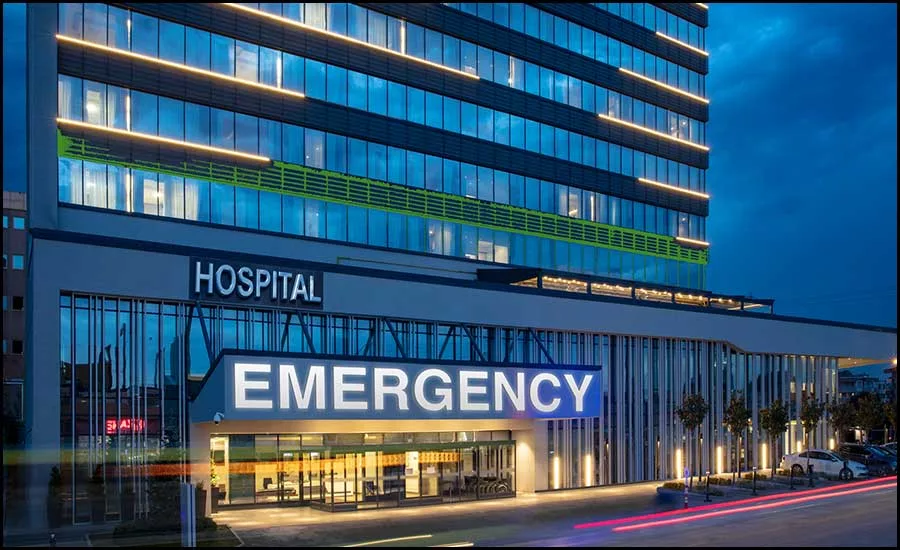
Lead Image [JazzIRT]/[E+] via Getty Images
Under the 2021 National Fire Protection Association’s Health Care Facilities Code (NFPA 99), electrical preventive maintenance is now required for the most critical environments in health care facilities using a time-based scheduling approach. This shift is backed by overwhelming evidence that ongoing equipment inspection, maintenance, and testing are required to avoid diminished reliability.
Prioritizing strategic electrical preventive maintenance is an effective solution to help achieve regulatory compliance and ensure the focus remains on patient care. It is important to recognize the NFPA 99 requirements set a minimum guideline — and it can often be impactful to go above and beyond the code to ensure resilient, reliable health care.
Understanding Preventive Maintenance for Electrical Systems
Under the requirements in NFPA 99 Section 6.9, all health care facilities must establish an electrical preventive maintenance program for electrical components serving Category 1 and 2 spaces. This code establishes a consistent framework for health care facilities to implement a preventive program and provides recommended maintenance activities with time intervals.
The new NFPA 99 requirements include:
- A list of all equipment and systems included as part of the program;
- A schedule of inspection, testing, and servicing (maintenance) of equipment;
- A survey and analysis of electrical equipment and systems to determine maintenance requirements and priorities;
- Reviews of inspection and test reports so that proper corrective measures can be prescribed;
- Performance of necessary work;
- Complete records to facilitate enforcement and adherence by approved third-party entities, such as the joint commission.
While the code helps establish some consistency, some specific components may not be addressed. Due to the unique nature of health care electrical systems, there may also be instances when facility management teams need to adjust recommended time intervals to maintain specific components more effectively. In these circumstances, the code permits the use of alternative equipment maintenance programs and outlines the requirements these programs should include for compliance.
Why Use an Alternative Equipment Maintenance Program?
Every health care facility has a constantly changing electrical infrastructure. And maintenance requirements vary for equipment, depending on where and when the equipment is installed within the essential electrical system.
This difference can make the implementation of a one-size-fits-all approach to time interval-based maintenance inadequate, with some equipment issues going undetected. Alternatively, this approach could lead to facility management teams spending valuable resources to perform maintenance on equipment that simply doesn’t require it yet.
Many additional factors, such as operating environment, equipment age, state of repair, general condition, and application are all important considerations in determining an effective maintenance interval. With these factors in mind, here are three steps that can help improve preventive maintenance in healthcare environments.
Three Steps for Improving Preventive Maintenance in Health Care Environments
1. Adopt a data-driven approach — Data-driven approaches to preventive maintenance are extremely similar to reliability centered maintenance (RCM) — a strategy that is becoming increasingly popular across the health care industry because it allows organizations to customize maintenance plans for their specific environments.
Rather than relying on generic, time-based intervals to maintain equipment, a data-driven approach allows facility management teams to take the following selective steps to optimize preventive maintenance programs:
- Prioritize systems and equipment based on the role they serve;
- Review baseline performance and maintenance data;
- Examine potential risk for equipment and systems;
- Determine the root cause of failure or downtime for each potential scenario;
- Estimate the impact of the failure or downtime;
- Detail what mitigation or maintenance tasks should be completed to prevent failure or downtime from occurring; and
- Decide what should be done if maintenance cannot address the issue.
To put it simply, a data-driven approach can help continually identify potential problems with equipment and systems to determine what can be done (and when it should be done) to ensure assets continue to operate reliably.
2. Utilize predictive failure monitoring — Real-time electrical system equipment monitoring has the potential to both increase the productivity of preventive maintenance programs and reduce the likelihood of planned and unplanned downtime. This process is known in the electrical industry as predictive failure monitoring and is designed to help management teams predict the imminent failure of systems or components and take corrective action.
Predictive monitoring works by tracking key equipment health parameters that are directly linked to potential failures to help notify operations and maintenance staff of pending failure conditions — and recommend maintenance based on data rather than planned outages and manual inspection. Many conditions that could impact power systems or contribute to failures can be monitored, trended, and alarmed.
For example, a variety of recent innovations makes it easier to determine the health of molded-case circuit breakers. With self-diagnosing trip units, some circuit breakers can measure a variety of parameters in real time and over time to provide a better indication of when a breaker needs to be serviced. This allows maintenance personnel to target efforts proactively and precisely toward circuit breakers that require service or replacement rather than taking the time and effort required to test all of the circuit breakers in a facility or system.
Similar technology can be used to accurately assess the health of medium-voltage switchgear. For instance, a common point of failure for switchgear is insulation deterioration over time that can result in a system fault and unplanned downtime for replacement or repair. By embedding sensors within the switchgear, personnel can closely track conditions that would eventually lead to insulation failure. This capability informs maintenance teams with adequate time to perform repairs, order replacement parts, or schedule downtime to make corrective measures.
3. Unify facility monitoring — The integration of real-time, essential electrical system monitoring with centralized building management systems can provide the intelligence needed to drive improvements in power reliability, energy efficiency, maintenance practices, and safety. Based on historical electrical generation and distribution data, facility managers can more effectively allocate where and when proactive maintenance dollars should be spent.
By incorporating power system and component monitoring into centralized management systems, organizations can go a step further to proactively access vital performance details, including circuit loading, peak demand, and equipment health. Such systems also give organizations the ability to proactively set hundreds of alarms that warn building management of underperforming equipment and conditions threatening uptime.
Additionally, these platforms can provide the ability to view a concise summary of essential electrical system health and manage alarms from a remote location. This allows health care operations with remote operations centers (ROCs) to centralize the responsibility of identifying equipment anomalies across their facility portfolio.
Operations and maintenance staff can arrange reports, including user-specified statistics, to be automatically compiled at predefined intervals, reducing the time and labor needed to analyze equipment status across facilities and campuses. Further, these systems can be useful for event analysis. If a full power outage occurs, the ability to trace the events that led to the failure is key in protecting against liabilities.
Electrical systems must be maintained properly to avoid poor performance, abnormalities, or outages, and failures. When regular event analysis and remote monitoring is integrated with building management platforms, potential issues with equipment can be identified well before failure and downtime occur.
Ensure the Future of Health Care Is Reliable and Resilient
Health care essential electrical systems are made up of hundreds of different pieces of equipment, all of which will require maintenance. Balancing the need for around-the-clock resilience with these maintenance-related requirements is a complex challenge.
The 2021 NFPA now requires preventive electrical system maintenance for the most critical environments in health care facilities. It is important to understand these requirements to formulate the best maintenance approach for your facility. Using a data-driven approach that includes predictive failure monitoring can help health care facility teams operate more efficiently and allocate more resources toward what matters most — patient care and safety.
Looking for a reprint of this article?
From high-res PDFs to custom plaques, order your copy today!


