search
Ask ACHR NEWS AI
cart
facebook twitter instagram linkedin youtube
  • Sign In
  • Subscribe
  • Sign Out
  • My Account
  • NEWS
  • TECHNOLOGY
    • Heating & Boilers
    • Cooling & Chillers
    • Pumps & Flow Controls
  • SECTORS
    • Commercial
    • Health Care
    • Data Center
    • Educational Facilities
  • DESIGN | CONSTRUCTION
  • OTHER TOPICS
    • High-Performance Buildings & Automation
    • Ventilation and IAQ
    • Commissioning
    • HVAC Retrofits
  • TODAY’S BOILER
    • Today’s Boiler Archives
    • Today’s Boiler Digital Edition
  • MORE
    • Case Studies
    • Podcasts
    • Videos
    • Directory
    • Webinars
    • ES NEWS Store
    • White Papers
  • SIGN UP
  • Back to The NEWS
Engineered Systems NEWSHVAC Engineering SectorsVentilation and IAQHealth Care HVAC

Lungs: Leading By Example

What works inside humans can point toward what works in rooms with humans inside.
By Stephanie Taylor, M.D., M. Arch, CIC
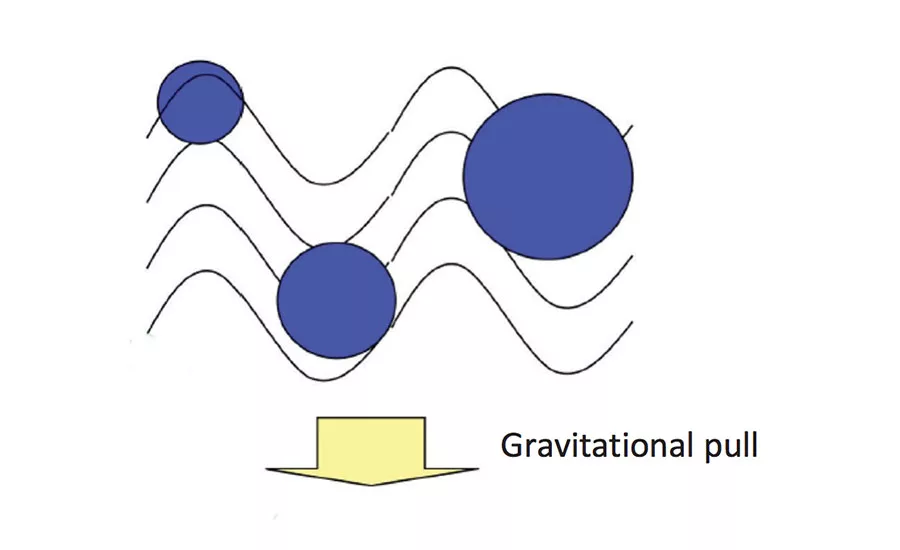
Stokes law

FIGURE 1. Stokes law: The deposition and resuspension of aerosols is closely related to the size of droplets.

October 3, 2017

After reading my September column about using the heart as a guide for energy efficient HVAC design, a forward-thinking ES reader asked about using the respiratory system to think about air handling strategies. We could clearly use some help with this topic as the debate rages on about the key metric of indoor air management. Do we prioritize low-energy consumption with a bow to “human comfort” or do we prioritize human health (not merely comfort) and hope that we do not raise building fuel consumption in the process? Let’s ask Mother Nature about how she manages gas exchange in the most energy-efficient way.

In mammals (this includes humans), life–supporting gas exchange occurs in the innermost part of our lungs, in tiny air sacs called the alveoli. The ultimate job of each alveolus is to allow inhaled oxygen to get into our blood stream, and simultaneously remove excess carbon dioxide, the waste product of our metabolism. This gas exchange occurs through passive diffusion, so the air and blood sides of the alveoli can only be separated by one thin membrane.

Think about the challenges our lungs face. Only a delicate cell membrane separates the perilous air-world filled with particles, microbes, and gases that would ultimately kill us if they reached our blood. Only a few bacteria crossing into our circulation can lead to sepsis, a potentially fatal infection. Clearly, our alveolar membranes need additional protection.

How does our upper respiratory system protect our lungs, and can any of the strategies inform HVAC design to support occupant health while still conserving energy? The answer is a resounding “Yes!” Our bodies take in unrefined air that is then carefully processed for gas exchange in our lungs. First, the mucus in our nose and throat must be sticky, yet not too thick (gross). Tiny hairs known as cilia line the cells from our throat to lungs and continually sweep upwards, carrying particulate debris away from the delicate alveoli. For this cleaning to occur, inhaled air velocity is first reduced while air hydration is increased.

You may be asking yourself, “What does this have to do with HVAC systems and hospital IAQ?”

Hospitals are currently the second most energy-intensive building type in the United States, where heating, cooling, and ventilation account for 52% of their energy use. High room air change (RAC) rates in patient care spaces contribute significantly to this high energy use, yet studies comparing volume exchange ventilation with patient infection rates have not documented any correlation.

In fact, there is evidence associating both dry and turbulent air with transmission of infectious diseases. This makes sense because infectious aerosols originating from breathing, speaking, coughing, toilet flushing, vomiting, and diarrhea shrink to become tiny droplet nuclei in air below 40% rh. When the upward velocity of room air with circulating droplets of aerosol exceeds the settling velocity of the aerosols, they remain suspended in the air for prolonged periods. The relationship between the settling and resuspension rate of particles depending on their size is mathematically defined by Stokes law.

The design lesson is: by maintaining indoor air hydration between 40-60% rh, and reducing RAC rates, occupant health and patient outcomes are improved while energy efficiency is increased. Thanks to the elegant modeling by mammalian lungs, the previously diverse goals of physicians and HVAC engineers are now united, and the hospital bottom line will improve.

Share This Story

Looking for a reprint of this article?
From high-res PDFs to custom plaques, order your copy today!


Dr. Stephanie Taylor is the president and founder of Building4Health Inc. After working as a physician for many decades, Dr. Taylor obtained a Masters in Architecture as well as Infection Control certification. Her lifelong commitment to patient care includes focusing on improving the healthcare physical environment and clinical work processes to help patients heal quickly and save hospitals valuable dollars. Dr. Taylor is a graduate of Harvard Medical School (MD), and Norwich University (Masters Architecture). She has numerous research publications in Nature, Science, and other peer-reviewed journals. She can be contacted at stephanie@b4hinc.com or (860) 501-8950.

Recommended Content

JOIN TODAY
To unlock your recommendations.

Already have an account? Sign In

  • HVAC-enrollment

    The Trades Are Back: HVACR Programs See Nearly 30% Enrollment Spike

    A new wave of future technicians is entering the pipeline.  
    Training and Education
    By: Matt Jachman
  • 2025 Top 40 Under 40

    2025 Top 40 Under 40 HVACR Professionals List

    The 11th annual Top 40 Under 40 list highlights those...
    HVAC Light Commercial Market
    By: Hannah Belloli-Oster
  • LG Ductless Mini-Split Systems

    The 9 Types of Heat Pumps

    As the U.S. moves toward electrification, heat pumps are...
    Heat Pumps
    By: Joanna R. Turpin

More Videos

Today's Boiler

Spring 2026 Issue

Today's Boiler - Spring 2026 Cover

Read More from Today's Boiler

Case in Point Logo

Smarter Hydronic Design for Data Centers - Free Webinar - January 22, 2026

Related Articles

  • Contractors Leading Green by Example

    See More
  • County Is LEEDing By Example

    See More
  • Educating by Example

    Educating by Example

    See More

Related Products

See More Products
  • Training-System-2017.jpg

    Customer Service Training System by Steve Coscia

  • Training-Managing-System-2017.jpg

    Customer Service Training & Managing System by Steve Coscia

  • The ACHR NEWS - April 06, 2026

    ACHR NEWS April 6, 2026, Issue

See More Products

Related Directories

  • Vilter by Copeland

    Vilter is a leading provider of durable industrial compressors optimized for demanding applications in refrigeration, cold storage and district heating.
  • White-Rodgers by Copeland

    Industry-leading thermostats, gas valves, furnace controls, ignition accessories and components.
×

Sign Up. Stay Informed.

The #1 trusted source for the HVACR industry since 1926

SUBSCRIBE
  • RESOURCES
    • Advertise
    • Contact Us
    • Advisory Board
    • Classifieds
    • Submit a Letter
    • Directories
    • Store
  • ACCOUNT CENTER
    • Create an Account
    • Start a Subscription
    • Manage My Account
    • Sign Up for Newsletters
    • Visit Customer Service
    • Update Preferences
  • SERVICES
    • Marketing Services
    • Reprints
    • Market Research
    • List Rental
    • Survey/Respondent Access
  • STAY CONNECTED
    • LinkedIn
    • Facebook
    • Instagram
    • YouTube
    • X (Twitter)
  • PRIVACY
    • PRIVACY POLICY
    • TERMS & CONDITIONS
    • DO NOT SELL MY PERSONAL INFORMATION
    • PRIVACY REQUEST
    • ACCESSIBILITY

Copyright ©2026. All Rights Reserved BNP Media, Inc. and BNP Media II, LLC.

Design, CMS, Hosting & Web Development :: ePublishing