Hospitable Hospital, Where Art Thou
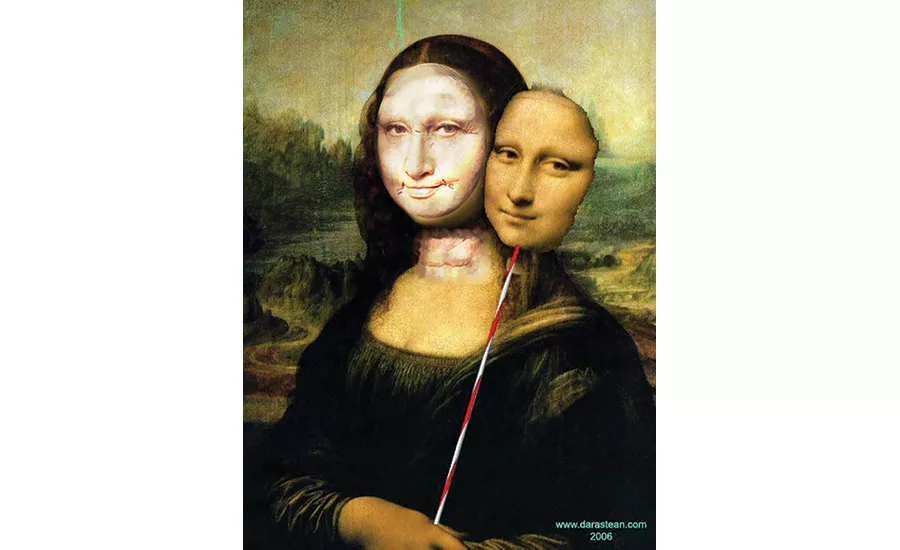
Best practices keep the Mona Lisa from cracking up. Shouldn’t they do the same for you?
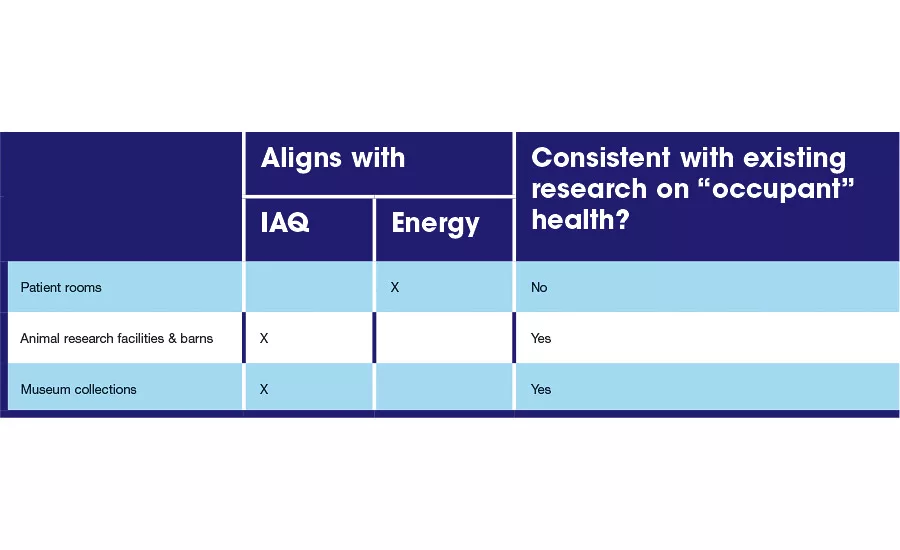
What should hospital facilities prioritize — maintaining healthy IAQ or decreasing energy consumption? Ideally, both could be accomplished equally, but while we figure out how to do this, let’s take a look at the current consequences of our decision.
If facility managers place IAQ as their top priority, they support patient healing but may increase energy consumption from frequent room air changes, running indoor humidifiers, and maintaining room pressures. If low energy cost is the primary focus, decreased fossil fuel consumption helps the outdoor environment as well as the hospital budget — but may not be the best choice for patients.
What does research on IAQ and health recommend?
Animal research facilities and dairy barns
The building codes for the National Institute of Health animal housing facilities mandate IAQ parameters known to protect the health of expensive, non-human primates used in medical research. The codes state, “Ventilation should not reduce the indoor RH below 40% because dry air allows particulates, including micro-organisms, to be deposited deep within the respiratory tract. RH between 40 and 75% also reduces the viability of pathogens in the air. Therefore, the walls should have sufficient insulation to prevent surface condensation when the indoor RH is as high as 80%.”
Dairy barns have similar IAQ standards to optimize the health of cows which produce more than 50 pounds of milk per day. The rationale for this is that, “poor indoor climates can stress the animal, make them more susceptible to disease, and decrease milk production.”
What about non-milk producing humans?
Physicians are aware that indoor climates of 70˚ to 72˚F with 40% to 60% rh decrease respiratory infections, promote wound healing, and decrease dehydration from transdermal water loss. This is well established! Extensive research done by the military also shows that our skin coefficient of elasticity (Young’s modulus and shear strength) are determined by skin hydration, skin temperature, ambient temperature, and air humidity. Dry climatic conditions worsen skin inflammation and decrease essential barrier functions that protect underlying tissues from mechanical stress damage, skin irritants, and allergens.
Recommendations for hospital IAQ versus energy use
ASHRAE 170 standards state, “While the need for clean and conditioned air is high, the high cost of energy demands efficient design and operation to ensure economical management.” Yet for patient rooms, pressure relationships, exhaust to outdoors, and a minimum rh level all have N/R, or no recommendation. Furthermore, recommendations for IAQ in surgical areas say, “The temperature and RH set points in operating rooms should be adjustable by the surgical staff to reduce the temperature to 62˚F.” Relative humidity levels are now allowed to be as low as 20%. These settings do not protect patient health!
Finally, let’s explore IAQ standards for museums
Museums that house valuable painting and artifact collections maintain indoor rh close to 50% and a temperature between 68˚ to 70˚F. The ASHRAE guidelines state, “Operating a preservation indoor environment is often costly, but it is necessary for long-term protection of a valuable collection. The increase in usable life of a collection easily justifies the annual energy and operating costs to maintain the special environmental conditions. If humidification in a heated building in a cold climate causes condensation problems, retrofitting the building envelope to tolerate higher humidity is required.”
The message here is that despite research on animals and health, hospital IAQ building standards prioritize reducing energy costs over patient health. If museums can be built to maintain known healthy indoor climate conditions, then hospitals should follow suit. Let’s not wait until we are mummies to breathe easily! ES
Looking for a reprint of this article?
From high-res PDFs to custom plaques, order your copy today!