Is Your Hospital a Transfer Site for Antiobiotic-resistant Genes?
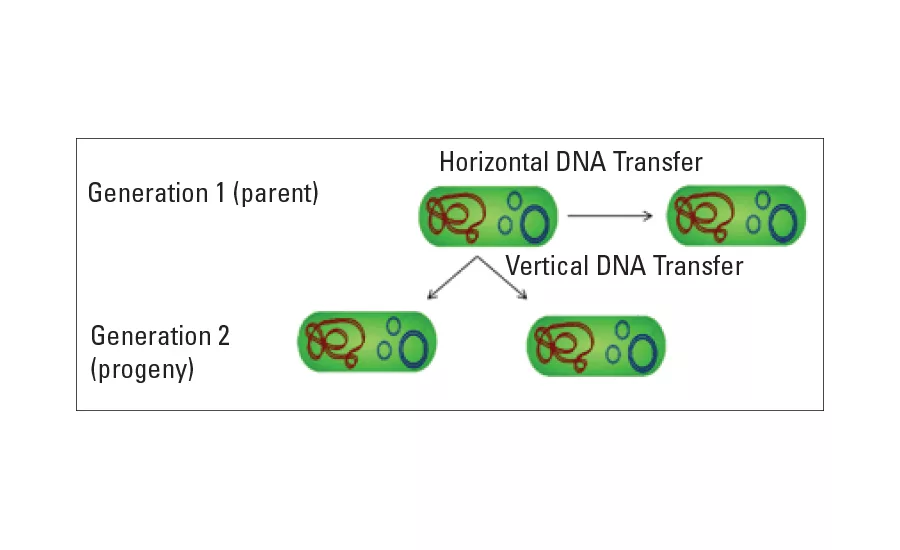
FIGURE 1. HAIs may be transferred horizontally or vertically.
When people are very sick, injured, or having a baby, many head to the hospital, where they hope to receive the best treatment in buildings that have the space, equipment, and personnel to support the practicing clinicians. We now know there is another dimension to hospitals; they can be extremely dangerous places. The severity of the danger in hospitals became undeniably clear when the Institute of Medicine published To Err is Human in 1999. This report revealed that many thousands of patients in U.S. hospitals were injured or died each year because of preventable infections called healthcare-associated infections (HAIs), which were acquired during their hospital visits.
Part of the reason that HAIs are so deadly is that they are often caused by bacteria that have become resistant to antibiotics. Unfortunately, hospitals have become reservoirs of these virulent bacteria. How has this happened, and what can building managers and mechanical engineers do to help save patient lives?
Usually, we think of antibiotic resistance developing when sub-populations of bacteria survive exposure to antibiotics and then reproduce to recolonize their environments. This pathway is known as vertical transmission. Unfortunately, there is another route through which antibiotic resistance spreads in hospitals — one which microbiologists are now realizing is extremely important.
This second route is through direct “injection” or transfer of resistance genes from bacteria that are harmless in the physical environment to bacterial organisms that cause deadly infections in patients — all while bypassing the need for reproduction. This pathway, called horizontal gene transfer, becomes an even bigger threat when extreme microclimates in building spaces, such as behind walls or in mechanical systems, expose bacteria to harsh environmental conditions, which cause the organisms to shrink to “survival mode” forms. These tiny bioaerosols, previously thought to be dead and noninfectious, can penetrate deeply into vulnerable lung tissue, causing illness when the same microorganisms would be harmless in their native environments.
New studies from the Hong Kong Polytechnic Institute provide data that shows higher airborne transmission of antibiotic resistance on 2.5-um particles, which are of inhalable size, during the dry winter season when compared to the higher humidity spring and summer months. This group concluded that, “The airborne environment represents an unappreciated compartment for the dissemination of antibiotic resistance genes, particularly via airborne fine particles (PM2.5), with strong implications for inhalational exposure of the population.”
While this sounds alarming, the good news is that mechanical engineers, facility managers, and construction professionals are in the unique position of being able to design and manage indoor climactic conditions and oversee the cleaning of building interstitial spaces. By lessening the load of airborne bacteria and particulate matter, horizontal gene transfer of antibiotic resistance can be decreased. This will help more patients be discharged home to fully recover from their illnesses or injuries, or enjoy their newborn children, without the tragedy of an HAI.
While the pharmaceutical industry continues to invest in new antibiotics, we can take unprecedented actions to prevent environmental conditions that promote the evolution and spread of antibiotic resistance.
Here are some steps to help limit the horizontal transfer of antibiotic resistance from environmental sources to bacteria which infect patients:
- Remove visible soil from hospital floors;
- Clean hidden spaces behind walls and above ceiling tiles;
- Maintain proper pressurization of protective patient rooms;
- Decrease bioaerosol and small particle resuspension with healthy indoor relative humidity of 40-60 percent whenever possible; and
- Educate construction, engineering, and custodial professionals about the importance of their work in saving patient lives.
In the hours it took me to write this column, more than 100 patients in U.S. hospitals suffered avoidable infections that could debilitate them and devastate their families. Now, almost 20 years after the Institute of Medicine published To Err is Human, forgiveness is not an option. It’s time to truly prioritize patient healing by keeping our hospitals hygienic.
Looking for a reprint of this article?
From high-res PDFs to custom plaques, order your copy today!