Case In Point
Weather analytics increases hospitals' chiller plant performance
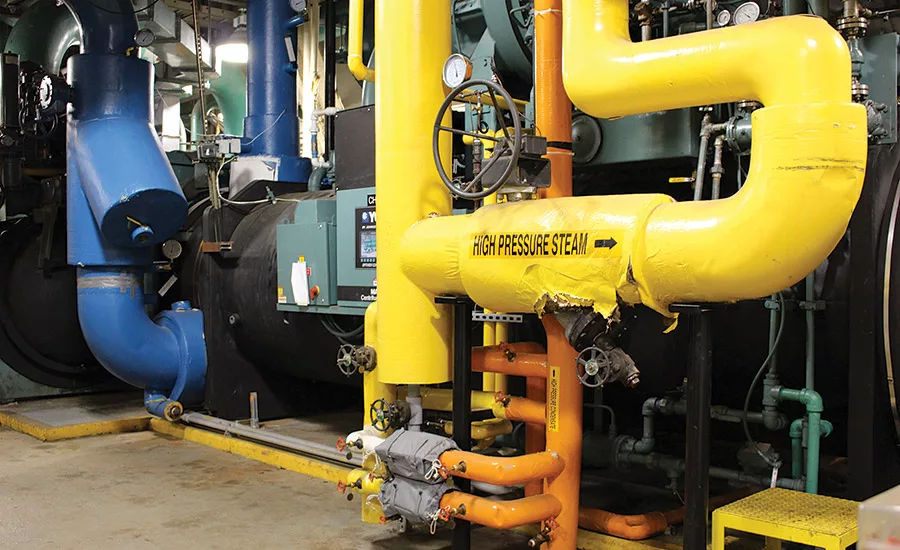
NewYork-Presbyterian Hospital (NYP-Columbia) is increasing its chiller plant performance — and reaping big savings — with the use of weather forecast-based analytics. The hospital saved approximately $6.5 million from May 1, 2010 through May 31, 2015 compared to its baseline chiller plant performance (on average, $1.3 million a year).
This is due in part by optimizing chiller plant operations in “real time” based on continuous remote energy monitoring and oversight by utiliVisor, an energy advisory firm. In 2014 and 2015, NYP-Columbia saved an additional $130,000 after implementing the firm’s predictive analytics/operating matrix, which uses a 10-day weather forecast to enable plant operators to optimize chiller plant performance based on anticipated weather changes.
Striving for continuous improvement in quality and operations distinguishes NYP, which is nationally recognized for the quality of its health care and for its environmental sustainability. In 2014, NYP received the U.S. Environmental Protection Agency (EPA) Energy Star Partner of the Year-Sustained Excellence Award for its long-term commitment to energy efficiency.
One of NYP-Columbia’s long-term energy initiatives is continuous improvement of its chiller plant operations. The 8,800-ton central plant serving the 4,000,000-sq-ft campus in New York City comprises seven York chillers — three 2,000-ton steam-turbine-driven chillers, three 2,000-ton electric-motor-drive chillers (one with a variable-speed drive), and one 2,800-ton steam-turbine-driven chiller — and fourteen 75-hp cooling tower fans.
Predictive analysis by NYP’s energy advisory firm, utiliVisor, provides NYP-Columbia with energy forecasting capabilities based on models of existing equipment operations. The new service accurately forecasts building cooling loads and utility meter power consumption/peak demand at hourly, weekly and monthly intervals based on the weather forecast.
Based on prior performance metrics, the predictive analysis models forecast the optimal sequence of equipment operation in conjunction with utility rates for chilled water plants, hot water, steam, and power generation.
“Our predictive analytics forecast the building’s cooling and power loads within 5% of actual loads, which helps operators to sequence the proper equipment without resetting the building’s demand value. This enables the facility to maintain the lowest demand value on a month-to-month basis,” explained Chris Angerame, vice president of engineering at utiliVisor.
NYP-Columbia chiller plant operators view a graphic matrix of the predictive analysis on a dedicated user web page at the service’s operations center in New York City. The matrix presents the optimal chiller sequence and operations points by time of day and provides graphic alerts when plant efficiency drops below the target.
With predictive analysis modeling, utiliVisor and the building energy team have the ability to input any array of equipment configurations to determine what the plant efficiency will be if changes or enhancements are made to ongoing operations. The models predict building demand set-points for such scenarios as forecasted weather and historic energy usage, enabling owners to optimize a plant’s sequence of operations.
“Predictive analysis shows our tonnage based on the weather forecast for a given day, which helps us tremendously,” said Rawlins Callender, chief/plant supervisor and facilities services management at New York Presbyterian Hospital. “For example, if the matrix shows that we will stay within 4,000 tons for the day, there is no need to start our 2,800-ton chiller; as a result, we save energy. Similarly, we see our minimum and maximum wet bulb and dry bulb temperatures for the day, which enables us to effectively stage our cooling towers. This is a much clearer and sharper way to operate.”
In 2015, optimization of chiller plant sequencing using predictive analysis yielded approximately $37,000 in savings above existing savings from continuous remote energy monitoring and oversight in 2014. Similarly, chilled water pump staging yielded approximately $49,000 in additional savings and cooling tower selection (based on total chilled water flow/chiller tonnage) staging saved another $21,000 — all with no capital outlay.
Operators also receive real-time alerts when plant performance decreases, enabling them to stage down chiller equipment as outdoor temperature drops. This is advantageous during the “shoulder months” of April, May, October, and November. At NYP-Columbia, every hour that the plant is not operating at low loads during these months represents approximately $145 in additional savings. Maximizing on these temperatures represented approximately $23,000 (157 hours) saved through December 2015.
Based on actual operating data, the models provide accurate, timely forecasts of future energy demands, greatly increasing the accuracy of “what if” analyses. This results in better optimization of plant equipment and greater energy savings.
Even more important, said Rawlins Callender, predictive analysis enables operators to maintain a consistent comfort level for NYP’s patients. “In every aspect of care,” he said, “NYP puts patients first.”
Looking for a reprint of this article?
From high-res PDFs to custom plaques, order your copy today!