Mysteries In U.S. Medicine

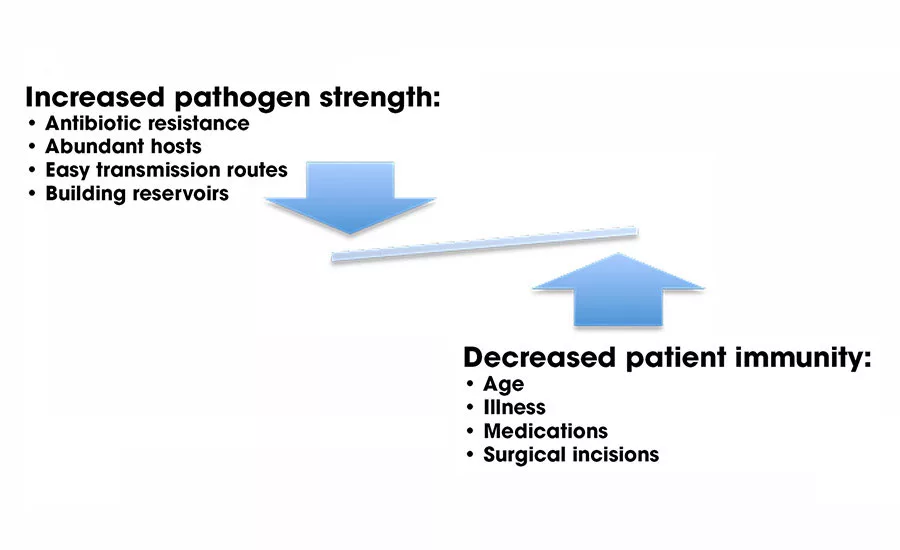
FIGURE 1. Understanding the balance of patient defenses and pathogen virulence.
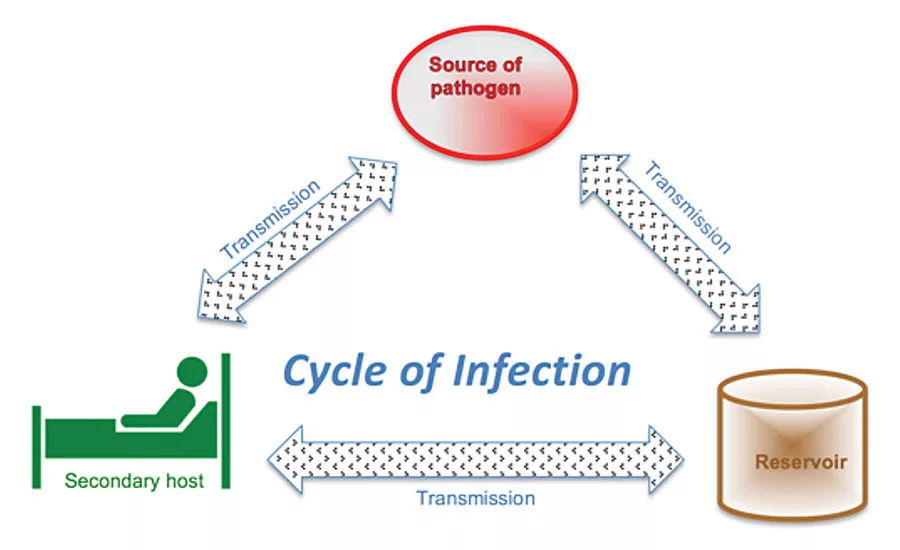
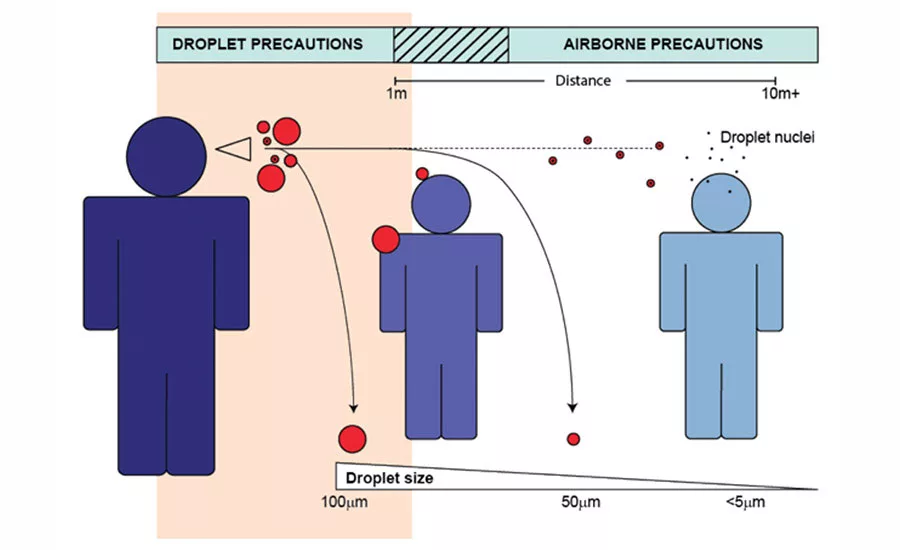
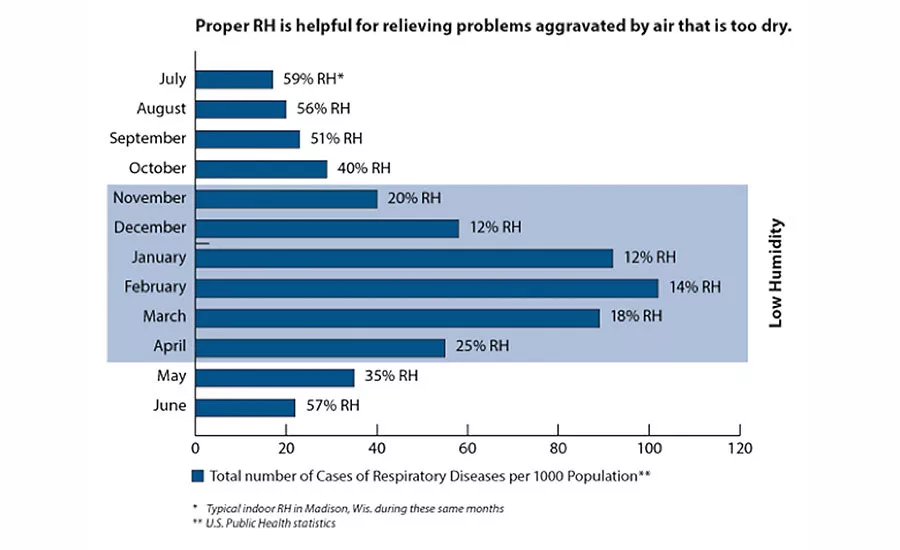
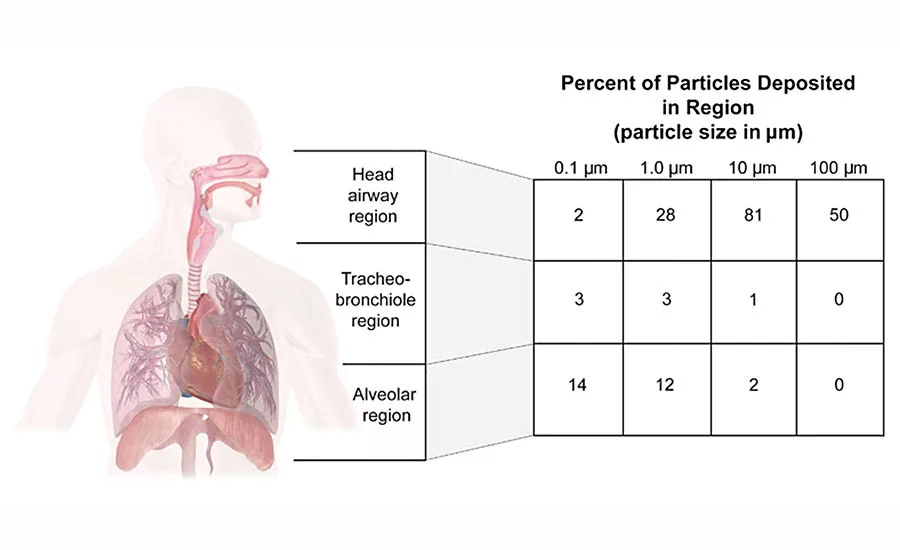
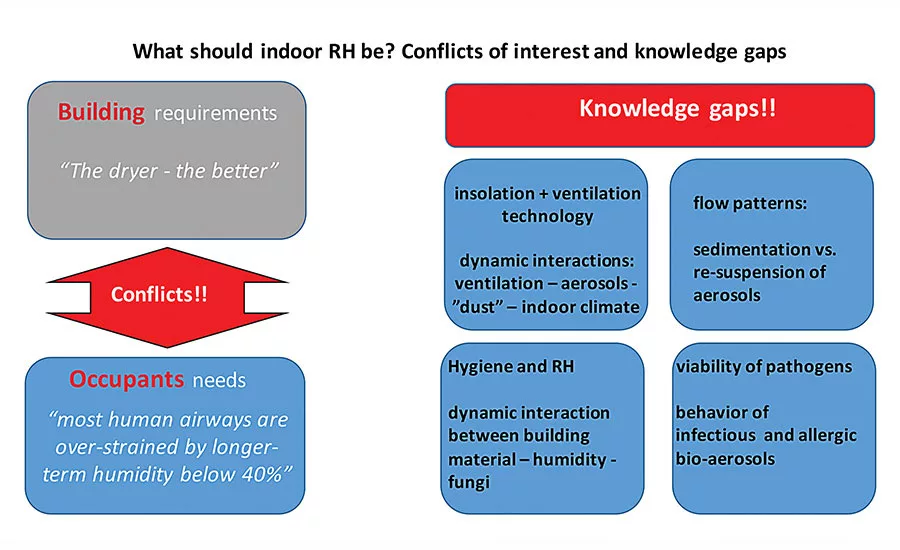
FIGURE 4. For the occupants, optimal rh is 40-60%. For the building structure, lower is better.
Two very important and largely unanswered questions in U.S. health care are: why is the cost of in-patient medical care so high and so variable from hospital to hospital, and why do so many patients get new infections during their hospitalization? Furthermore, there is no correlation between the cost of medical care and the clinical outcome of the patient. For example, on a national scale, the cost of our medical system is the highest in the world, yet we are only the 20th in good patient outcomes. And tragically, health care-associated infections (HAIs) kill over twice as many people each year as do automobile accidents in the United States.
Could these two areas of confusion be related? In other words, does the cost of treating additional, albeit unintended, patient illness resulting from the hospitalization contribute to high and variable medical expenses? To date, this question is unanswered because the underlying data for each component is extremely difficult to obtain. The statistics on errors in patient care, such as HAIs, are often buried in diagnostic codes that are impossible to decipher. Tallying the costs of a hip replacement in one hospital compared to another is the subject of large, government-funded grants. Until we can collect understandable and accurate data on the numbers of patients harmed, the cost of treating the consequent illness, and the characteristics of the indoor hospital environment where HAIs occur, our understanding will remain incomplete.
Hospital indoor environment
The role of the indoor environment in patient healing is one that hospital designers and engineers need to fully understand. To gain this understanding, more research is needed on the relationship between patient clinical outcomes and the surrounding building characteristics. Patient room parameters such as rh, temperature, patient occupancy, room pressurization and hourly air changes, housekeeping protocols, and the coming and going of visitors and medical staff should be actively monitored and recorded. This idea on room monitoring tablets is discussed in columns by Howard McKew, P.E. The collected information could then be compared to patient clinical data to get a much better understanding of how building parameters impact clinical safety and patient outcome.
Challenges for the hospital building
When humans created shelters thousands of years ago to seek refuge from harsh environmental conditions, they could not have known that these same buildings would also provide shelter for microorganisms such as bacteria, viruses, and fungi. These microscopic pathogens have coevolved with us, adapting to our indoor environments and increasing in diversity and virulence. Buildings provide pathogens an available host reservoir, regulated temperature and humidity, shielding from sunlight oxidation, and easy mechanisms for spreading through ventilation systems, on human bodies, and in food and water.
History bears out a relationship between the creation of buildings and the spread of diseases. From 1350 - 1850 AD, when European homes became more airtight, there was an explosive spread of a number of airborne pathogens, including tuberculosis and the Plague.
Hospitals face an additional challenge in controlling infections because the majority of occupants entering the building are sick, injured, or needing medical intervention. The result of illness, treatment with antibiotics or other medications, surgical procedures, cancer treatment, and more is often temporary inhibition of natural immune defenses. The result is that during hospitalization, patients are more vulnerable to infections. Until the last decade there was little recognized harm in casually prescribing a full course of antibiotics to a patient with a suspected infection. This practice has now changed! The rapid development of antibiotic resistant organisms and infections from these virulent pathogens have required physicians to think carefully about when to use antibiotics. The statement from the U.S. Surgeon General in1967, “We have won the war on bacteria with the development of synthetic antibiotics” has definitely turned out to be inaccurate.
Hospital engineers and facility managers must become involved in patient care
How much do we really understand about managing the hospital indoor environment to decrease the spread of infectious disease? Which environmental parameters should we focus on to curtail the spread of HAI causing pathogens? Patients, visitors, and staff introduce a wide array of microorganisms into the hospital environment. New research has shown that it takes approximately 30 minutes before a patient’s microbial footprint is established in their room. The organisms which people shed and expel can remain in the building, creating reservoirs of micro-organisms which can be released to infect new patients. A single sneeze generates as many as 40,000 infectious droplets! Add other everyday patient activities such as talking, coughing, vomiting, skin shedding, and toilet-flushing, and the microorganism load becomes huge. When certain conditions exist in the hospital building, the infectious particles are protected and nourished, ready to be disseminated to a second vulnerable patient.
The hospital has now become both a reservoir and a vector for infectious micro-organisms, and not surprisingly, HAIs are now ubiquitous in health care facilities.
Current infection control methods in hospitals
At least 7% of all patients who enter an inpatient healthcare facility for treatment will develop an HAI. Despite the knowledge that diseases can be transmitted through the air, current protocols for infection control focus on hand, instrument, and surface hygiene for interruption of direct contact transmission. However, even excellent adherence to these protocols can do nothing to interrupt the transmission of infectious airborne particles.
For example, Influenza A illustrates the difficulty hospitals have containing airborne particles that have the ability to remain infectious for prolonged periods. Influenza A is transmitted both by direct droplet and indirect airborne transmission, so sterile hands, instruments, and equipment alone cannot prevent an infectious person from transmitting, or a susceptible individual from acquiring, the virus. Over 50% of detectable Influenza A viral particles are airborne. In addition, 30%–50% of those infected with Influenza A are asymptomatic, making it impossible to detect when an infectious person is present. Because the human infectious dose of this virus is very low, it is easy for individuals to become infected in such an environment.
Maintaining a high level of IAQ has become an increasing challenge for health care facilities. Have hospital ventilation guidelines evolved to protect patients from dangerous airborne infectious diseases? What are the goals for HVAC regulations and how are these goals accomplished?
There are two basic strategies currently used in ventilation guidelines for infection control. The first is through dilution of airborne pathogens, and the second is the control of movement of airborne pathogens from one space to another. These IAQ regulations are derived primarily from demonstrations of particulate clearance and thermal comfort rather than from scientific data related to patient infections.
It is now time to reexamine current IAQ standards designed primarily for comfort, and ask if there are other air handling strategies to decrease HAIs.
The great humidification debate
Protect the building: Keep indoor rh below 30% to protect the building structure from moisture damage and mold growth.
Protect the occupants: Maintain indoor rh from 40-60% to protect the building occupants, in this case patients.
With indoor rh management, rules of thumb often embody an assumption that “less is better” — i.e. that decreased rh yields increased safety, worker comfort, and research productivity. Real world experience shows that this is not the case. In fact, rh below 40% can erode human safety conditions. Thus, best practices involve an optimization of ventilation for people rather than maximization of air conditions for building materials alone.
In today’s energy conscious thinking, strategies for maintaining a healthy indoor rh must be energy efficient while providing protection for hospital patients. Can we look at evidence and answer the question: what indoor rh is required in a hospital in order to limit the pathogen/spore count in the air to a safe level?
Microbiologists now conclude that at least one-third of all HAIs involve movement of the infectious organism through the air at some point between the initial source, the reservoir, and the secondary susceptible patient. The significance of transmission through the air is becoming clearer as microbe detection assays are becoming more precise, now detecting the actual genetic material of micro-organisms rather than simply their ability to grow on petri dishes.
Maintaining the indoor rh from 40-60% may be the most effective and underutilized tool in combating the spread of dangerous droplet nuclei. When droplets containing infectious organisms are expelled by patients, toilets, or mechanical systems into dry air (rh < 30%), they quickly shrink to become tiny “droplet nuclei.” The “dryness” of the air determines the extent of shrinkage and ultimately the diameter of the droplet. The diameter, or size of the droplet, determines how long it will remain suspended in the air and how far it can travel. The World Health Organization uses the cutoff of a 5 µm diameter to differentiate between droplets which fall quickly onto surfaces, people, or the ground and droplet nuclei which can remain airborne.
The infectious droplet nuclei that become airborne can remain suspended in air for long periods of time, dispersing material over great distances that can cause illness in patients who had no contact with the primary infectious source. The smaller and lighter the infectious particle, the longer it will remain airborne.
“Moisture content may, indeed, be the most important environmental factor influencing the survival of airborne microbes.” Dimmick, Naval Biological laboratory, Univ. CA, Berkeley
So, we accept that disease has the potential to be transmitted through the air and that any measures to diminish pathogens in the air from the occupied space reduces the chance of exposure. According to Bloch et al. (1985), Gustafson et al. (1982), Hutton et al. (1990), Wehrle et al. (1970), and the study of a SARS outbreak by Li et al. (2005a), Wong et al. (2004), and Yu et al. (2005), a few secondary cases or even a large number of cases at a considerable distance away from the index patient were shown to be infected via an airborne transmission route. It is also interesting that all the outbreaks investigated in the studies occurred in hospitals or pediatric offices. This indicates the importance of managing the pathogen count air in healthcare settings.
Protests against ICD-10
Perhaps you have heard the uproar in the physician and hospital communities about moving from ICD-9 to ICD-10 (International Classification of Diseases - 10th Version), the new set of medical billing codes used by hospitals and physicians for billing which were recently implemented on October 1, 2015. This upgrade was initially planned for 2012 and has been delayed three times due to the outcries from hospitals. ICD-10 is designed to yield more accurate classifying and reporting of diseases in hospitals and will provide higher-quality information for measuring healthcare quality and safety. This is a good step forward in gaining the patient information we need to manage the hospital building with the occupants in mind.
What are the most important considerations when we think about indoor rh?
- Reconsider quality control regulations for patient safety in addition to hospital staff comfort and building management.
- Consider the huge savings of lives and dollars by decreasing HAIs.
- This is especially important now because:
- Harm from HAI’s continues
- Hand washing improvement has been around long enough to begin to see trends, and the organisms that are not going away need to be addressed
- There is worsening mortality from some HAI organisms, such as clostridium difficile.
As energy conservation progresses, let’s not make the wrong decisions for the building occupant, such as lower rh limits. This could be disastrous for patients.
Museums do it, libraries do it, hospitals should do it even better. ES
Dr. Taylor, a graduate of Harvard Medical School (MD) and Norwich University (Masters Architecture), is the CEO of Taylor Healthcare Commissioning, Inc. (www.taylorcx.com). She now focuses her lifelong commitment to promoting health on improving the safety of the built environment. She has numerous publications in Nature, Science, and other peer-reviewed journals.
Looking for a reprint of this article?
From high-res PDFs to custom plaques, order your copy today!