Case in Point
Research facility upgrades efficiency with geothermal, modular chillers
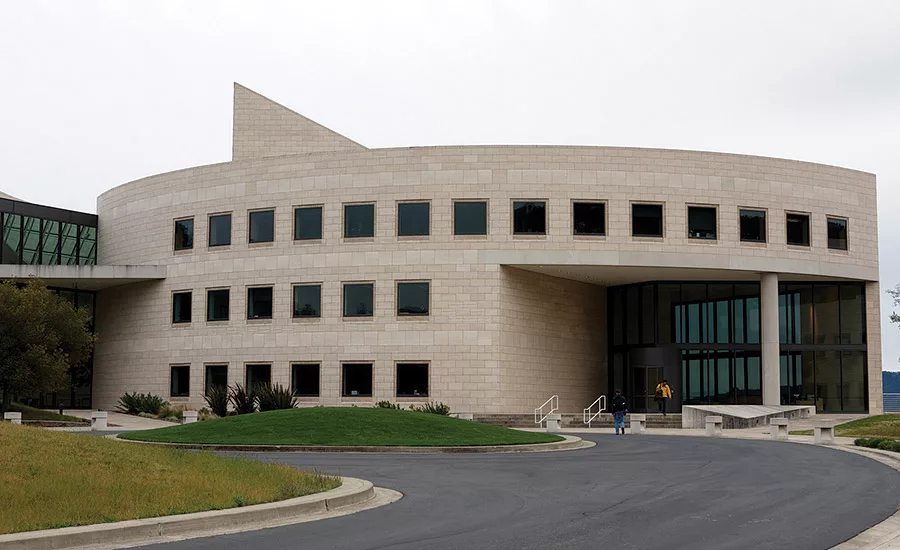
Running on 100% single pass outside air, the Buck Institute’s laboratory spaces required full air replacement cycles in 10-minute increments. Thus, any HVAC component downtime would require a complete shutdown of the facility.
The Buck Institute for Research on Aging, a non‐profit, biomedical research facility based in Novato, CA, is the nation’s first independent research facility focused solely on understanding the connection between aging and chronic disease. In spring 2010, the Buck Institute began construction of a 60,000-sq-ft building addition to expand its current 185,000-sq-ft research campus. Looking to identify a solution that could provide the necessary additional HVAC capacity for the expansion, the Buck Institute was driven to identify a mechanical system capacity that would optimize energy efficiency while minimizing overall consumption.
“As a non‐profit entity working toward notable advancements in aging medicine, we want to keep our operational costs down so we are able to focus funding on actual scientific research,” said Ralph O’Rear, vice president of facilities and planning at the Buck Institute.
In addition to expanding capacity, the original HVAC system, designed in 1995, required upgrading to improve its efficiency. Recognizing this, the Buck Institute facility management team commenced a three-part evaluation that began with an in‐depth analysis to fully understand current energy consumption. The team then looked for immediate and less invasive ways to reduce energy use, such as motion sensing lighting systems, adding VFDs to motors in the central plant, purchasing Energy Star‐rated electrical devices and equipment, and performing tasks that require high levels of electrical use in off‐peak hours. This led to the ultimate development of a campus‐wide cooling technique and central plant plan, which incorporated consideration of new technologies in solar, wind, coal, cogenreation, and geothermal exchange.
Due to the critical and ongoing nature of the scientific research being conducted at the Buck Institute, reliability, efficiency, and redundancy were of utmost importance in designing the new mechanical system. Running on 100% single‐pass outside air, the facility’s laboratory spaces required full air replacement cycles in 10-minute increments. Thus, any HVAC component downtime that could impede this process would require a complete shutdown of the facility.
Also, as evaluation of the existing system showed that cooling load created a substantial energy demand at the facility, the team sought a new geothermal exchange system to better manage load requirements.
“In addition to being a renewable energy source, geoexchange facilitates a ‘flattening out’ effect using the ground to cool the condensing water in the chiller system rather than employing the typical evaporative cooling tower system used in most large buildings. The ground based condensing water system discharges heat from the condensing water system into the ground. The cooling capacity in the ground is fairly consistent and allows the supply and return water temperatures to temper the temperature differentials,” O’Rear said. “This equates to a notable overall reduction in the amount of energy required for cooling.”
Buck Institute’s new HVAC system solution, designed by PAE consulting engineers and installed by Lawson Mechanical, primarily included two 70-ton, simultaneous heating and cooling heat recovery modular chillers from ClimaCool, fed by a Trison Construction exchange system to its supply. Also, instead of an evaporative cooling system, the Buck Institute decided to install a geo‐exchange borehole field and couple it with an existing cooling tower and 500-ton centrifugal chiller to provide redundancy in the central plant.
“The geothermal loop and modular chillers are our primary system for most of the year,” O’Rear explained. “In California, we get 30 to 40 days of really intense heat each year, and that’s when we utilize the secondary system to meet the additional load requirements.”
According to O’Rear, “In addition to the groundwater loop for cooling, the facility is using heat recovery to further equalize the temperature range to reduce energy generation required in heating mode. The ClimaCool modular units allowed us to cover a cooling load range of 35 to 320 tons in energy efficient stages and turn over the load to a 500-ton centrifugal chiller when needed.
“We chose ClimaCool’s chiller bank because it required a smaller physical footprint, allowing us to get additional modular chillers for added capacity into our existing space,” O’Rear said. “ClimaCool’s design made for easier maintenance than other alternatives that we considered.”
The modular management of load demand allows the Buck Institute to make only as much chilled water as needed to meet the load. The ClimaCool units systematically provide a bank that is used to take heat from the return water loop and use it to make domestic hot water for campus buildings.
The new HVAC system has provided the Buck Institute with load and supply matching for exceptionally improved efficiency.
“After increasing our total facility footprint by more than 30%, we have saved about $300,000 per year in utility expenses, and our operating expenses have remained about the same as they were for our original square footage,” said O’Rear.
Looking for a reprint of this article?
From high-res PDFs to custom plaques, order your copy today!