Chiller Retrofit: The Attraction Of Magnetic Bearings
With multiple expansions and projects, a DC-area hospital also had to plan for cooling that could keep up with developing demands and spaces.
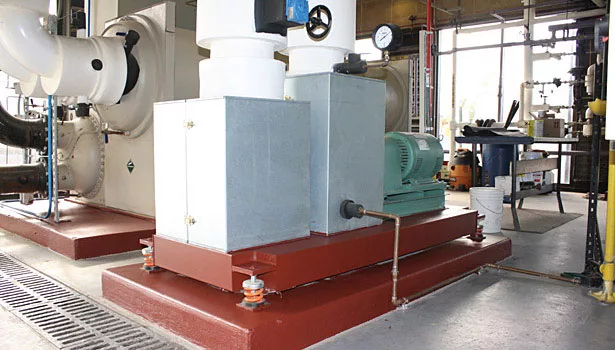
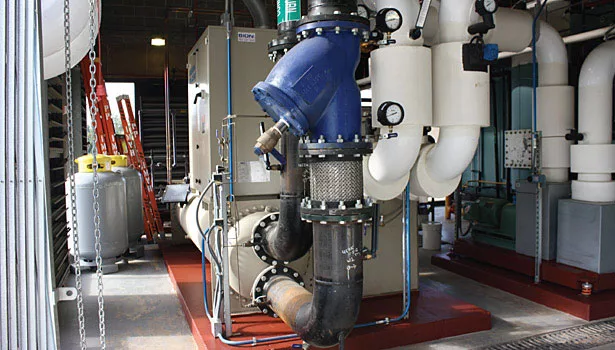
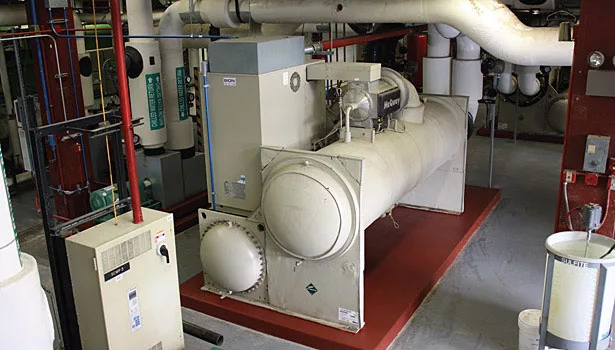
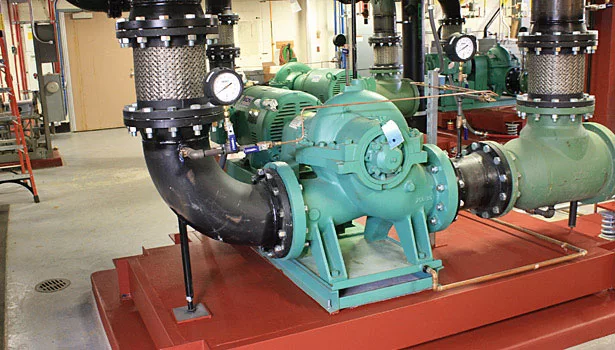
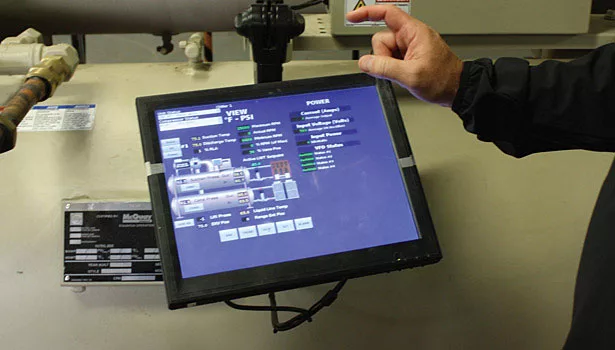
When the facilities management staff of Mount Vernon Hospital completed an assessment of its central chilled water plant, it became evident that while the original chillers had served the hospital well since its opening in 1975, they were ready for replacement. The hospital used this opportunity to install three state-of-the-art chiller systems; the largest of their type.
The energy required to cool a hospital in the mid-Atlantic region of the U.S. can represent 20% or more of the annual energy consumed, so efficiency upgrades in the cooling system can have a significant impact on total energy use. With the many advances that have occurred in chiller technology since the original units were installed, replacing the chillers with new equipment was seen as an ideal approach for improving operating efficiency.
Improvements in compressors, controls, and heat exchangers have occurred over the past few decades that make even the most basic modern chiller much more efficient than those produced in the 1960s and 1970s.
Today, the use of VSDs on chillers coupled with reduced condenser water temperatures (where feasible) has allowed many manufacturers to offer chillers with very attractive efficiency ratings, especially Integrated Part-Load Value and Non-Standard Part-Load Values (IPLV/NPLV). These values are used throughout the industry to describe the realistic performance of the chiller over the life of the machine and make the investment of a chiller replacement much easier to justify through a lifecycle cost analysis.
For several chiller manufacturers, the use of magnetic bearings in a variable-speed, oil-free compressor is the most recent chiller innovation with both measureable maintenance and efficiency benefits, but until recently was limited in capacity to applications of only a few hundred tons.
The magnetic bearings technology actually provides a magnetic electrical field that levitates the shaft of the compressor so it is essentially “riding on air.” The shaft speed of revolutions reaches as high as 20,000 rpm with very little friction due to the elimination of oil lubricated bearings.
For Mount Vernon Hospital’s project team, the final piece fell into place for a very modern, very efficient chilled water system when Daikin McQuay extended the product range of its magnetic bearing compressor chiller offering to 700 tons.
Hosptial Background
Mount Vernon Hospital is part of the INOVA Health System, which has five nationally ranked hospitals located within the northern Virginia area. Mount Vernon Hospital located in Alexandria, VA, is a 237-bed facility specializing in orthopedic joint replacement and patient rehabilitation.
Although several building additions have been completed since its original 315,000-sq-ft construction in 1975, the largest construction project in the hospital’s 38 years of operation began in 2013 and is currently under construction. This latest project involves the addition of a 55,000-sq-ft patient tower along with a 15,000-sq-ft operating suite addition. The project is scheduled for completion in 2015. Also, a 14,000-sq-ft addition to the hospital’s emergency department is slated to start next year.
The hospital’s heating, cooling, and electrical utilities are served by a dedicated central energy plant (CEP) in a separate building located behind the hospital. The CEP houses high-pressure boilers (125 psig) and water-cooled chillers for the hospital’s heating and cooling demands and is manned 24 hours/day.
Hospital Operations
The hospital utilizes central station air handling units (AHUs) for space pressurization and comfort control. Under normal operation, the AHUs have an outdoor air (ventilation) demand of approximately 45% and all of the AHU’s are equipped with economizer controls for 100% OA capability.
At Mount Vernon and other healthcare institutions, it is common to maintain the operating room space temperature at 62°F because of the physical nature of the surgical procedures performed in the orthopedic operating rooms. During a joint replacement surgery it is not uncommon for the surgeon to use tools such as hammers, saws, and chisels to complete the procedure, resulting in increased internal heat gains inside the operating room. Chilled water from the hospital’s CEP is required year-round to maintain proper temperature and humidity control within the operating rooms. Therefore, to achieve a stable 62°F temperature and 50% relative humidity, even though the AHUs are equipped with 100% outside capability, supplemental mechanical cooling may still be required during days when outside air conditions are suitable for economizer control.
Randy Cole, chief plant operator of the CEP, stays in constant communication with the surgical staff. On any given day based on the surgery caseload, Cole may receive a call from the surgical unit requesting additional cooling for the OR suites. At Mount Vernon, the operating rooms are active 10 hours a day, 5 days per week.
Another challenge the chilled water equipment must handle is the considerable swings in cooling load the hospital experiences throughout the year. The CEP chilled water equipment must be capable of meeting the peak summer cooling load of 1,400 tons while able to turn down to as low as 150 tons of cooling during the winter months of operation.
The Project
The chiller replacement project originated from a condition assessment report, which detailed all of the age related deficiencies at each of the INOVA facilities. Pete Shannon, a project manager for INOVA, was responsible for the projects, which came from this report. System deficiencies were listed for each facility and grouped by level of urgency. One of the major priorities at INOVA Mount Vernon Hospital was the replacement of aging chillers at the CEP.
The original CEP consisted of four chillers: two 700-ton centrifugal electric chillers, one 500-ton high-pressure steam absorption chiller, and one 300-ton high-pressure steam absorption chiller. From a condition assessment investigation, the two 700-ton chillers were listed as beyond their useful remaining life and were identified for immediate replacement due to their age, which exceeded 35 years. These chillers operated below their nameplate capacity, typically at 600 tons, and performed at efficiencies greater than 1.0 kilowatt of electricity per ton of cooling. In addition, the 500-ton steam absorption chiller was listed for immediate replacement due to the lack of reliability and constant maintenance requirements. The condition assessment report also recommended replacing the four condenser water pumps as they were in “fair” condition and approaching the end of their useful lives.
Shortly after the chiller replacement engineering project kicked off, it began to evolve with a greater purpose. Mount Vernon Hospital was growing rapidly — and with growth, comes building expansion. With the addition of the hospital patient tower and the operating suite it was necessary not only to improve the chiller operating performance, but also to increase the central energy plant cooling capacity to account for this additional load. This ultimately led to the decision to replace the chillers each with a 700-ton capacity chiller, adding an additional 400 tons of capacity over the two underperforming centrifugal electric chillers and a 500-ton steam absorption chiller.
It was determined the new chillers would be capable of variable flow through the evaporator barrel. Therefore, the decision was made to include replacement of the chiller’s associated constant speed primary chilled water pumps and provide variable speed capability. Shortly thereafter, Cole brought to the design team’s attention the lack of winter cooling capability. The existing cooling towers did not have a means of winter time operation without having to drain a tower each time it was idle to prevent freezing and refilling when there was a call for cooling. Since the condition assessment report indicated one of the three cooling towers was near the end of its useful life, its replacement was added into the project, with the ability to provide on-call winter time operation with basin heaters included to prevent freezing.
As the design moved forward, multiple chiller manufacturers and types were investigated to determine the optimal plant design, but kept within budget. After meeting with manufacturers’ representatives, attending factory plant tours, and visiting nearby sites where these machines were installed and operating, a decision was made to design the replacement around the new Daikin McQuay Magnetic Bearing chiller. Standard variable speed centrifugal chillers were included as an alternate during the bid process in order to provide INOVA with multiple options.
Mike Ruby, sales engineer for Havtech, said, “When RMF and INOVA asked me if Daikin (McQuay) had a magnetic bearing chiller around 700 tons, I was very pleased to say ‘yes.’ Daikin is a leader in innovation and design of oil-less magnetic bearing and inverter compressor technologies. They are constantly improving the technology and increasing their chiller product offering. Havtech is pleased to represent Daikin as it gives us the opportunity to offer owners the ability to reduce their total cost of operating and maintaining their machines as compared to traditional oil machines.”
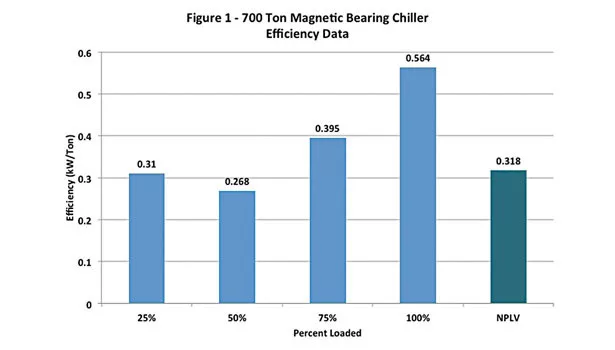
The existing CEP was previously operated manually and as part of the optimization effort, the project included providing automatic controls to stage chillers on and off to maximize their efficiencies at part load conditions. Ultimately, this was one of the major reasons for use of the magnetic bearing chillers, which demonstrated outstanding efficiency between 40% and 80% load. Figure 1 demonstrates the chillers efficiencies at part load conditions, which includes 0.310 kW/ton at 25% load, 0.268 kW/ton at 50% load, and 0.564 kW/ton at full load.
Redundancy
Since INOVA Mount Vernon Hospital provides a full continuum of patient care, it seemed prudent to provide the ability to operate these chillers during an unplanned outage of normal power. However, the existing generator capacity was not able to account for all three magnetic bearing chillers. Instead, all three were designed to be capable to run, but only two are ever able to run at the same time. This provided a new level of redundancy under an emergency situation.
The Results
The project was competitively bid among several INOVA-proven mechanical contractors with the bidders required to submit both cost and guaranteed operating efficiency data so that a lifecycle cost analysis could be performed based on reliable data. Mechanical contractor BION Inc., was selected to furnish and install the three 700-ton chillers in a phased replacement that would allow the plant to maintain reliability throughout the planned construction period.
The chillers, which were the basis of design, were ultimately selected based on the results of the annual operating cost analysis. In addition, the contractor later reported that the magnetic-bearing chillers were no harder to install than conventional chillers, while delivering advantages of a smaller footprint and less maintenance.
The installation of the final chiller was completed in June 2013, with the new chillers serving the hospital throughout the summer of 2013. The application of magnetic bearing technology in this size range was new enough that field retrofits of standard product features were necessary in order to meet the project required chiller production schedule.
As Greg Foor, project manager for the Inova Facilities Management Department (IFMD) explained, “…we are already seeing a significant savings in power consumption and have found the new chillers more than capable of meeting the hospital’s demand needs.”
Looking for a reprint of this article?
From high-res PDFs to custom plaques, order your copy today!