Retrofit and air separator system help fill the air with flexibility and savings at UNL

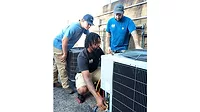
Many residential buildings, such as this one, on the Lincoln campus of the University of Nebraska (UNL) benefited from the installation of combination air/dirt separators, which have drastically reduced PM.
It isn't always easy to sell the idea of PM to folks who have to answer to budgets and ROI. John Heise, housing special projects manager for the University of Nebraska Lincoln, however, is a firm believer. To Heise, it's all about opportunity. "The motivation is simple," he explained. "If you don't let your system get dirty, you don't have to clean it. Installing Spirotherm is an example of one of the steps being taken to seize the opportunity."
The Lincoln campus of the University of Nebraska (UNL) was founded in 1869 and has a current enrollment of approximately 22,000 students. The housing buildings range in age from almost 80 years old to new, and all have varying HVAC systems. Renovations are underway to update the aging heating and cooling systems in each of the older buildings on the housing side, and Heise's PM philosophy ensures the residents' comfort with the installation of combination air/dirt separators.
‘AIRING' ON THE SIDE OF CAUTION
The relationship started when Heise purchased a couple of small boilers for one of the University Park Apartment buildings. They had always had air problems in the building, so Dallas Pearson (B.G. Peterson, Omaha, NE) suggested they install a Spirovent® air separator as well.Within two days of installation the system had begun to quiet down, and by the end of the week they couldn't locate any air in the system at all. Before the Spirovent was installed, they had always dreaded draining that particular hydronic system for maintenance because of the weeks of bleeding they knew they faced. "When it comes to operation and performance, it's comforting to know that you can just bolt it up and forget it," said Heise of the Spirovent.
A HIGH-RISE SOLUTION
The Harper, Schramm, Smith complex consists of three 10-story high-rise buildings built in the mid 1960s. Each building contains approximately 250 dorm rooms and a 15,000-sq-ft commons area. The original HVAC configuration consisted of a two-pipe hydronic system with console type fancoil units in the dorm rooms and a combination of AHU/fancoil units in the commons areas. Age and electrolysis had deteriorated the mechanical system to a point where maintaining it was no longer practical, so the entire mechanical infrastructure was replaced in all three buildings.Ryan and Associates installed a McQuay closed-loop heat pump, pre-heat/re-heat glycol coils, and shell and tube heat exchangers for loop (water). The shell and tube exchangers on the closed loop (water) are for back-up purposes. They also installed Alfa Laval plate-and-frame exchangers on the loop.
At this point, the system becomes non-traditional. In cooperation with the campus power plant, piping (HDPE) was installed from the plant to the above-mentioned buildings. This piping can either provide cooling tower sump water or condenser water directly from the plant chillers (not chilled water). During the cooling season water is pumped directly from the cooling towers to the plate exchangers at an entering water temperature of around 80°F. This allows for use of the towers at the plant to reject heat without the need for an additional cooling tower or fluid cooler at the complex.
During the heating season water is pumped directly from the chiller cooling loop to the buildings. Currently, the campus plant maintains a cooling load of approximately 1,500 tons during the winter months. By pumping this water to the buildings, the heat from the chillers is rejected to the heating system of the buildings, eliminating the need to pump water over the towers in the winter. At the same time, water circulates through the heat pump loop, the heat is extracted, and the cooled water returns back to the plant to cool the chillers.
DECREASED MAINTENANCE CALLS
As for a cooling backup, campus chilled water is also available to the plate exchanger through a series of Delta motorized valves controlled by the EMS system. With backup systems in place for both heating and cooling, the campus now has the ability to switch between systems when performing routine maintenance or for load shedding at the plant should any capacities be compromised. The system's set up is a win/win for both housing and the campus plant, and Heise is confident that the energy savings realized by both entities will be significant.As the renovations are completed, many of the mechanical problems that had plagued the university's housing maintenance staff have disappeared, and the university realizes additional savings in decreased maintenance calls, proving that PM really does pay off.
Looking for a reprint of this article?
From high-res PDFs to custom plaques, order your copy today!