Industry, government work together on new rules for HVAC equipment
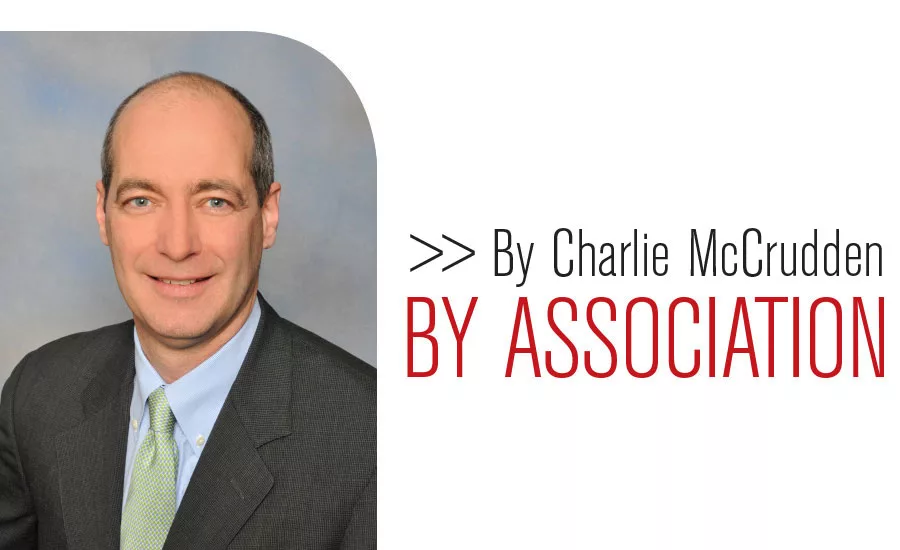
Charlie McCrudden is the senior vice president of government relations for the Air Conditioning Contractors of America.
In June, a special working group of stakeholders convened by the Department of Energy negotiated new energy conservation standards for commercial warm-air furnaces and commercial unitary air conditioners and heat pumps.
Seventeen individuals representing the interests of equipment manufacturers, contractors, utilities, energy efficiency advocates, and the Energy Department itself came together to find an alternative to standards proposed by the department earlier this year.
The use of these working groups, part of the DOE’s Appliance Standards and Rulemaking Federal Advisory Committee (ASRAC), is a rising trend. Negotiated rulemakings provide a substitute to the typical notice-and-comment rulemaking process that has become contentious and often resulted in litigation. I predict that more energy conservation standards for residential and commercial HVACR equipment will be set using the ASRAC process than the “normal” rulemaking process over next few years.
Since 2010, ASRAC working groups have been used to set new standards or develop rules for commercial and industrial pumps, manufactured housing, regional standards enforcement, and the commercial HVAC market, water heating and refrigeration certification. Anyone can sit on an ASRAC working group, as long as he or she pledge to put in a good-faith effort to find consensus and act as an industry representative and not individual.
Typically, energy conservation standards are set using a multistep processes that takes several years to complete. It begins when DOE announces its intention to set a new energy conservation standard or review an existing one, with the release an initial proposal for comment stakeholders. After reviewing the comments and running significant economic analysis, the DOE releases a notice of proposed rulemaking that suggests specific standard levels along with a lengthy report demonstrating how the proposed standards are economically justified, technologically feasible and will result in significant energy savings. Stakeholders are given time to review and comment on the notice, which the DOE reviews before releasing a final rule
Meetings
The commercial warm-air furnaces and commercial unitary air conditioners and heat pumps working group took 10 face-to-face meetings in Washington over the course eight weeks to reach consensus, and it was a collaborative effort. When the discussions bogged down with technical details, the engineers and those with decades of experience helped the rest of us keep up. There were a few times when our progress slowed and it seemed like the opposing sides would never come together, but in the end the group met the goal of setting alternative standards that achieved as much energy savings as the one proposed by DOE.
Over the last three decades, standards for HVAC market equipment have been routinely increased as technology has made it easier and cheaper to make higher-efficiency products. While the technology gets better, the test procedures used to measure energy use aren’t always updated. For some products, standards have raised the floor, but the ceiling can’t get any higher. The benefit of ASRAC working groups is they can look outside the existing test procedures or the statutory language that governs the standards setting process and find creative solutions that result in energy savings without harming industry.
That’s why the active dialogue and creative thinking to find alternatives of ASRAC negotiated rulemakings make sense.
Engagement
The ASRAC-negotiated rulemaking process engages all interested parties, gather data, and attempt to reach consensus on establishing energy efficiency standards, and do it in a matter of months. Rules drafted by negotiation may be more pragmatic and implemented at earlier dates than under a more traditional rulemaking process.
Two ASRAC working groups are meeting right now: one to set new standards on residential central air conditioners, and the other to set standards for walk-in coolers and freezers. In both of these cases, the working groups were established after a previously published standard was remanded as part of a lawsuit settlement.
You will likely see the formation of more working groups over the next two years. The Energy Department has an aggressive agenda to set 19 new standards on several HVAC construction and hot water test procedures and appliance standards before President Barack Obama leaves office in January 2017.
Looking for a reprint of this article?
From high-res PDFs to custom plaques, order your copy today!