Success, not excess
Use these sheet metal shop fundamentals to boost your business

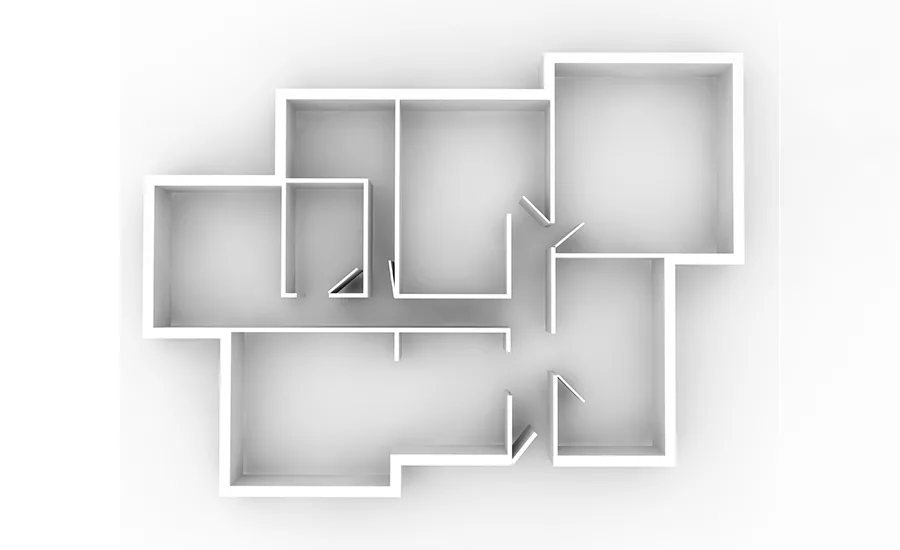
Many sheet metal contractors ask, “When should I prepare a shop layout for my business?” To answer this question, I submit for consideration the following six elements — which should be present — either single or combined, because of current business conditions:
1. When starting a new HVAC construction contracting business.
2. New or additional plant space is required as a result of production volume increases.
3. The sheet metal shop changes emphasis from residential to commercial work, etc.
4. Shop is moved from one building to another.
5. When adding a major new sheet metal machine, such as a 10-foot power shear, 10-foot power brake or a coil handling system.
6. When use of raw material, such as steel changes from flat sheets to coil stock, as well as flat sheet stock.
Production planning
The secret of successful and profitable sheet metal ductwork fabrication lies in proper production planning — the right kind of tools used in the right way.
The sheet metal products shop should be an integrated efficient production line that will turn out the greatest amount of work with the least amount of time, effort and cost. Sheet metal fabrication involves:
- Preparation of metal in the flat, cutting metal to the required size and notching it to a pattern.
- Forming metal, either a lock seam, cross breaking or beading, bending or shaping metal to a radius.
- Final assembly, including final seaming, forming cleat edges and completion of the sheet metal product.
Minimum material handling
For the most efficient operation, the shop must be planned so that production operations can be performed in the proper sequence. Tools should be arranged systematically to keep material handling to a minimum. Cut down the amount of space through which materials or sheet metal forming workers must travel. Avoid the re-handling and piling of material and backtracking from one operation to another.
The most efficient production is obtained from setting up two flow lines. The primary line should handle the standardized types of components, which comprise the bulk of the shop’s work.
The secondary line should handle special or custom items. Plan the production so that as much work as possible moves through primary or standard flow lines. The secondary flow line should be for special fittings and other types of work not adapted to the primary line.
To implement sound planning practices, it is necessary to constructively and creatively strive for simplicity in shop production. In this respect, the following objectives are relevant:
- Simplify and mechanize all operations.
- Gain full value from money invested in production tools and shop equipment.
- Stress flexibility in production by planning and selecting the means and methods used so that capacity can be increased when required.
- Ensure versatility in production so that many different types of operations can be accomplished.
- Work toward reducing space required. Use good housekeeping practices and implement a systematic production area.
Putting it all together
Considering the basic steps to take when making an individualized shop layout plan, begin with a scale drawing of the shop floor, omitting moveable items such as machinery or material racks in the initial plan.
These basic steps should be considered when making the rough plan:
- Locate all existing walls, columns, power sources, doors and loading areas, and include in the plan stairways, windows and drive areas.
- List all equipment in the shop and draw to scale the equipment or machinery to be considered in the layout, such as mobile tables, benches, A-frames, steel storage racks, vertical racks, brakes, notchers, roll formers, etc. Draw symbols for these items on cardboard or colored paper; cut them out and label them. Also cut out aluminum samples or make use of miniature tool samples.
- Place symbols in the best possible order, keeping in mind the above mentioned practices in production planning.
The scale of a shop layout is always an important consideration. The best scale to use in preparing the shop layout is with a quarter-inch to equal 1 foot. In this way, it is large enough for adequate detail, yet not so large as to be difficult to work with.
If shop dimensions are over 200 by 200 feet, use a smaller scale of one-eighth-inch is equal to 1 foot. The size of the paper to be used and the work surface where the layout is prepared will help control the scale used.
For reprints of this article, contact Renee Schuett at (248) 786-1661 or email schuettr@bnpmedia.com.
Looking for a reprint of this article?
From high-res PDFs to custom plaques, order your copy today!