Fall Prevention Deserves Your Attention
According to OSHA, falls continue to be the leading cause of fatalities in the construction industry.
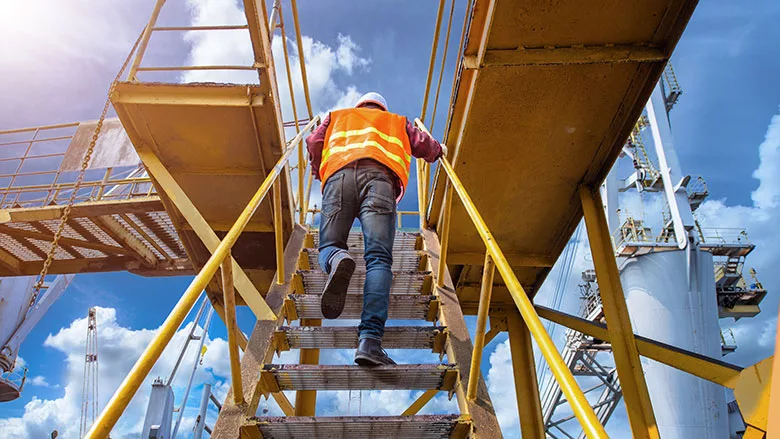
Fall prevention is one area of occupational safety and health that can be varied and complicated but has many options for protecting workers (fall protection). In May 2022, Federal OSHA and several organizations sponsored the annual Stand Down to Prevent Falls in Construction, a voluntary event for employers to talk directly to employees about the importance of fall prevention awareness. The national program is directed towards construction and includes dedicated posters and publications, local and regional events, video presentations, and partner resources to encourage employers to take the time to address fall prevention in the workplace.
According to OSHA (and the Bureau of Labor Statistics - BLS), falls continue to be the leading cause of fatalities in the construction industry. The numerous fall hazards available on sheet metal / HVAC projects can be readily identified and mitigated with a combination of workplace planning including funding and purchase of appropriate equipment and tools, workplace and task-specific training, providing proper equipment in good condition, pre-use inspection of the workplace and equipment, following manufacturer provided safe work practices including fall rescue procedures, and near-miss / accident investigation.
First, let’s discuss where fall hazards can be found on jobsites and in shops. To simplify, falls can happen at level ground (slips and trips) or from heights. Slips and trips occur most often due to debris, trash, or wetness on the floor. Although the term “housekeeping” seems basic, it is the best way to prevent slips and trips. A thorough and constant Housekeeping Program for ensuring floors, especially aisles and passageways, are clean and dry will reduce the likelihood of slips and trips.
While the height at which falls are regulated varies (usually 4 or 6 foot), why not address falls from all heights? A worker can be seriously hurt from a 2-foot fall from a ladder. Ladders are one of the most frequent sources of falls in our industry because they are commonly utilized equipment that is often used incorrectly. Equipment such as scaffolds and aerial lifts are a source of fall hazards that also need attention. Falls through floor openings and skylights are all too common and require hazard mitigation such as warning signs, railings, floor covers and other protective measures.
Now, let’s look at each one of the important steps in the fall prevention process mentioned above starting with workplace planning. Planning for fall prevention includes deciding how the construction job will be done or the tasks and processes in the shop, and what safety equipment may be needed to complete each task. Some employers conduct a job hazard analysis (JHA) to help identify the steps in involved in the tasks. When estimating the cost of a job or work in the shop, employers should include the cost of safety equipment to ensure all the necessary equipment and tools are available. An example OSHA provides is a roofing job and the need to identify all the different fall hazards, such as holes or skylights and leading edges, then plan and select fall protection suitable to that work, such as personal fall arrest systems (PFAS).
Training is an important part of fall prevention. Every worker should be trained on proper set-up and safe use of equipment they use on the job or in the shop. Employers must train workers in recognizing hazards on the job as identified in the planning process we just discussed. Two specific areas of fall prevention training are the importance of conducting pre-use inspections of equipment and tools and following proper use procedures.
Numerous falls have occurred due to broken or worn-out equipment that should have been taken out of service. Training would focus on how to conduct the pre-use inspection for each specific piece of equipment and what to do when a defect is found (contact supervisor, tag the equipment as unusable, take it out of service, etc.). Many types of fall protection equipment have manufacturer-recommended use procedures. Workers should be trained on these procedures and any company-specific polices or procedures that provide a high level of fall prevention.
Another “prevention” tool for companies is conducting fall related accident and near miss investigations. Much can be learned when a thorough follow up is done when there is a failure in the fall prevention program. Encourage workers to report the “near miss” as they indicate a need for action. Conducted with a goal of fixing any problems, and not placing blame, these inquiries often show several causes that can be addressed through better training, planning, equipment, etc.
For more information on fall prevention, visit these OSHA webpages dedicated to the topic:
Fall Protection - Overview | Occupational Safety and Health Administration (osha.gov)
OSHA's Fall Prevention Campaign - Training | Occupational Safety and Health Administration
Resources for Employers and Employees | Occupational Safety and Health Administration (osha.gov)
Looking for a reprint of this article?
From high-res PDFs to custom plaques, order your copy today!