How-to
Proper application of ceiling dampers
Ceiling dampers are crucial components of many fire-rated floor, ceiling and roof, ceiling assemblies.
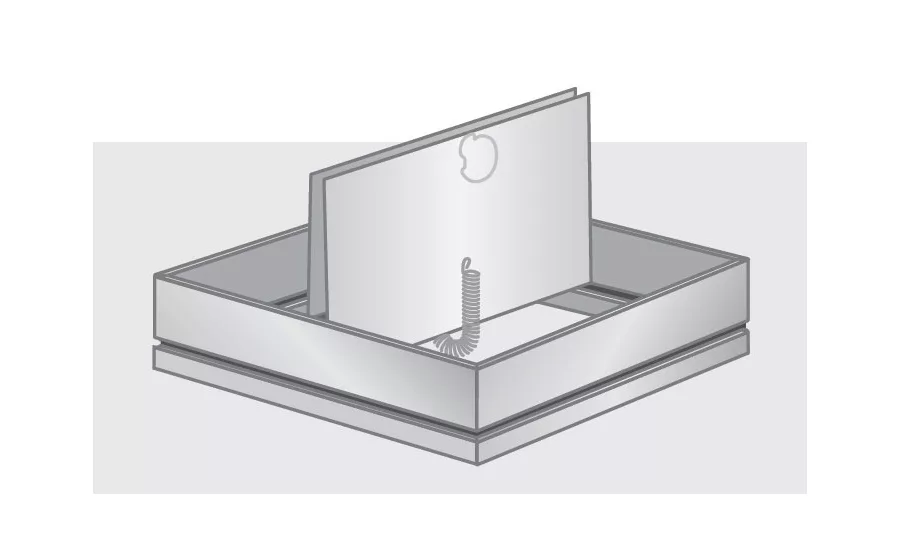
In many a floor/ceiling and roof/ceiling assembly listed in UL’s Fire Resistance Directory, a ceiling membrane is required to thermally protect the structural members of the assembly in the event of a fire. Most commonly, the ceiling membrane is fire-rated acoustical ceiling tiles or gypsum board. Because of the critical role a ceiling membrane plays in the fire-resistance performance of a floor/ceiling or roof/ceiling assembly, any penetration through it must be protected. In the case of HVAC penetrations, protection comes in the form of a ceiling damper (Figure 1).
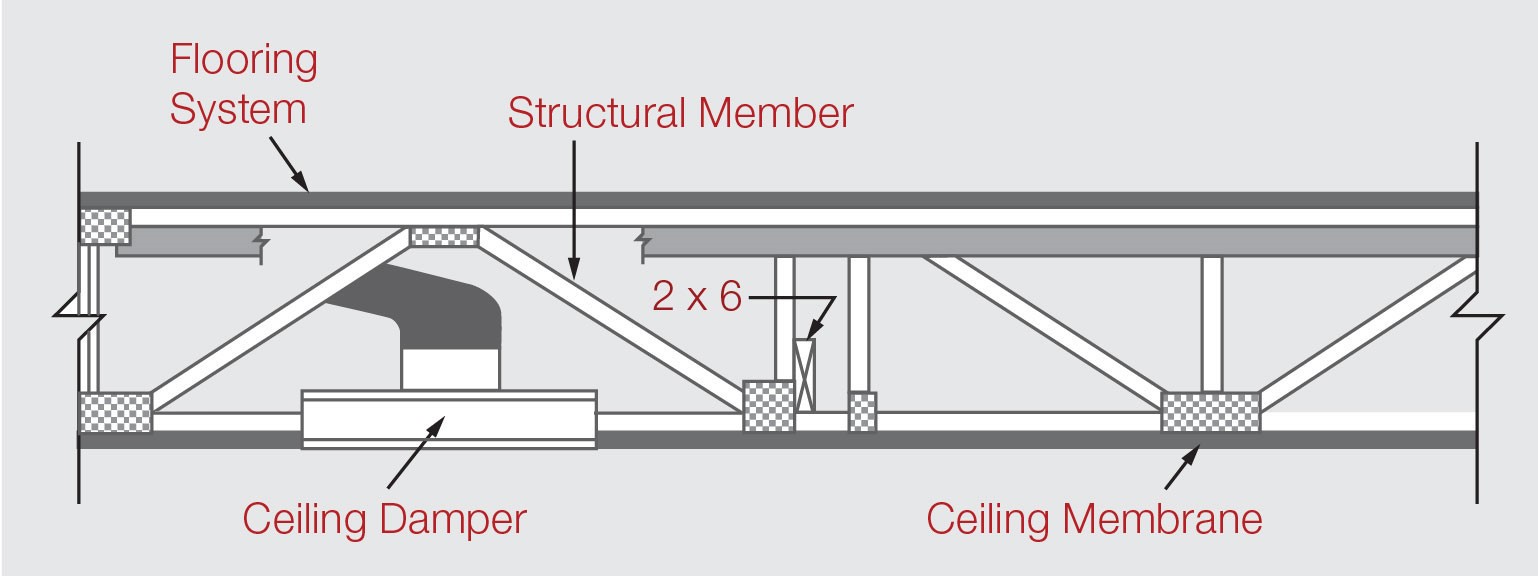
Figure 1. Example fire-rated floor/ceiling assembly with approved HVAC penetration.
All too often, ceiling dampers are installed in assemblies for which they are not approved, voiding the hourly rating of the assemblies. This article explains the proper application of ceiling dampers.
Three types of assemblies
Floor/ceiling and roof/ceiling assemblies listed in the Fire Resistance Directory are evaluated to meet the requirements of ANSI/UL 263, Fire Resistance Ratings. With respect to the use of ceiling dampers, fire-rated floor/ceiling and roof/ceiling assemblies can be placed into one of three categories: assemblies tested without ceiling dampers, assemblies tested with generic hinged-door-type dampers and assemblies tested with manufacturer-specific damper models.
Assemblies tested without ceiling dampers
Not all floor/ceiling and roof/ceiling assemblies with ceiling membranes are tested with HVAC penetrations. Installation of ceiling dampers in assemblies tested without them is prohibited. How can you tell if an assembly was tested without a ceiling damper? A ceiling damper is not called out in the construction details of the assembly in the Fire Resistance Directory. If an application requires HVAC penetrations through a ceiling membrane, it is critical such assemblies not be specified.
Assemblies tested with generic hinged-door-type dampers
A hinged-door-type damper is a generic ceiling-damper design not specific to a given manufacturer. During ANSI/UL 263 fire tests of floor/ceiling and roof/ceiling assemblies, hinged-door-type dampers often are used so as not to restrict the type of damper that can be used as part of an assembly during a building’s construction. In actual building construction, however, hinged-door-type dampers rarely are used. UL 555C, Standard for Ceiling Dampers, is used to compare the performance of a ceiling-damper manufacturer’s design with that of a hinged-door-type damper. Thus, when a hinged-door-type damper is used during a fire test, any manufacturer’s UL 555C-classified damper is approved for use in the construction of that rated assembly.
Assemblies tested with manufacturer-specific damper models
When a floor/ceiling or roof/ceiling assembly is tested with a manufacturer-specific damper, that damper model will be specified in the Fire Resistance Directory, and only that damper can be installed. When manufacturer-specific damper models are called out in the Fire Resistance Directory, dampers “only” tested to the requirements of UL 555C are not approved for use. The most common application for manufacturer-specific damper models are assemblies with wood-truss or wood-joist structural members, or “combustible assemblies.” Dampers only tested to the requirements of UL 555C are not approved for use in combustible assemblies.
Ceiling dampers are crucial components of many fire-rated floor/ceiling and roof/ceiling assemblies. Though the specification and selection of ceiling dampers can be confusing, pitfalls can be avoided if the three categories of fire-rated floor/ceiling and roof/ceiling assemblies requiring ceiling-membrane protection are kept in mind.
To learn more about ceiling dampers, read the AMCA white paper “Ceiling Dampers Explained,” available to download at no cost at www.amca.org/whitepapers.
Looking for a reprint of this article?
From high-res PDFs to custom plaques, order your copy today!