Voting in the workplace
How to ensure your business stays compliant with state, federal laws
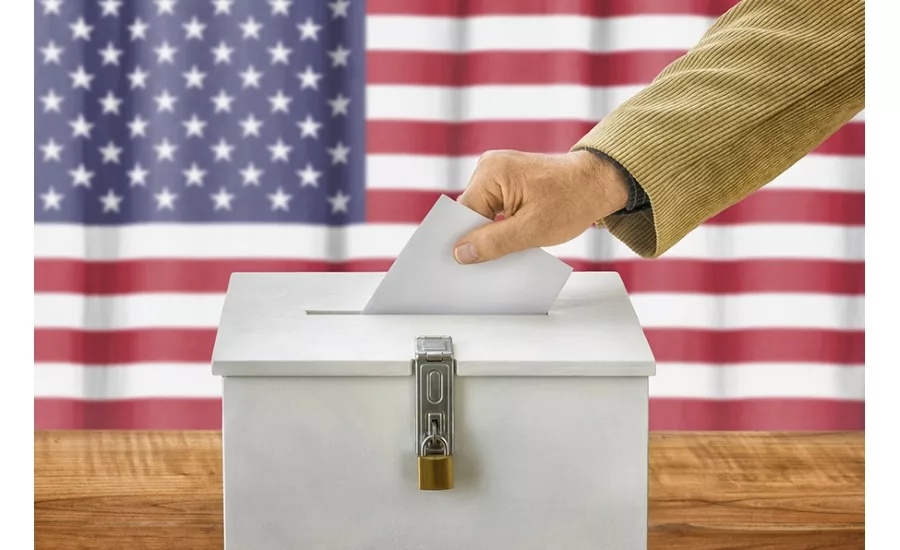
Elections often stir up passionate feelings—and that seems to be particularly true this year. As politicians and voters gear up for Nov. 8, employers may not know that their workers have certain rights when it comes to elections, and corporations even have rights of their own.
Employers need to understand the obligations and restrictions regarding allowing employees time off to vote, whether they can encourage employees to vote for specific candidates, and even if they can ban politicking from the workplace. Failing to do so can result in workplace discord, and in some cases, even violations of law.
There are no federal laws that grant employees the right to time off from work in order to vote. However, 31 states require that employers give their workers time off to visit a polling place to vote. In some states, that time off may need to be paid.
For example, in Nevada employees for whom “it is impractical to vote before or after” work are entitled to one to three hours off to vote, depending on how far their workplace is from their polling station. Employees have to request time off in advance, and employers can decide when leave can be granted. California workers may take up to two hours of paid time off at the beginning or end of their shift to cast their ballots, if they would otherwise not be able to vote because of their shift. Arkansas employers are required to schedule workers in a manner that ensures that employees have the opportunity to vote.
Penalties for failing to give employees voting time off as required by state law can range from nearly inconsequential to extremely significant. In Colorado, companies can lose their corporate charter. Under the Texas Election Code, it is a misdemeanor when someone who has authority over an employee “refuses to permit the other person to be absent from work on election day for the purpose of attending the polls to vote; or subjects or threatens to subject the other person to a penalty for attending the polls on election day to vote.” Some states, such as California, also require companies to alert workers about their rights.
In some states, there are no laws against companies that discriminate or fire employees for political affiliations or political activities. However, other states explicitly prohibit it, including California and New York. For example, in Michigan, it’s a misdemeanor for a supervisor to “either directly or indirectly, discharge or threaten to discharge an employee . . . for the purpose of influencing the employee’s vote at an election.”
The stakes are even higher in Florida, where it’s a third-degree felony. According to Florida § 104.081 “It is unlawful for any person having one or more persons in his or her service as employees to discharge or threaten to discharge any employee in his or her service for voting or not voting in any election, state, county, or municipal, for any candidate or measure submitted to a vote of the people.”
Other states, such as Colorado and North Dakota, prohibit discrimination for lawful conduct outside of work. Some cities also have their own regulations. In Seattle, “political ideology” is protected from discrimination, along with religion, sexual orientation, and military status.
When employees wear their politics on their sleeves—or on hats, by way of pins and buttons—it can lead to workplace distractions and even heated arguments. Fortunately, companies generally have the right to prohibit political paraphernalia in the workplace, along with campaign signs and solicitations.
However, employers need to be careful that these policies don’t violate any provisions of the National Labor Relations Act, which protects the rights of employees to engage in “concerted activity.” Concerted activity occurs when two or more employees take action for their mutual aid or protection regarding terms and conditions of employment. According to the National Labor Relations Board (“NLRB”), the agency that enforces federal labor law, a lone employee can also engage in protected concerted activity when acting on the authority of other employees, bringing group complaints to the employer’s attention, trying to induce group action, or seeking to prepare for group action.
If an employee combines a union message with a political one, such as a button expressing a union’s support of a particular candidate, the speech may be protected. If an employer tried to ban that button, it could find itself under investigation by the National Labor Relations Board.
In order to maintain a professional work environment while also staying in compliance with all local, state, and federal laws, companies need to take a few basic steps:
●Know the laws. Laws can vary significantly from jurisdiction to jurisdiction, and the penalties for failing to comply can be costly. It’s important that companies understand the legislation that impacts each worksite. Knowledgeable attorneys can offer critical insights into this complicated area of law. They can also help employers prepare for an election that could impact their businesses, including special elections and ones that are strictly local.
●Consider your strategy and goals. When companies decide to engage in political activity or support specific candidates, it’s important to consider what the goals are and the best way to accomplish those goals. This will help the company craft its communications and limit its communications to those employees it can legally solicit.
●Communicate with workers. With the election looming, companies that are required to offer time off to employees should develop a policy that covers all logistics. The policy should explain what the company expects and whether employees need to communicate ahead of time if they plan to arrive late or leave early to vote. The policy should obviously be shared with all workers and supervisors, so there are no surprises on Election Day.
Voting is critical for democracy, which is why so many states have laws protecting employees’ right to vote. By knowing the relevant laws, employers can remain in compliance for this election, as well as upcoming ones.
Richard D. Alaniz is senior partner at Alaniz Schraeder Linker Farris Mayes LLP, a national labor and employment firm based in Houston. He has been at the forefront of labor and employment law for over 30 years, including stints with the U.S. Department of Labor and the National Labor Relations Board. He frequently conducts frequent seminars to client companies and trade associations across the country.
Looking for a reprint of this article?
From high-res PDFs to custom plaques, order your copy today!


