Helping contractors place equipment is part of the sales process, manufacturers say



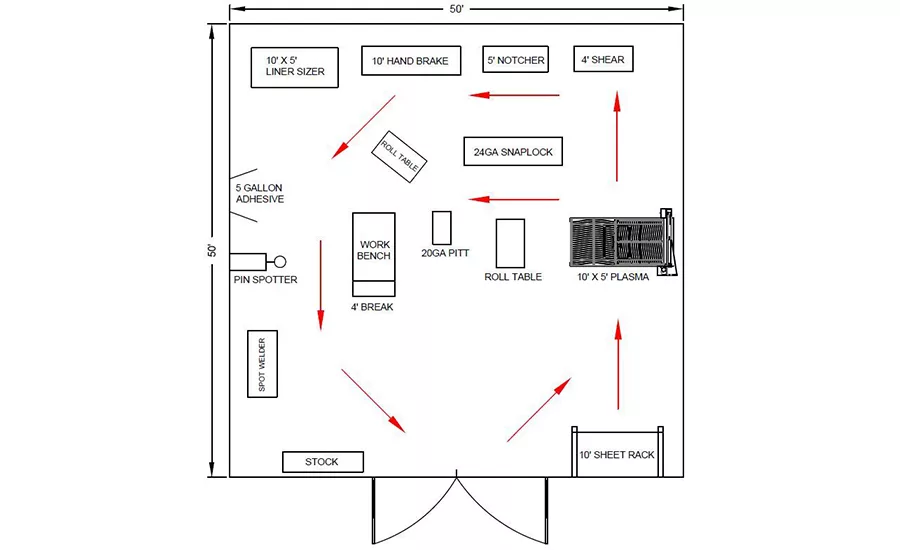
For many shop managers, buying a piece — or several pieces — of sheet metal machinery is not a quick decision.
Determining whether you really need the equipment and if using it will increase efficiency enough to justify spending thousands — or tens of thousands — of dollars are only a couple of the items that must be considered.
A potentially bigger one is just where to put the machine. And despite seemingly being a basic consideration, it’s one that some HVAC construction contractors overlook, according to several representatives from machinery manufacturers interviewed by Snips.
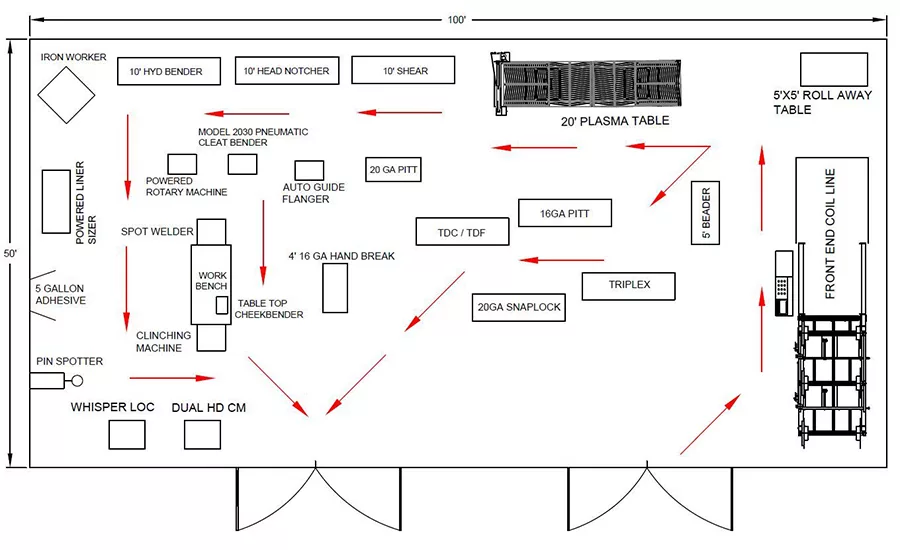
A new piece of machinery can improve material flow on the shop floor — or it can really mess it up, if the equipment is not located in the right spot or other machines are not moved to maximize effectiveness and efficiency, experts say.
“The positioning of that equipment is essential to allow that shop to be fluid with their process,” said Kevin Baydar, vice president of sales at Bohemia, New York-based Vicon Machinery and Plasma Automation. “If they’re putting the machine in the wrong area, they’re going to be handling material much more, causing more labor costs.”
That’s why many equipment makers say they are reluctant to sell a piece of machinery without visiting a sheet metal shop in person and consulting with employees on how the facility currently operates.
“The guys who (call and) say, ‘What’s your price and how quick can I get it?’ I might as well hang up the phone,” said Mike Bailey, vice president of sales and new-product development at Mestek Machinery.
The Iowa-based company’s ductwork fabrication machinery brands include Engel, Iowa Precision, Lockformer and ISM.
“I’m not here to cut $50,000 out of a $200,000 deal if you buy today. That’s just not me,” he added.
Weaknesses
Oftentimes, a visit and a short conversation with workers will expose where the weaknesses are and what equipment might help make the process run smoother.
“Wherever you see parts start to stack up because they’re not flowing properly, that’s a bottleneck. And usually there’s a solution for it,” Bailey said. “And it may not be a piece of machinery. It may just be that the machines aren’t set in the right areas of the floor.”
At Vicon Machinery, the process is similar, said company President Tim Walsh. Even if customers say they’re pretty sure what equipment they want, Vicon will ask to schedule an in-person visit.
“We would ask the typical questions: How large are you, what type of work – residential or commercial? Do you do any fabrication right now?” Walsh said. “Some of them don’t do it and they want to get into it.”
Sometimes, Bailey said, it can take five or even 10 visits before a contractor agrees to buy a machine, especially a large, customized piece.
Baydar said completing a sale could be even longer — a lot longer.
“I’ve worked on deals that are 16 years,” he said. “We’re persistent. And persistence pays off.”
Officials with Mestek and Vicon both said that most established sheet metal contractors have a pretty good idea of what equipment they want, even if not all of them are sure where to put it. Most customers want the opinion of the manufacturer.
“Let’s say a guy has never had a plasma (cutting) machine. He definitely wants one,” Walsh said. “What I do is, I say, ‘Do you have an idea where you wanted to put it?’ Most of the time, they say, ‘Yeah, I was thinking over here. But I want to know what you think.’ ”
Education
Experience selling machinery is no substitute for learning from workers what works best in their company’s facility, Bailey added.
“You’ve got a shop guy who’s been there for 20 years. You don’t want to alienate him,” he said. “You want to pick his brain.”
Since efficiency is typically the No. 1 reason most contractors invest in new equipment, a good salesperson needs to ensure customers are going to get the most benefit out of the purchase, Bailey said.
“In this business — and you can quote this — there is no material savings per contractor,” he said, adding, “I can only say that because I worked for a distributor selling all the material too for 10 years. I tell this to contractors all the time: There may be 3 to 5 percent savings on materials based on how you pay your bills, the amount of material you order — or there may not. The only thing you’ve got in this whole entire trade to compete and better yourself from the other guy is labor. That’s it. And labor means automation, and labor means fewer steps to make a product.”
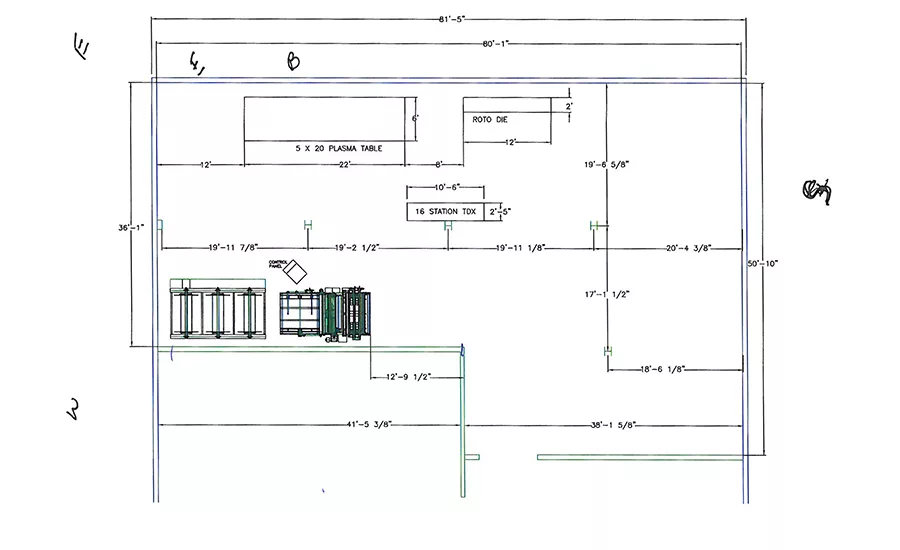
When you start counting steps and looking into the size of the facility and how far apart machinery is spaced, that’s where the layout expertise of manufacturers may be helpful. Plenty of supervisors already know where a machine will work best, but for those who don’t or want some advice, Bailey, Walsh and Baydar all said they offer shop layout services.
Both manufacturers pointed out that sheet metal shops vary greatly in size, from 1,500-square-foot facilities that look like little more than a garage to sprawling plants. Depending on size and the type of work the contractor performs, assisting in shop design could be as simple as a few hand-drawn sketches or it could be a more involved diagram created using a computer-aided drafting program.
Design services
“Nine times out of 10, with the small shops, you can do it very quickly just talking while you are there,” Baydar said. “A medium-size shop, you can do a little bit with the hand sketch and they can draw something up. And then when you get into the large shops, we provide on particular machines like coil lines and roll formers or what not, we give them the dimensions that if they want to enter it in (to CAD) or I can send them the layout plan view of each of these machines.”
In the New York City area, where Vicon has a lot of customers, the never-ending traffic and high cost of space can present unique challenges, Walsh said.
“Even the parking lots have a big issue,” he said. “I mean the impact of bringing raw material in their facility. If there parking lot is nonexistent, they’re loading in the street blocking traffic. It’s amazing what things go on in Queens, in New York City. Its staggering how people can operate, but they do it.”
That’s why the machinery’s proximity to loading areas and objects such as metal racks is critical when deciding on placement, officials from both companies said.
“Sometimes these shops are pretty big and they’re just spaced out too far,” Bailey added.
While most shop layout work concerns what goes on inside the facility, contractors also need to be aware of the kind of neighborhood where they’re buying or leasing space, Walsh and Baydar added.
Even if it is zoned for commercial or industrial work, if the site is too close to a residential area, they may face angry neighbors and upset city officials who must field the noise complaints.
“That can be a problem,” Walsh said, adding that Vicon had a customer who was forced to relocate after a year because the company didn’t investigate the neighborhood and the landlord was tired of the objections from neighbors.
You also don’t want a delivery truck full of ductwork to get stuck in traffic on local streets during rush hour, he said. Investigate the community and know where and when traffic tie-ups are likely to occur.
“Pay attention to your local ordinances,” Baydar said. “You’re responsible.”
For reprints of this article, contact Renee Schuett at (248) 786-1661 or email schuettr@bnpmedia.com.
Looking for a reprint of this article?
From high-res PDFs to custom plaques, order your copy today!