Proposal to limit use of flexible duct has many in HVAC industry upset
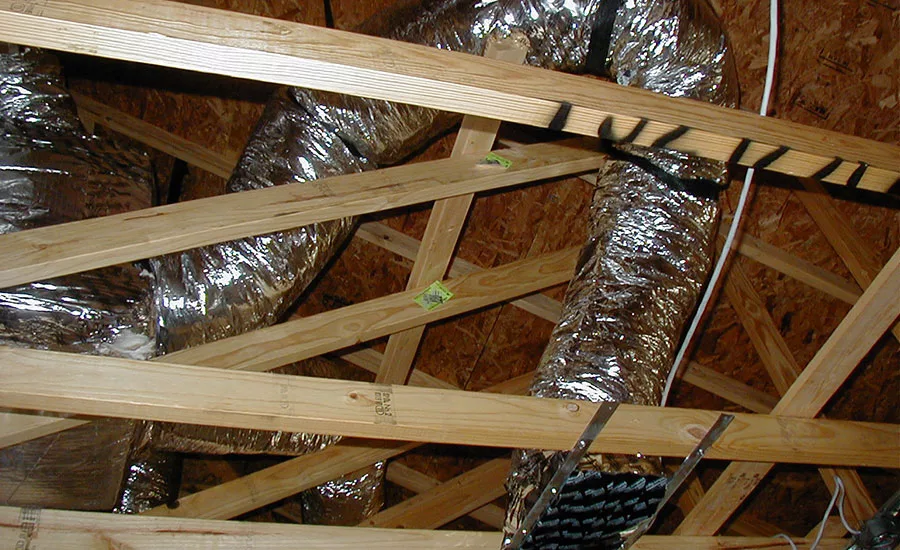
A proposal to limit the use of flexible ductwork in residential construction has some people in the industry bent out of shape.
The International Association of Plumbing and Mechanical Officials is considering whether to limit the use of flex duct in residential projects to no more than 5-foot lengths, citing the energy lost to friction inherent when flex duct is installed, especially in longer runs. A similar rule already exists for nonresidential projects in the association’s Uniform Mechanical Code.
The proposal has already passed the association’s technical committee, and it could become part of the 2018 updated code later this year, supporters and opponents say. And if that happens, the rule could eventually be adopted by states and local jurisdictions throughout the country.
The proposed code language
Members of an International Association of Plumbing and Mechanical Officials technical committee adopted code language limiting the use of flexible ductwork to 5 feet or less during a May 2016 meeting in Denver. It says, “Length limitation: Factory-made flexible air ducts and connectors should not be more than 5 feet (1,524 mm) in length and shall not be used in lieu of rigid elbows or fittings.”
The opportunity for the public to comment on the proposal ended Jan. 3, but opponents are still working to convince IAPMO members to kill the rule as it works its way through the approvals process this year.
“The flexible duct industry is not throwing in the towel,” said Matt Meyer, a product manager with Hart & Cooley Inc., a manufacturer of flexible ductwork and other HVAC accessories based in Grand Rapids, Michigan. “If this measure were to go (through), we’d fight it at the local level.”
A popular product
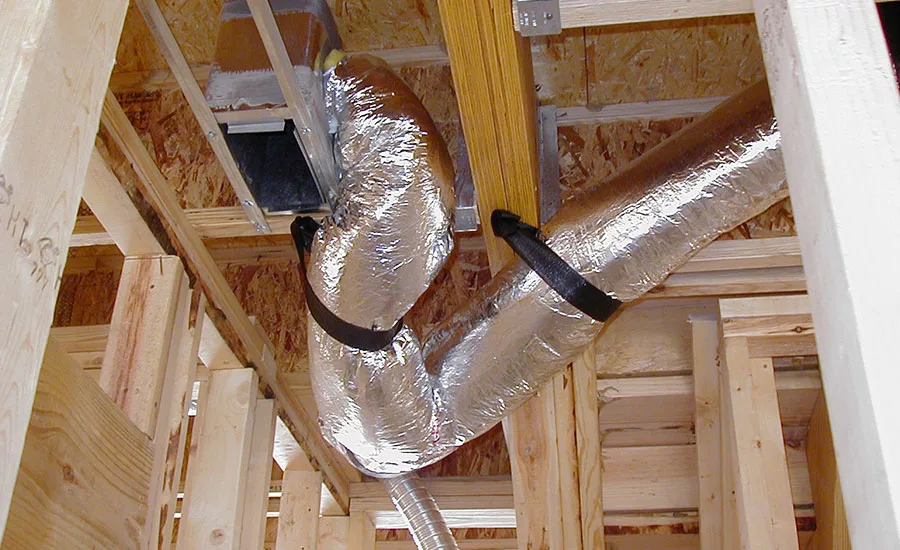
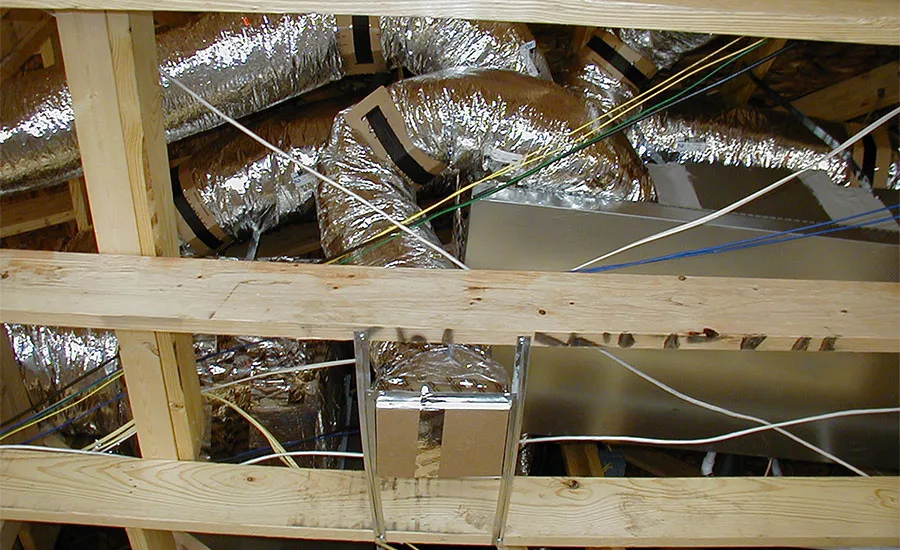
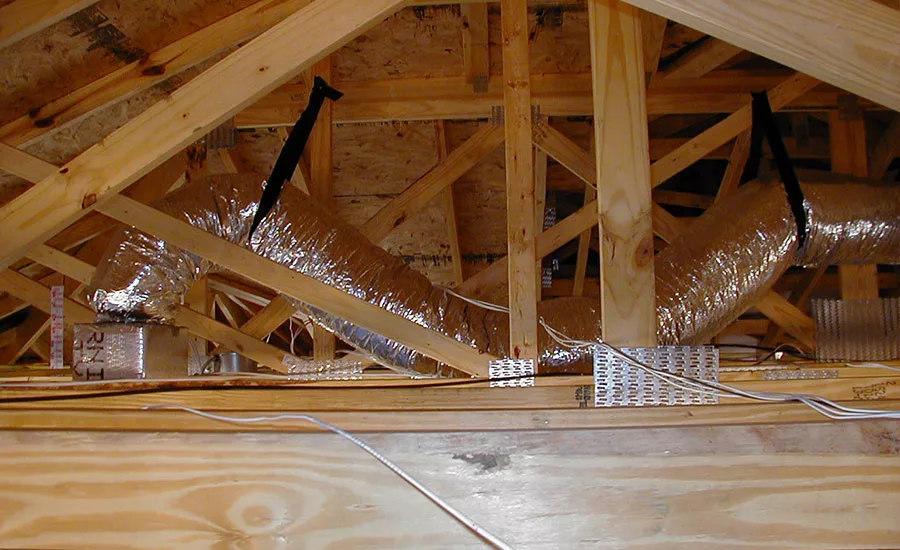
Makers of flex duct say the product is liked by builders and many contractors for its price, effectiveness and easy installation in tight spaces such as attics. Unlike metal ductwork, it quickly bends around corners and can be put up in a few minutes. Industry trade group the Air Duct Council, which says it represents the manufacturers and suppliers of 95 percent of the flex duct used in North America, said the product can last as long as a home stands if installed properly. The association sells a 28-page “green book” outlining proper installation and use of flexible ductwork.
Upcoming dates in the 2018 Uniform Mechanical Code development process
- Public comments submission deadline: Jan. 3, 2017
- Comment distribution to committee members: March 24
- Technical committee meetings: May 1-5
- Initial ballots sent to committees: May 19
- Ballots sent back, comments circulated: June 2
- Deadline for ballots, vote changes based on comments: June 16
- Report on received comments submitted: Aug. 21
- International Association of Plumbing and Mechanical Officials annual conference: Sept. 24-28
- Technical committees begin vote on floor amendments: Oct. 4
- Initial ballots returned, comments sent to committee members: Oct. 11
- Deadline for ballots, vote changes based on comments: Oct. 18
- Standards council meeting: Nov. 15-17
- Deadline to notify board of plan to file petition: Dec. 11
- Board of directors addresses petitions: To be determined
Glenn Hourahan, a licensed professional engineer and the Air Conditioning Contractors of America’s senior vice president, said there are no technical or installation-related reasons to limit flexible ductwork to 5 feet or less.
“I understand why they chose to go that way because flex duct has a tendency to be incorrectly installed,” Hourahan said. “But if you don’t install any product or device or element correctly, it’s not going to perform either.”
When flex duct is put in according to the guidelines contained in the ACCA’s manuals on residential duct construction and HVAC installations, they are quiet, energy efficient and work well, he said.
‘At a loss’
A Southern California-based HVAC association, the Institute of Heating and Air-Conditioning Industries is also speaking out against the proposal, noting that if approved, it’s likely to find its way into the Golden State’s mechanical codes.
“We are at a loss regarding IAMPO’s decision,” said Phillip Grosenbach, president of the institute, which represents contractors, manufacturers, distributors, utility companies and others involved in refrigeration and sheet metal. “Our organization strongly objects to the vote and urges industry leaders to voice their opposition.
“Should this vote stand, inevitable replacement of flexible air duct with sealed, insulated sheet metal duct and fittings will result in significant costs to California residents,” Grosenbach added.
Mandating metal ductwork where flex duct is typically put in could more than double installation costs, according to some estimates.
Opponents also include the Sheet Metal and Air-Conditioning Contractors’ National Association, which despite having “sheet metal” in its name, does support the use of flex duct in certain applications.
In comments submitted to the IAMPO, the association called the 5-foot limit already in place for commercial projects and proposed for residential work “an arbitrary limit.”
“It is our opinion that the 5-foot limit on flexible duct should be fully vetted on the technical merits and not an arbitrary number that has been done to date,” the association’s letter said. “SMACNA supports the model building codes and would recommend at the future code development hearings this 5-foot limit be replaced with the language from the SMACNA standard that has served the HVAC and R industry to maximum benefit.
“The limit also conflicts with installation instructions of a number of HVAC products, which require flex duct lengths over 5 feet to meet specific performance requirements,” SMACNA said.
Officials with the American Society of Heating, Refrigerating and Air-Conditioning Engineers have also spoken out against the IAPMO rule.
Supporters speak
But the proposal does have the backing of others in the industry. Chris Van Rite, the vice president of sales at M&M Manufacturing Co., a Fort Worth, Texas-based maker of metal ductwork and fittings, said the rule would benefit HVAC construction.
“Flex duct is a great product for the contractor. It’s cheap and it’s easy. It takes almost no skill at all to install it,” Van Rite said. “The problem is homeowners get a less-efficient system than what the designers are claiming.”
He acknowledged that an outsider might just assume that the only reason M&M supports the flex duct limit is that the company makes a competing product. But there’s more to it than that, Van Rite said.
“There’s no question that flex duct has replaced lots and lots of sheet metal duct over the last 30 or 40 years, but my experience and the things that I have been involved in on behalf of the industry really do have to do with research and real data on airflow efficiency,” he said.
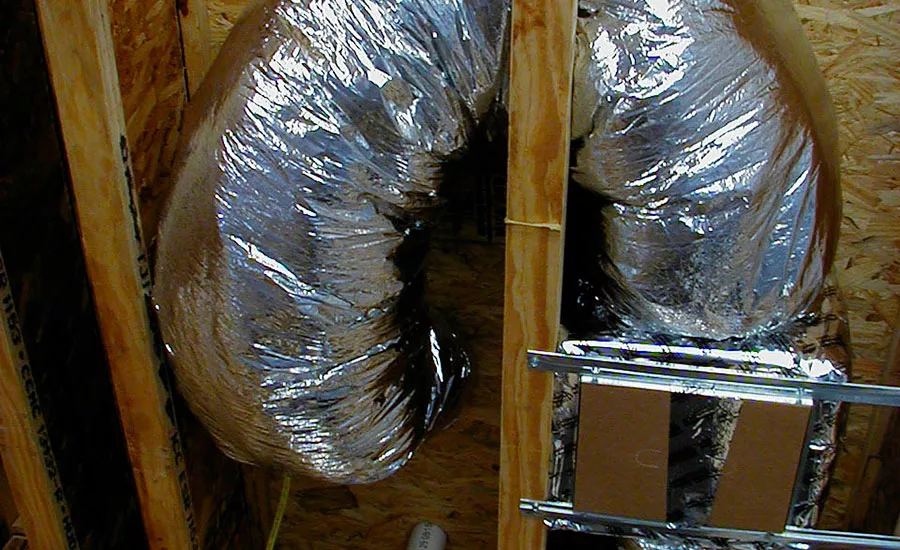
Several studies have shown that when flexible duct is compressed, airflow is severely reduced, Van Rite said, adding that it occurs frequently.
“The biggest problem we have with field-installed flexible duct is (contractors) use too much of it,” he said. “And by using too much, you’re putting 10 feet of duct where 7 would have been plenty.”
Van Rite said manufacturers don’t want to acknowledge that shortcoming.
“The flex duct industry has known this for years, but they’re just ignoring the facts,” he said.
Even though the proper installation techniques are available in the ADC’s manuals, the information is not widely available, he said.
“It would be unfair to say they’re keeping this information a secret,” Van Rite said. “They just don’t advertise where you should go to get this information.”
Meyer disagreed, saying plenty of contractors properly put in flexible ductwork.
“If you don’t install flex duct correctly, then you’re going to have issues. Nobody is arguing that,” Meyer said. “There are a lot of extremely large HVAC contractors who install this product every single day. They install it well and they have no issues. … When things are done correctly, this product works incredibly well.”
For reprints of this article, contact Jill DeVries at (248) 244-1726 or email devriesj@bnpmedia.com.
Looking for a reprint of this article?
From high-res PDFs to custom plaques, order your copy today!