Sheet metal contractor says new construction method may change the industry


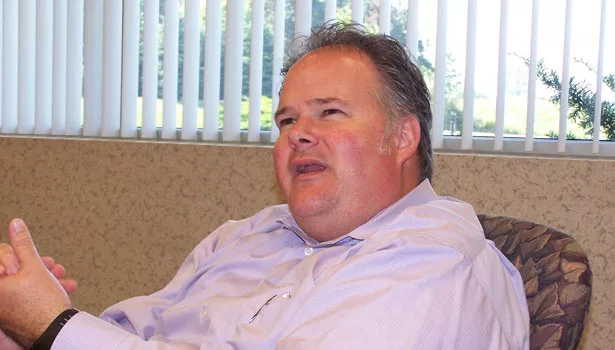
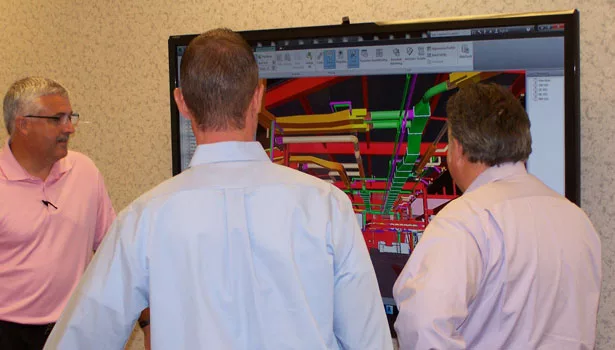
HOLLY, Mich. — For Matthew Cramer, president of Dee Cramer Inc., there was nothing unusual about its work at Hurley Medical Center.
The city-owned hospital, almost 114 years old, was spending $30 million to double the size of the existing emergency room, relocate and add entrances, and generally update a facility that dated to the 1970s.
Dee Cramer was tapped to turn 80,000 pounds of sheet metal into 11,000-plus feet of ductwork, which it would tie into a variable-air-volume system. Like any modern medical center, it uses high-end filtration to purify the air for patients, staff and visitors.
During its 86-year history, Dee Cramer — one of the largest sheet metal contractors in the country — has done many similar hospital projects. What made this one unique for the Michigan-based company was the way this health care facility would be built: at the urging of Virginia consulting firm KLMK Group, the Hurley expansion would use “integrated project delivery” instead of traditional construction methods or even the more common design-build model.
What it is
Integrated project delivery, commonly called IPD, is a far more collaborative way of building than most contractors are used to. Instead of each trade focusing exclusively on its job, IPD forces contractors, architects and everyone involved in a project to work together to ensure everything goes as planned. The goal is to deliver maximum value to the building owner. It uses many of the time-saving techniques employed in lean construction and building information modeling to eliminate waste and redundant work.
The American Institute of Architects, which is a supporter of the process, lists this definition on the group’s website, www.aia.org: “IPD is a method of project delivery distinguished by a contractual arrangement among a minimum of owner, constructor and design professional that aligns business interests of all parties. IPD motivates collaboration throughout the design and construction process, tying stakeholder success to project success, and embodies the following contractual and behavioral principles.”
Unlike typical construction, IPD forces contractors to think about the other trades on a job, Cramer said.
“If you’re installing ductwork and you think you are going to be in the way of the fire (systems) guy, you can’t just say, ‘Oh well,’ ” Cramer said.
A level of comfort
Dee Cramer would work under general contractor Granger Construction Co. of Lansing, Mich., and with architect/engineer HDR on the Hurley center.
It was critical that everyone on the project become comfortable with the companies involved. They would be meeting regularly to discuss issues before they became problems.
With IPD, “You look to move the teamwork … earlier in the project,” Cramer said. “It’s communication.”
Such a team-oriented focus means integrated project delivery may not be right for every company or every project, Cramer pointed out. IPD contracts also mandate that all companies share in the financial risk — and rewards — so that everyone has a stake in a job’s success. A price guarantee was built in to the Hurley project before final plans were created.
Engineered to be a “lean” job through IPD, the hospital project did away with a lot of the design steps that can slow a project down.
“(The project) is essentially being drawn once,” he added. “It saves a lot of money from that standpoint. It saves a lot of changeovers.”
The Hurley project was the first one in Michigan attempted using IPD, according to officials with the project. It came in under budget and ahead of schedule.
“It’s exciting to be a part of it,” he said. “We’ve been building buildings the same way for 80 years.”
A major change
The construction industry is slow to change and embrace new technologies and methods, Cramer said, and this has the potential to really shake up the industry.
“I see this as a (game) changer,” Cramer said. “It removes barriers for a team to work together for an owner’s benefit.”
However, as Cramer has mentioned in his presentations to Sheet Metal and Air-Conditioning Contactors’ National Association members, it probably isn’t right for every company or every project. There could be legal issues over who has responsibility on certain parts of a project, and architects may have to give up some of the control that they are used to.
“You have to know who you are working with,” he said.
But that doesn’t make him any less of a fan.
“It makes things easier to deal with because there isn’t finger pointing,” Cramer said. “Everybody understands their role.”
That extends to project estimators. Harold Whitcomb is an estimator with Dee Cramer. Whitcomb said he prefers working on jobs that use integrated project delivery methods, even though it’s not necessarily easier.
“It’s different,” he said. “With an IPD job, we’re looking at the entire project. It takes more time and more thought. I’m thinking about what looks good.”
Since working on the Hurley project, Dee Cramer has become involved with a few other IPD jobs, including one at Michigan State University.
Integrated project delivery isn’t well known yet in the construction industry, but Cramer said he sees that changing.
“Owners are asking questions about it,” he said.
Whitcomb agreed.
“There is money to be saved,” he said.
For reprints of this article, contact Renee Schuett at (248) 786-1661 or email schuettr@bnpmedia.com.
Looking for a reprint of this article?
From high-res PDFs to custom plaques, order your copy today!