ACHR News
search
Ask ACHR NEWS AI
cart
facebook twitter instagram linkedin youtube
  • Sign In
  • Subscribe
  • Sign Out
  • My Account
ACHR News
  • NEWS
    • Breaking News
    • New HVAC Products
    • Featured Products
    • Manufacturer Reports
    • HVAC Data
    • Legislation
    • ACHR NEWS Centennial
  • RESIDENTIAL
    • Air Conditioners
    • Furnaces
    • Residential Heat Pumps
    • Ductless
    • Residential IAQ
    • Testing, Monitoring, Tools
    • Components & Accessories
  • COMMERCIAL
    • Air Handlers
    • Rooftop Units
    • Chillers and Cooling Towers
    • Commercial Heat Pumps
    • Boilers and Hydronics
    • VRF/Ductless
    • Commercial IAQ
  • REFRIGERATION
    • Refrigerants
    • Refrigerant Regulations
    • Leak Management
  • CONTRACTOR PRO
    • Geothermal
    • Homeowner Study
    • VRF and VRV Ductless
    • Unitary Trends
  • EDUCATION
    • Training and Education
    • Business Management
    • Service and Maintenance
    • Continuing Education
    • Market Research >
      • HVAC Brand Awareness Report
      • VRV, VRF, VRVZ Report
      • Unitary Trends Report
      • Water Heat Professionals Report
    • Webinars
    • Sponsor Insights
    • eProducts Info
    • White Papers
  • EVENTS
    • HVAC Contractor Forum
    • Industry Events and Webinars
  • MEDIA
    • Videos
    • AHR Expo 2025 Videos
    • Podcasts >
      • ACHR News Podcast
      • HARDI Podcasts
      • AHR Expo Podcasts
      • ACCA Podcasts
    • Interactive Spotlights
    • Quizzes
    • eBooks
    • HVAC Talkback
  • HVAC GROUP
    • ACHR NEWS >
      • Current Issue
      • Digital Edition
      • Subscribe
    • Distribution Trends
    • SNIPS NEWS >
      • Join SNIPS NEWS
    • Engineered Systems News >
      • Join ES News
    • HVACR Directory
    • Contests
    • Newsletters
    • Contact
    • Advertise
    • My Account

Using CO2 to Optimize Ventilation
By Doug Hampton, QCxP, CxA, EMP
September 27, 2010

Ventilation to a space is often specified by an engineer based on the purpose of the space. All too often the outside air requirements are established as an unmeasured cfm value; this ultimately ends up being set as an outside air damper or economizer minimum position. During certain conditions this may be too much fresh air or not enough. During hot and humid conditions, this can cause a tremendous load on the equipment, causing unneeded energy consumption.

However, by monitoring CO2, return air, or individual sensors, the outside air amount can be determined by actual need and not an established value. Using a proportional integral derivative loop to reset the outside air minimum position or outside cfm required is not advised. This will typically cause hunting, which will cause erratic supply air temperatures, and possible building pressure issues.

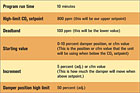
Experience has proven that the best way to effectively control CO2 is to use an incremental approach. Using an energy management system (EMS) to monitor CO2 and damper position, a program can run every 10 minutes adjusted (adj.). When CO2 levels rise above the high-limit set point, the program increases the damper position by 5 percent. This will occur every 10 minutes, until CO2 levels are not above the high-limit set point.

The damper will continue to open until the CO2 levels are decreased or the damper position high limit is reached, 50 percent (adj.). The damper will remain at its calculated position until all CO2 levels are below the deadband of 100 ppm. If no levels are above 700 ppm, the program will begin to incrementally close the damper every 10 minutes. This incremental approach keeps CO2 levels between 700 and 800 ppm, preventing unnecessary flooding of outside air into the building.

Using this strategy can greatly increase energy conservation in facilities with varying degrees of occupancy. Other benefits of using this approach include decreased load on EMS control processors, increased longevity of damper and damper actuators due to less motion, less loading of DX or chilled-water systems, improved supply air control, increased longevity of chilled-water valve actuators, and greater humidity control.

SYSTEM OPTIMIZATION

Below are some specific ways to achieve EMS optimization:

VAV critical zone reset: AHU discharge air set point reset.

• Simple strategy: Vary the discharge air set point based on VAV demand.

• Detailed explanation: On start-up, the discharge air set point will start at 57°F (adj.).

When a VAV box space temperature deviates from the set point, the discharge air temperature of the unit will then be reset down by 0.5° (adj.) every 15 min. (adj.). When all boxes are within set points, discharge air temperature set point will be reset up by 0.5° (adj.). Discharge air temperature set points can also be reset linearly using outside air conditions.

AHU discharge air temperature (DAT) reset: Linear outside air temperature (OAT).

• Simple strategy: Vary AHU discharge air temperature set point on change in OAT.

• Detailed explanation: In situations where the load is predictable, and more sensible than latent, the discharge air set point of an AHU may be reset on a linear scale based on change in OAT. For example: 50° OAT = 58° AHU DAT, 80° OAT = 55° AHU DAT. Any of these values can be adjustable.

AHU Economizer: CO2 demand ventilation.

• Simple strategy: Vary the outside air minimum position based on CO2 levels in the facility.

• Detailed explanation: In older buildings, a minimum outdoor air damper position is used to satisfy building ventilation requirements. Sometimes this minimum position is undesirable from an operations perspective. By monitoring building CO2 levels, either by return air or space CO2 sensors, the AHU outside air damper can be closed and only opened in economizer mode, or when the CO2 rises above desired levels.

When the CO2 level rises above the high limit of 800 ppm (adj.), the outdoor air damper minimum position can be increased from a starting level 0 or 10 percent (adj.) by 5 percent (adj.) every 15 min (adj.), to a maximum outside air damper position of 50 percent (adj.), until CO2 levels are below the high level. The damper will remain at this calculated position until CO2 levels are below the deadband of 700 ppm (adj.).

When it’s below the low-level set point, the outside air minimum position set point will be decreased by 5 percent (adj.) every 15 min (adj.) - as mentioned above, until the outside air damper is closed, or at its starting minimum positions.

Publication date: 09/27/2010

Share This Story

Looking for a reprint of this article?
From high-res PDFs to custom plaques, order your copy today!


Doug Hampton is a Commissioning Agent holding two credentials, one with the ACG (CxA) and the other with the University of Wisconsin-Madison (QCxP). He is a charter member of the Energy Management Association (EMA) certified as an Energy Management Professional (EMP). Memberships include ASHRAE, Green Omaha Coalition, and LEED Green Associate. Hampton is also an ITC certified Level II Thermographer.

Recommended Content

JOIN TODAY
To unlock your recommendations.

Already have an account? Sign In

  • HVAC-enrollment

    The Trades Are Back: HVACR Programs See Nearly 30% Enrollment Spike

    A new wave of future technicians is entering the pipeline.  
    Training and Education
    By: Matt Jachman
  • 2025 Top 40 Under 40

    2025 Top 40 Under 40 HVACR Professionals List

    The 11th annual Top 40 Under 40 list highlights those...
    HVAC Commercial Market
    By: Hannah Belloli-Oster
  • LG Ductless Mini-Split Systems

    The 9 Types of Heat Pumps

    As the U.S. moves toward electrification, heat pumps are...
    HVAC Commercial Market
    By: Joanna R. Turpin
Subscription Center
  • Create an Account
  • Start a Subscription
  • Manage My Account
  • Sign Up for Newsletters
  • Visit Customer Service
  • Update Preferences

More Videos

Sponsored Content

Sponsored Content is a special paid section where industry companies provide high quality, objective, non-commercial content around topics of interest to The News audience. All Sponsored Content is supplied by the advertising company and any opinions expressed in this article are those of the author and not necessarily reflect the views of The News or its parent company, BNP Media. Interested in participating in our Sponsored Content section? Contact your local rep!

close
  • Piggy Bank
    Sponsored byWatercress Financial

    Energy Prices, Inflation, and HVAC: What Today’s Homeowners Care About

  • Refrigerated Food
    Sponsored bySolstice Advanced Materials

    R-455A Refrigeration: A Cold Storage Solution for the Future

  • Airex Rooftop Units
    Sponsored byAirex Manufacturing Inc

    Consolidating Roof Penetrations: A Growing Trend in Multifamily HVAC Design

Popular Stories

Outdoor-condensing-units.jpg

EPA Removes R-410A Installation Deadline

Trump-Section-232.jpg

Trump Reduces Section 232 Tariffs on HVAC Equipment to 15%

HVAC-Price-Increase-graphic

HVAC Price Increase List: June 2026

cooling-habits.jpg

50 Percent of Americans Have Skipped HVAC Maintenance

ACHR NEWS Editor Chris Gray Presenting HVAC Minute 5-18-2026

HVAC Manufacturers Fight Pricing Lawsuits

View The ACHR NEWS
Centennial Anniversary Timeline

The ACHR News Timeline Chart
Submit a Letter
Submit a letter to our editors.

Events

November 6, 2025

Next-Gen Data Center Cooling: HVAC Innovation and Real-World Solutions

On Demand As AI workloads and high-density computing push traditional cooling methods to their limits, the data center industry is accelerating the adoption of next-generation HVAC technologies.

June 9, 2026

Before You Go All In on AI: Set Up Your Business to Actually Win

In this webinar, we'll walk you through exactly what to get in place before you add AI to your business. You'll leave with a clear picture of where you stand today and a practical action plan to set yourself up for real results.

View All Submit An Event

Poll

EPA Decision

Are you happy the EPA decided contractors can continue to install R-410A equipment?
View Results Poll Archive

Products

BNI Mechanical/Electrical Square Foot Costbook, 2026 Edition

BNI Mechanical/Electrical Square Foot Costbook, 2026 Edition

See More Products
A2L Refrigerants - Free Webinar - May 21, 2026

Related Articles

  • Using Air Intake Filtration to Optimize School IAQ

    See More
  • A 40-plus-story office building was plagued with high energy consumption, poor space comfort, and low productivity.

    Should I Have a Thermal Camera in My Tool Bag?

    See More
  • Data

    Three Ways to Use Customer Data to Optimize Your HVAC Business for Success

    See More

Related Products

See More Products
  • new cover.jpg

    Profit is An Attitude: The Strategies You Need to Optimize Profits

  • Using Schematic Diagrams to Troubleshoot HVAC/R Electrical Circuits

  • drafting.gif

    Sheet Metal Drafting Using Solidworks, 1/e

See More Products

Events

View AllSubmit An Event
  • October 8, 2025

    Heat Rejection Solutions: Leverage Data to Optimize Design

    On Demand This webinar will present real performance data for evaporative cooling towers, closed circuit coolers, hybrids, dry, and adiabatic coolers, clarifying tradeoffs and utility impacts.
View AllSubmit An Event

Related Directories

  • Plastec Ventilation Inc.

    Complete line of corrosion-resistant polypropylene fans from 20 to 9500 CFM and up to 11.5` S.P.
×

Sign Up. Stay Informed.

The #1 trusted source for the HVACR industry since 1926

SUBSCRIBE
  • RESOURCES
    • Advertise
    • Contact Us
    • Advisory Board
    • Classifieds
    • Submit a Letter
    • Directories
    • Store
  • ACCOUNT CENTER
    • Create an Account
    • Start a Subscription
    • Manage My Account
    • Sign Up for Newsletters
    • Visit Customer Service
    • Update Preferences
  • SERVICES
    • Marketing Services
    • Reprints
    • Market Research
    • List Rental
    • Survey/Respondent Access
  • STAY CONNECTED
    • LinkedIn
    • Facebook
    • Instagram
    • YouTube
    • X (Twitter)
  • PRIVACY
    • PRIVACY POLICY
    • TERMS & CONDITIONS
    • DO NOT SELL MY PERSONAL INFORMATION
    • PRIVACY REQUEST
    • ACCESSIBILITY

Copyright ©2026. All Rights Reserved BNP Media, Inc. and BNP Media II, LLC.

Design, CMS, Hosting & Web Development :: ePublishing