Applicable to large, open, indoor spaces with low occupancy as well as to warehouses, the findings are based on more than 220 parametric computational-fluid-dynamics (CFD) simulations varying worker and packing-line locations and fan speed (20%-100%) with and without racking.
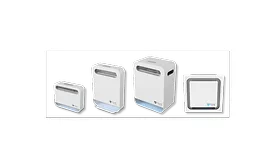
The study was conducted over 30 months with more than 100,000 patient-days. Following implementation of advanced air purification technology, HAIs at St. Mary’s went from an average of 11.9/1,000 patient-days to an average of 6.6/1000 patient-days — a 45% reduction.
For spaces that may have high levels of total volatile organic compounds (TVOCs), the Carrier air monitor includes a sensor that detects the concentration of such compounds, which can be emitted as gases from certain solids or liquids and may be linked with potential health concerns.
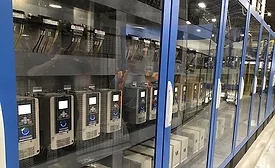
As with all electronics, VFDs have advanced in capability and function over their long history, providing more system control to help eliminate external devices and integrate with programmable logic controllers (PLCs).
 RSS
RSS