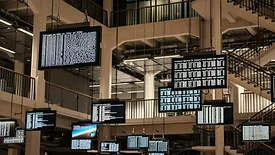
As market demand for computing power increases (partly fueled by the virality of generative artificial intelligence), engineers are required to rethink data center design.
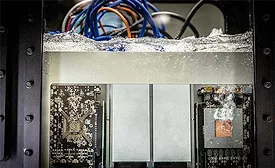
The recent and enthusiastic interest in two-phase, direct-to-chip cooling directly results from its dynamic ability to handle intense heat loads from high-power chips and its reliability compared to other liquid cooling methods.
Building owners, facility managers, and HVAC design engineers convince themselves that pharmaceutical and mission critical installations are very sophisticated and more complex than many health care applications and certainly more challenging to engineer, operate, and maintain than commercial buildings. But, that’s not the case.
The sound emitted when the air handling unit (AHU) starts up can make it hard for students to hear instruction or create a distraction for students trying to focus.
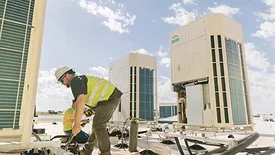
All-electric infrastructure is a pivotal step toward achieving net-zero emissions in the building sector, paving the way for a cleaner, more sustainable future.
Recent studies show that Improved air quality in classrooms has demonstrated an increase in test scores by 14%, increase attendance by 11% (classrooms with better air quality yield fewer sick days), and a 20% increase in attention span longevity.
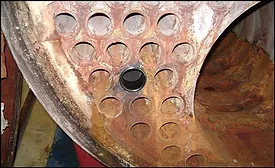
In hazardous industrial environments, it's important to put safety first. Establishing a rigid safety program for heater and boiler systems can reduce potential risks and enhance worker safety at all times.
 RSS
RSS