After evaluating several low global warming potential (GWP) refrigerant alternatives on a variety of performance and market metrics, including safety, capacity efficiency, reliability, availability, and longevity, R-454B was chosen as the best solution to minimize environmental impact and energy use.
Instead of needing to build in resilience for both fossil fuels (natural gas, propane, fuel oil, etc.) and electricity to keep your building systems running, an efficient all-electric design only requires resilience for one energy supply.
“Free cooling,” the process of allowing the building load to bypass mechanical cooling and exchange its heat with lower temperature outdoor air, is an environmentally favorable approach that helps reduce operating costs.
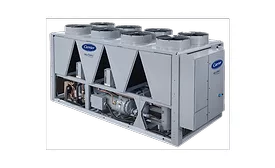
This technology harnesses the power of evaporation to lower ambient air temperatures entering Carrier’s 30XV chiller – helping to reduce chiller power consumption, increase reliability and extend the life of the chiller.
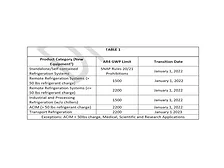
For new residential and light commercial central air conditioning equipment, the AHRI petition seeks a regulation requiring that equipment manufacturers use refrigerants with a global warming potential (GWP) of 750 or less in equipment made after Jan. 1, 2025, with the exception of variable refrigerant flow (VRF) equipment, whose deadline would be Jan. 1, 2026.
 RSS
RSS