Engineered Drivetrain Reliability for High-Density Data Center Cooling Towers
How next-gen drivetrain engineering is redefining reliability in the high-stakes, always-on world of data center cooling towers
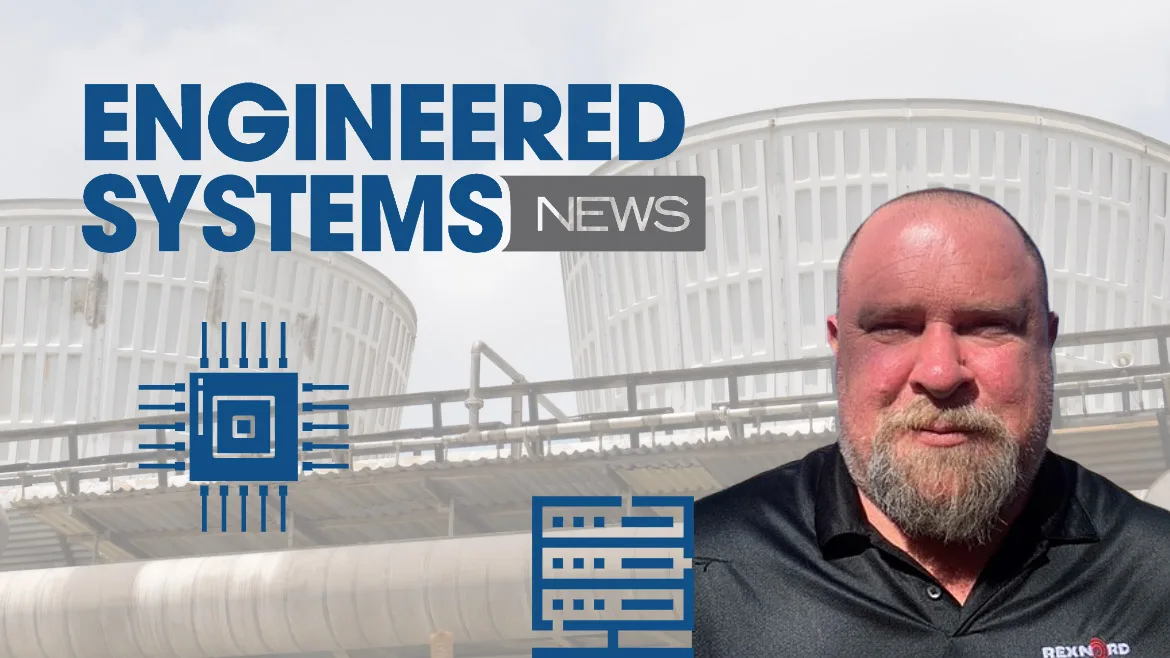
RELIABLE: Chris Cowins has spent decades ensuring the backbone of data center cooling towers is as reliable as the servers they protect.
With digital infrastructure continuing to expand, high-density data centers are pushing the envelope in terms of the scale and complexity of industrial cooling. Facilities supporting cloud computing, AI workloads, and large-scale data processing place unprecedented demands on thermal management systems.
Unlike traditional industrial applications, data centers experience what could be described as “double cooling demand.” Not only do they need to manage heat given off by the densely packed servers themselves, but they also need to manage the power generation and electrical infrastructure required to power these systems. The result is a significantly higher concentration of heat within a confined footprint.
To manage this, many facilities rely on large cooling tower solutions as a primary means of heat dissipation. These systems need to operate continuously with little tolerance for interruption. In a 24/7 environment, even minor shifts leading to decreased capacity or brief downtime can have major financial and operational consequences, making reliability in this equipment essential.
As these cooling systems continue to scale to meet demands, the performance of mechanical drivetrain components will become increasingly critical to maintaining stable and predictable operation.
Cooling Tower Drivetrains and Evolving Mechanical Demands
Cooling tower configurations are not a one-size-fits-all ordeal and depend widely on facility design, space constraints, and the cooling strategy being used. Some systems utilize direct-drive fans, while others might rely on belt-driven arrangements. In both instances, components can be tightly integrated, and their mechanical dynamics may be heavily constrained.
However, in many large-scale installations—especially those where layout flexibility and accessibility are important—long-span-shaft-driven cooling towers can be utilized. In these systems, torque is transmitted from the motor to the fan through the driveshaft. While this method is highly effective, long-span drivetrains introduce additional mechanical considerations and risks. Increased shaft length and overall flexibility require precise alignment and load distribution. Among these factors, torsional characteristics could also be a significant consideration—not as a universal issue, but as an application-specific factor that cannot be ignored.
The variance is important to note, as not all cooling systems are equally susceptible to these concerns. In compact or direct-drive configurations, there is often limited opportunity for torsional interaction. In contrast, longer-span systems inherently introduce more complexity due to their dimensions and operational variability.
The difference in these demands, along with the increased focus on larger operations, has shifted attention to the components that connect and stabilize these systems.
The Driveshaft as a Reliability Driver
Within the cooling tower drivetrain, the driveshaft serves as the main component connecting the motor, gearbox, and fan. While the gearbox manages torque conversion and direction, the driveshaft determines how that energy is transmitted and how the system responds to changes in these forces.
From a performance standpoint, many industrial gearboxes operate within a similar design envelope. As a result, differentiation within the drivetrain often comes down to the interaction with the driveshaft in terms of handling misalignment, dynamic loads, and system variability.
These components don’t just transfer torque; they also significantly influence system stability by accommodating misalignment, which impacts how these forces are distributed across the drivetrain. It’s these operations that make them a key driver of overall reliability, beyond just being an individual component.
Thankfully, modern driveshaft solutions are increasingly engineered with these points in mind. Rather than serving only as connections in a larger system, they are designed to contribute to a stable system by helping manage the forces they transmit, better supporting long-term performance.
Engineering for Stable, Predictable Operation
As these systems grow in size and complexity with new goals in mind, drivetrain design has evolved from a focus on basic power transmission to one also centered on dynamic performance and system stability.
One important consideration in these long-span cooling tower applications is how the system behaves across a range of operating speeds. Since cooling demand can fluctuate, fans are often operated at variable speeds, which introduces fluctuating dynamic conditions within the drivetrain itself.
Rather than treating torsional vibration as a persistent operational issue, more modern design approaches address it early in the engineering stage. Using advanced analysis and modeling techniques, drivetrain components can be configured to operate outside of their critical resonance ranges. This ensures that—even with variable speeds—the system avoids conditions that would introduce instability to its components.
In practice, this means that torsional vibration is not typically a dominant concern in well-engineered systems. Instead, it becomes one of several factors that is accounted for and effectively managed through the careful selection and engineering of drivetrain parts. This proactive approach reduces stress on gearboxes, motors, bearings, and seals, which contributes to longer equipment life and more consistent operation.
Installation Safety and Efficiency
The design of these components isn’t the only important consideration. Large drivetrain components are often installed at height and in constrained environments. By reducing component weight and simplifying the system, you can significantly improve installation efficiency and safety.
Easier handling of these components not only accelerates installation timelines but also reduces risk when service or replacement is inevitably needed in the future.
Simplified systems with fewer components require less frequent maintenance. Reducing the number of bearings and service points minimizes lubrication needs, inspection requirements, and overall maintenance effort to keep the system running smoothly.
For data centers operating around the clock, these reductions translate directly into improved uptime and a lower total cost of ownership.
Designing for the Future of Data Center Cooling
As data centers continue to scale and their cooling systems evolve in parallel, increased thermal loads, variable operating conditions, and the demand for uninterrupted uptime will require a more sophisticated and intentional approach to mechanical design.
Today’s drivetrain solutions reflect a shift toward more proactive engineering – where system behavior is analyzed, understood, and accounted for before installation. This approach enables better performance, reduces lifecycle costs, and minimizes operational risk significantly.
The future of data center cooling will depend not only on capacity, but on consistency; that consistency is built on the reliability of every component within the system.
Looking for a reprint of this article?
From high-res PDFs to custom plaques, order your copy today!