The Shift to Predictive HVAC Service
Q&A explores how predictive maintenance is transforming HVAC service from a game of catch-up to a discipline of planning
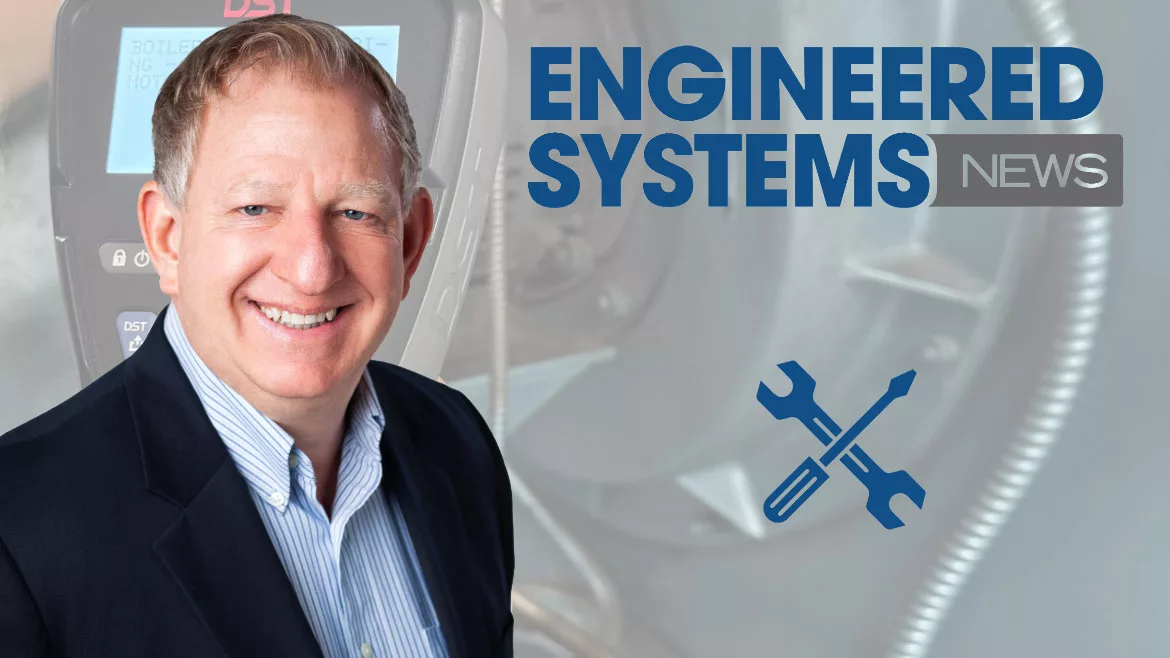
PE: John Gravatt, PE, Chief Operating Officer of ECM Technologies, brings decades of engineering and operational expertise to the push for smarter, data-driven HVAC service.
John Gravatt, PE, serves as Chief Operating Officer of ECM Technologies, where he plays a leading role in shaping the company’s approach to commercial HVAC performance and service innovation. With a background that spans engineering, operations, and contractor-focused program development, Gravatt brings a practical perspective to the challenges and opportunities facing the HVAC industry today.
Throughout his career, Gravatt has focused on bridging the gap between emerging technology and real-world facility operation. At ECM Technologies, he has been instrumental in expanding the company’s nationwide Preferred Service Network, helping partners deliver more predictive, performance-based solutions to their customers. He is also deeply involved in integrating advanced diagnostics, such as ultrasound-based technologies and performance enhancement treatments like ThermaClear, into commercial HVAC service programs.
Gravatt’s hands-on experience working with contractors and facility teams across diverse markets gives him a unique understanding of the evolving needs of building owners, operators, and service providers. His leadership reflects a commitment to continuous improvement, practical innovation, and supporting clients as they navigate the shift from traditional maintenance models to more data-driven, proactive strategies.
How are traditional HVAC service models falling short in today’s environment, and why is that becoming more apparent now?
Traditional HVAC service has historically been built around scheduled preventive maintenance (PM) and emergency response. Those two pieces are still necessary, but they are not enough for how commercial buildings are operated today. A quarterly PM visit may confirm that a unit is running, but it does not always tell the owner whether that system is drifting out of performance, consuming more energy than it should, or showing early signs of mechanical stress.
That gap is becoming more apparent because the cost of being reactive has increased. Facility teams are working with tighter budgets, fewer experienced technicians, aging infrastructure, and equipment that is often expected to run longer and harder than originally intended. When a critical system fails, the owner is not just paying for a repair. They may be dealing with tenant complaints, lost productivity, emergency labor, temporary cooling, expedited parts, and an unplanned capital decision.
From a commercial HVAC business owner’s perspective, that traditional service model also puts contractors in a difficult position. If all we do is show up on a calendar or after a breakdown, we are not giving the customer the visibility they need to manage risk. Owners today want to know where they stand, what is likely to fail next, what can be optimized, and where their maintenance dollars will produce the best return.

RISK: Traditional HVAC service models are being replaced by proactive, evidence-based strategies that help owners cut costs and reduce risk. (Courtresy of ECM Technologies)
What key factors are driving the industry toward more proactive, data-driven service approaches?
Several pressures are converging at the same time. Energy costs remain a major operating expense, skilled labor is limited, many buildings are operating with older equipment, and replacement lead times can still create real planning challenges. At the same time, owners are being asked to improve efficiency, support sustainability goals, and extend the useful life of existing HVAC assets.
The other driver is accountability. Building owners and facility managers are being asked to justify operating budgets and capital investments with better information. A recommendation based solely on age, or on a rule of thumb, is harder to defend than one supported by diagnostics, trend data, equipment history, and measured performance.
Fortunately, the tools available to the industry have improved. Better field diagnostics, monitoring platforms, ultrasound-based technologies such as Discovery Sound Technology (DST), or solutions designed to address long-term performance degradation, such as ThermaClear, are helping service providers identify issues earlier and manage long-term performance degradation more effectively. The industry is moving toward a model where there
are fewer surprises and emergency failures, allowing for better long-term planning. Contractors and service providers want to bring more value to the relationship beyond responding to reactive service calls and completing routine maintenance.
How do you define predictive maintenance in a practical, real-world service context?
In practical terms, predictive maintenance means using actual equipment condition and performance information to decide what needs attention, when it needs attention, and how serious the risk is. It is not a buzzword, and it is not meant to replace good mechanical service. It is a way to make service decisions from a more informed position.
In the field, that means the technician is looking beyond whether the unit starts, stops, heats, or cools. They are looking for changes in performance, poorly trending operating data, signs of stress, abnormal noise, vibration, or other indicators that the equipment is trending in the wrong direction.
The best predictive programs still include preventive maintenance. Filters still need to be changed. Coils still need to be inspected and cleaned. Belts, bearings, motors, refrigerant circuits, heat exchangers, pumps, and controls still need skilled technicians. The difference is that the maintenance plan is guided by deeper operational evidence instead of just a fixed checklist.

PREDICT: Predictive maintenance in action: Contractors are using diagnostics and performance data to prevent HVAC failures before they disrupt building operations. (Courtresy of ECM Technologies)
What role do diagnostics and field data play in identifying issues before they lead to system failure?
Diagnostics and field data are the foundation of a predictive service model. Without them, a service provider often relies on visual inspection, a tenant complaint, a BAS alarm, or a failure that has already happened. Those are useful signals, but they are usually late signals.
Good diagnostics help move the conversation upstream. Tools such as DST, which uses self-calibrating ultrasound diagnostics, can help technicians identify early indicators of mechanical stress or imbalance that may not be obvious during a standard inspection. When that information is combined with service history, technician observations, run-time data, energy performance, and known site conditions, the contractor and owner get a much clearer picture of asset health.
The key is turning data into action. We have seen plenty of buildings collect data that never impacts the maintenance or replacement decision. That does not create value. The value comes when diagnostics help the service team prioritize the right assets, recommend the right corrective work, clearly document risk, and help the owner avoid a larger failure or a poor capital decision.
How does a predictive approach change the day-to-day work of technicians and service teams in the field?
It raises the role of the technician. The technician is still a mechanic, but they also become an interpreter of system performance. Instead of simply completing a PM checklist, they are validating what the equipment is telling them and helping the customer understand its meaning.
That has a real impact on daily operations. When labor is tight, service managers need to know where to send their best people first. Predictive information helps separate urgent risk from routine maintenance. It helps determine which assets need immediate attention, which can be monitored, and which should be part of a future capital plan.
It also improves communication with the customer. A technician can walk into a facility meeting with evidence, not just an opinion. That builds trust. It also reduces the likelihood that a recommendation is viewed as simply a sales pitch for a repair.
At ECM Technologies, that practical field reality helped shape the development of PerformanceCore powered programs through our Preferred Service Network. The goal is not to replace the contractor’s existing service model. The goal is to help contractors integrate diagnostics, system optimization, and ongoing performance monitoring into the way they already serve customers, in a way that can be adapted to local markets and different types of facilities.
In what ways is predictive maintenance influencing repair-versus-replacement decisions and long-term capital planning?
Predictive maintenance gives owners a better basis for repair-versus-replacement decisions by adding condition and performance to the discussion. Age matters, but age by itself is not a capital plan. I have seen older equipment that still has plenty of useful life when the right performance issues are addressed, and I have seen newer equipment that is becoming a reliability problem because of operating conditions, installation issues or poor maintenance history.
When an owner has diagnostics, trend information, repair history, energy impact, and a clearer view of risk, the capital conversation becomes more strategic. Instead of replacing a unit because it failed on the hottest day of the year, the owner can plan the replacement, budget for it, coordinate with operations, and evaluate whether repair, treatment, optimization, or replacement produces the best financial outcome.
That is especially important in commercial buildings where HVAC decisions affect tenants, production, patient comfort, data environments, retail operations, or other mission-critical spaces. Predictive maintenance helps turn capital planning from a reaction into a managed business decision.
What operational or financial benefits are organizations seeing when they move away from reactive service models?
The first benefit is fewer surprises. Reactive service is expensive because it usually happens under pressure. A failure occurs; the building is uncomfortable; management wants an answer immediately; parts may not be available; and the owner may be forced into a repair or replacement decision without enough information.
A proactive, predictive approach helps reduce that pressure. Organizations can improve uptime, reduce emergency calls, control energy waste, extend equipment life where appropriate, and make better use of maintenance budgets. They also gain better visibility into asset condition, which supports stronger operating forecasts and more disciplined capital planning.
From the owner’s side, the financial case is not only about avoiding a catastrophic failure. It is also about reducing the hidden costs of poor performance. A system can be running every day and still be costing too much to operate. When service teams identify inefficiencies earlier, the owner has an opportunity to correct performance issues before they become energy, comfort, or reliability problems.
How does this shift impact HVAC contractors from a business standpoint, whether in service offerings, revenue or client relationships?
For contractors, predictive maintenance is an opportunity to move from a transactional relationship to a higher-value service partnership. Instead of being viewed only as the company that responds when equipment fails, the contractor becomes a resource that helps the owner manage risk, improve performance, and plan future investment.
That matters from a business standpoint. Data-driven service offerings can support recurring revenue, stronger customer retention, better technician utilization, and more credible recommendations for repairs, optimization, treatments, or replacement. Contractors are no longer selling only labor hours. They are selling expertise, insight, and risk reduction. It also helps differentiate the contractor in a crowded market. Many customers receive similar-looking PM proposals. A contractor who can show measurable asset condition, performance trends, and a practical plan for improvement has a stronger value proposition than one offering only a standard checklist.
Through our Preferred Service Network, we see that flexibility is essential. HVAC service is not one-size-fits-all. A contractor in Arizona dealing with extreme heat and long cooling seasons may need a different approach than a contractor in the Midwest, the Northeast, or the Southeast. The strongest programs allow contractors to build service tiers and performance strategies around their market, customer base, labor model, and operational style.
What are the most common challenges or misconceptions companies face when trying to implement a more proactive service strategy?
One misconception is that predictive maintenance requires a massive technology overhaul from day one. It does not. A company can start by improving documentation, identifying critical assets, using targeted diagnostics, and tracking equipment condition more consistently over time.
Another challenge is cultural. The HVAC industry has been reactive for a long time, and some organizations still have a mindset that service begins only when something breaks. Moving to a predictive model requires buy-in from ownership, service leadership, technicians, and facility teams. Everyone needs to understand that the goal is not to create more paperwork. The goal is to make better decisions and prevent avoidable problems.
A third challenge is data overload. More data is not automatically better. If no one is responsible for reviewing, interpreting, and translating it into action, it becomes noise. The most effective programs define what will be measured, who will review it, what thresholds matter, and how findings will be communicated to the customer.
The goal is not to eliminate every failure overnight. That is not realistic in mechanical systems. The goal is to reduce preventable failures, improve visibility, prioritize resources, and make maintenance and capital decisions with better information.
For contractors or facility teams looking to get started, what are the first practical steps to transition to predictive maintenance?
Start with the equipment that matters most. Do not try to convert every asset in the building at once. Identify the systems in which failure would have the greatest operational, financial, comfort, safety, or tenant impact. Those assets should be the first priority.
Next, build a baseline. Document the current condition of the equipment, known recurring issues, service history, energy or comfort complaints, run-time patterns, and any obvious performance concerns. A good baseline gives the team something to compare against later.
Then add diagnostics and performance tracking in a disciplined way. Decide what information will actually influence maintenance decisions. That may include mechanical diagnostics, temperature and pressure readings, amp draw, run time, alarm history, vibration or ultrasound indicators, heat transfer performance, or other site-specific measures.
Finally, make the process consistent. Predictive maintenance is not a one-time inspection or a single product. It is a service discipline. The contractor and facility team need a repeatable process for collecting information, reviewing findings, prioritizing action, and communicating risk in a way the owner can understand.
I always tell contractors and facility teams to focus on progress, not perfection. Even modest improvements in visibility, documentation, and prioritization can reduce surprises and lead to stronger long-term asset management. Through ECMT’s nationwide Preferred Service Network, we have also seen that contractors do not have to figure out this transition alone. There are service providers across the country already implementing performance-driven maintenance strategies in ways that fit their local markets and customer needs.
Looking for a reprint of this article?
From high-res PDFs to custom plaques, order your copy today!


