Engineering HVAC Solutions for Efficiency and Connectivity
Examining sustainability and digital transformation with Rheem’s Rodrigo Cedeno and Chris Day
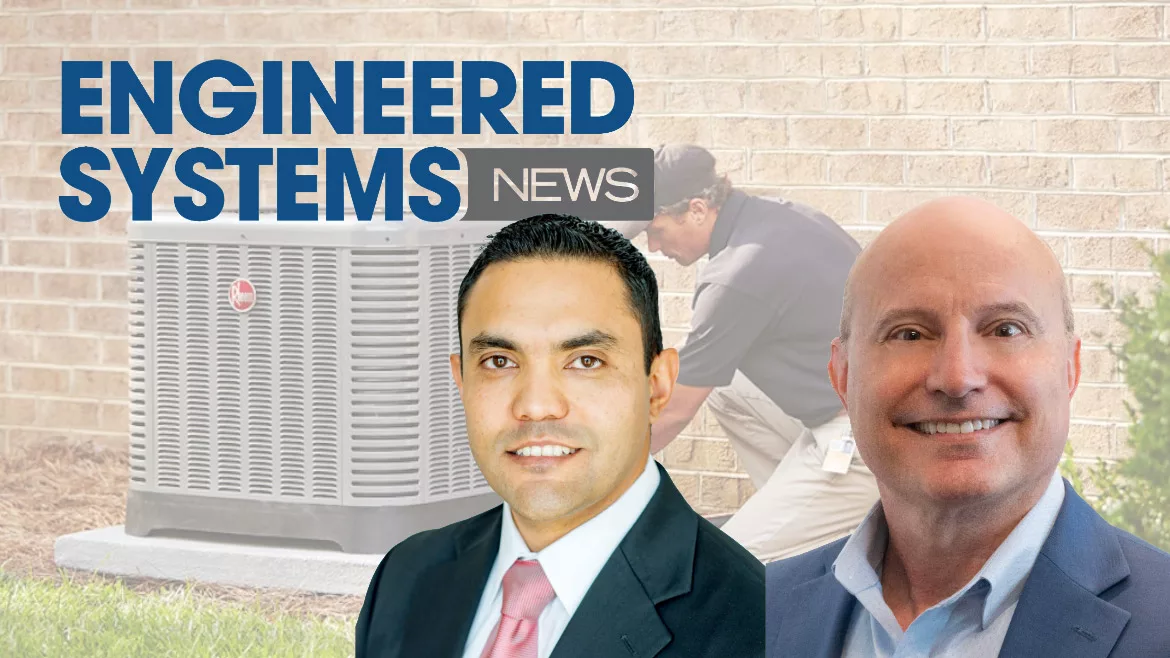
INNOVATION: Rheem leaders share how heat pump breakthroughs and digital tools are reshaping sustainability trends.
In this special conversation, Engineered Systems NEWS sits down with Rodrigo Cedeno, director of global sustainability, and Chris Day, vice president of product strategy, marketing and training at Rheem Manufacturing Company. Together, they discuss Rheem’s latest advances in heat pump technology, digitalization, and their vision for a more sustainable future in HVAC and water heating.
You showcased more than 15 new or enhanced products at the Expo. Which product or technology do you see as most transformative for advancing Rheem’s sustainability goals, and why?
Rodrigo Cedeno: Rheem’s advancements in heat pump technology, across both air and water, are key to realizing our goals in greenhouse gas reduction. This transformation comes not only from our landmark residential heat pump water heaters, but the wide array of solutions we offer. These range from dual fuel systems in heating and cooling to heat pump pool heaters, and from our largest commercial heat pump water heaters and air systems to our smaller VRF and mini split systems.
With recent advances in heat pump technology, what barriers to wider adoption do you still see in the North American residential and commercial markets?
Rodrigo Cedeno: One of the barriers we are working on is education. Heat pump water heaters are an excellent solution for end-users and a great product for plumbing contractors to add to their portfolio. The education starts with awareness and then understanding the product to ensure plumbing contractors feel comfortable offering it to their customers. Rheem has more than 20 Innovation Learning Centers (ILCs), which are advanced learning hubs designed to offer immersive, hands-on experiences. We provide training programs to help increase understanding of regulatory changes for heat pump water heaters as part of our compliance and sustainability initiatives. We are training our trade partners with the knowledge needed to install new technologies, like heat pumps, and to equip them with the skills to confidently explain to home and business owners how these products work and the benefits they can provide.
Across your product lines, how do you balance the push for sustainability with the need for affordability and reliability for both homeowners and commercial clients?
Rodrigo Cedeno: Our customer is our top priority, which is why we continue to innovate and evolve our products for reliability and ease of installation. We have enhanced components on our products that add value by reducing installation costs and service visits. This is a win-win for both the trade and consumer, as we understand we must have the best product hands down to be able to actualize these sustainability factors. Reliability, efficiency, and sustainability go hand in hand to be the best value for consumers and a product the trade can trust. Focusing on the overall cost of ownership through utility cost reduction and durability guides our pursuit of innovating higher efficiency products that are affordable for our customers.
The EcoNet platform and the upcoming TotalView digital tools promise greater connectivity and data. How do you see digitalization changing the way HVAC and water heating products are serviced, optimized, and even sold?
Chris Day: The HVAC and water heating sectors are experiencing the same digital transformation already reshaping other industries, and its impact on system performance and grid interaction is accelerating. Digitalization is enabling more precise comfort control, cleaner energy utilization, improved operational efficiency, and longer equipment lifespans. Connected systems also support grid stability by giving energy providers better tools to manage demand, reduce waste, and mitigate peak load challenges. Because space conditioning and water heating represent 40% or more of a home’s total energy use, applying data-driven optimization to equipment operation offers measurable energy savings potential for end users.
Some new products, like the RD18AY and RP17AY heat pumps, emphasize variable-speed compressors and refrigerant reductions. Can you share more about the R&D process that led to these features, and what’s next in terms of efficiency gains?
Chris Day: Innovation around products like the RD18AY and RP17AY is the result of an R&D strategy focused on advancing efficiency, sustainability, connectivity, and workforce readiness, while keeping pace with rapidly evolving industry standards. As energy regulations continue to tighten, including the DOE’s updated SEER2 standards and forthcoming shifts in heat pump water heating technologies, our team at Rheem is proactively engineering solutions that comply and lead. Rheem has long been a trailblazer in heat pump technology, and that commitment continues to shape our development priorities ... Looking ahead, we expect continued gains through advanced variable-speed technology, smarter connected systems, and optimized refrigerant use.
With evolving regulations and refrigerant standards, how does Rheem work with policymakers or industry groups to shape, adapt to, or even anticipate coming changes?
Chris Day: The HVAC/R and plumbing industries are at a pivotal moment. Shifting regulatory landscapes, combined with accelerated innovation, are creating opportunities. Clean energy goals, utility electrification initiatives, evolving refrigerant standards, and higher efficiency requirements are all reshaping the market ... Rather than simply reacting to change, we are focused on being proactive, aligning product development, refrigerant transitions, and efficiency improvements with emerging policy direction. At the same time, we recognize that regulatory change doesn’t impact manufacturers alone. That’s why Rheem is investing heavily in contractor training, technical education, and product innovation to help our partners confidently navigate new requirements.
As you look toward 2035 and beyond, what’s the one thing you’re most excited—or most anxious—about when it comes to sustainability in the HVAC and water heating sector?
Chris Day: Based on current demand, regulatory drivers, and the ongoing shift toward electrification and higher-efficiency technologies, Rheem expects the industry to continue modest growth while adopting a holistic approach and leveraging innovative technologies ... We're also excited about seeing contractors expand their capabilities to become multi-trade businesses, offering both HVAC and plumbing services under one roof. The multi-trade approach is gaining traction as homeowners and builders alike look to streamline service and trusted partners. This also opens new growth opportunities for contractors who are interested in investing in integrated solutions.
Looking for a reprint of this article?
From high-res PDFs to custom plaques, order your copy today!