Accelerating Clean Heat: How Electric Boilers are Powering Europe’s Energy Transition
Inside Finland’s push to decarbonize heat networks and stabilize power grids – by deploying rapid-response electrode boilers at scale
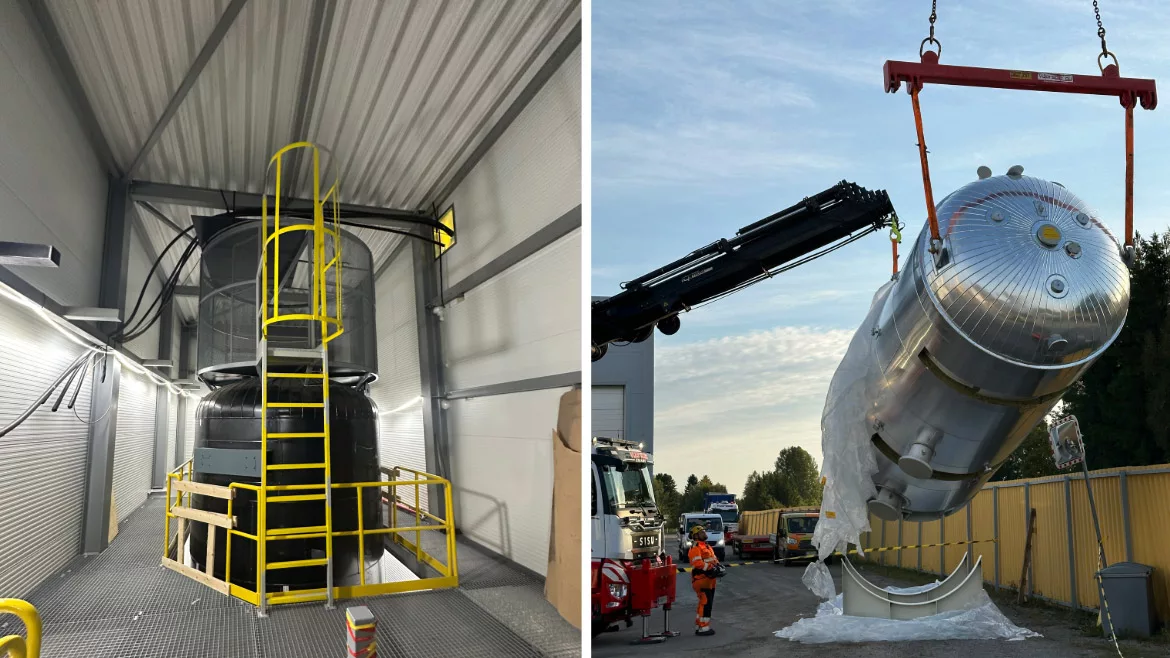
ENGINEERING: Acme 12 MW steam boiler (left), Acme 10 MW (right) – modern high-output electrode boilers like these from Acme Engineering deliver zero emissions at the point of use and feature flexible configurations.
As Europe accelerates toward a carbon-neutral future, countries are rethinking the way they heat cities and industries. Nowhere is this more apparent than in Finland, where high-voltage electrode boilers are being deployed at a breakneck pace – quietly transforming some of the continent’s most critical heat networks. The technology, once niche, is now central to the EU’s decarbonization playbook, allowing cities and companies to absorb excess renewable electricity, reduce fossil fuel use, and stabilize grids that are growing more volatile as wind and solar power surge.
Finland, one of the most ambitious climate actors in the EU, is betting big on this approach. With carbon neutrality set for 2035, the country is leveraging European Recovery and Resilience Facility (RRF) funding to modernize its infrastructure. Over €500 million has already been earmarked, with a major share directed toward the deployment of high-efficiency electric boilers – systems that deliver clean heat with zero emissions at the point of use and full modulation to match demand, whether for district heating or major industrial users.
“Electrode boilers are now being installed everywhere from city heat grids to manufacturing sites,” said Juha Mäntynen, Vice President of CT Industrial Oy (CTI), a Finnish CleanTech provider. “They help decarbonize thermal energy, replace fossil-fueled sources, and keep the grid in balance – especially as renewables grow.”

10 MW BOILER: In the EU’s broader decarbonization effort, high-voltage electrode boilers play a critical role in applications requiring rapid load absorption and grid stabilization. (Courtesy of Acme Engineering)
The grid connection is key. As wind and solar output expands, so do the swings in electricity supply – sometimes sending prices negative. Electrode boilers can ramp up almost instantly, absorbing surplus power and preventing waste, while companies participating in reserve markets can actually earn revenue by helping stabilize the system.
“Last year, reserve market prices averaged 3,000 euros per megawatt-hour. A 50-megawatt boiler running for just one hour could generate 150,000 euros in revenue,” said Mäntynen.
Finland’s district heating network, one of the world’s most advanced, is also transforming. Once fueled by coal and peat, the system is now shifting to a mix of renewables and electrification. New partnerships – like CTI’s collaboration with Acme Engineering – are accelerating the rollout, with flexible, CE-marked electrode boilers adapted for both new projects and retrofits. Already, milestone installations are up and running in cities like Jepua and Honkajoki, with more on the way – including a recent dual-output solution for the city of Kajaani, meeting diverse customer needs without doubling capacity.
The European market for decarbonization remains resilient, buoyed by municipal investment and long-term climate mandates. And as demand for agile, clean energy solutions grows, high-voltage electrode boilers are set to play a pivotal role – turning excess renewable power into reliable heat, supporting grid stability, and building a more flexible energy ecosystem for tomorrow.

15 MW BOILER: Electrode boilers are instrumental in generating revenue by absorbing excess power, enabling rapid, demand-responsive operation that aligns with market conditions. (Courtesy of Acme Engineering)
Looking for a reprint of this article?
From high-res PDFs to custom plaques, order your copy today!